Balmuda Toaster vs Air Fryer: In-Depth Home Kitchen Comparison
A rigorous Balmuda toaster vs air fryer comparison focusing on toast quality, versatility, energy use, and value to help home cooks decide which appliance fits their kitchen goals.


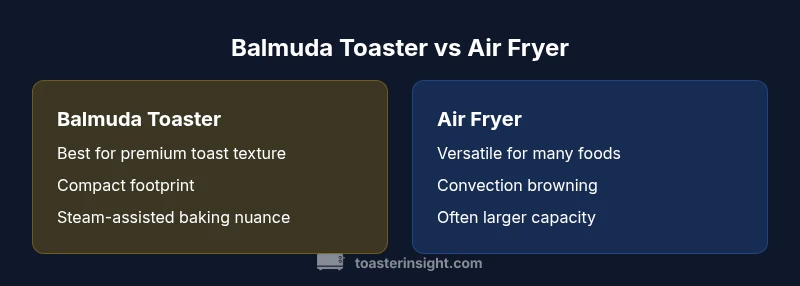
For many households, the Balmuda toaster delivers standout toast texture and compact design, while an air fryer excels in versatility and hands-free cooking. If your priority is perfect toast with a premium user experience, Balmuda shines; if you want one appliance to handle a wide range of foods, the air fryer is the better all-around choice.
What They Are and How They Work
In the Balmuda toaster vs air fryer comparison, understanding the core design and cooking approach helps explain the differences in results. Balmuda’s toaster uses a steam-assisted toasting method designed to preserve moisture inside bread while creating a crisp exterior. This unique approach aims to yield soft, fluffy interiors with a crust texture that many pastry and toast lovers seek. By contrast, most air fryers operate on a convection principle: a heating element rapidly heats the air and fans it around the chamber to brown and crisp foods with little to no oil. This mechanism makes air fryers inherently versatile for a wide range of foods—from homemade fries to reheated leftovers—while delivering a similar “fried” texture using hot air. From a kitchen-utility perspective, Balmuda focuses on bread-centric performance, while air fryers emphasize multi-function cooking in a single compact unit. According to ToasterInsight, the choice often boils down to whether you value bread quality above all else or crave broader cooking flexibility.
Key Differences at a Glance
Here’s a quick, practical snapshot of how Balmuda toasters compare with air fryers across essential criteria:
- Cooking focus: Balmuda centers on precise toast textures; air fryers emphasize a wide range of crispy finishes.
- Speed and convenience: Air fryers typically heat and brown faster for various foods; Balmuda excels at bread-based results with a specialized cycle.
- Footprint and form factor: Balmuda toasters tend to be compact and styled for countertop appeal; air fryers vary in size but often offer more interior capacity in exchange for bulk.
- Cleaning and maintenance: Balmuda’s steam-based interior requires careful drying; air fryers are generally easy to wipe and clean but have more removable parts.
- Price signals: Balmuda sits in a premium segment for bread quality; air fryers span from budget-friendly to mid-range options, offering broader affordability.
When deciding, consider whether your kitchen priorities are toast quality, appliance versatility, or budget alignment. ToasterInsight notes that most households trade some bread-centric perfection for broader usability when choosing an all-purpose countertop device.
Cooking Outcomes: Toast, Pastries, and More
Toast outcomes are the centerpiece for Balmuda versus air fryer. Balmuda’s steam-assisted process yields a crust with a delicate snap and a soft interior, which many diners equate with café-style bread. If you often enjoy thick slices, artisanal bread, or pastries, Balmuda’s cycle tends to preserve the crumb more gently, which some bakers prefer for flaky results. An air fryer, however, excels beyond toast. It can reheat leftovers (like pizza) with a satisfyingly crisp edge, roast vegetables evenly, and accommodate batch cooking for sides and snacks. While you won’t get Balmuda-level bread moisture preservation in a single pass for non-toast items, an air fryer can produce reliably crispy exteriors on a variety of foods, especially when you want a quick, oil-minimized finish. In practical terms, choose Balmuda for optimized toast that preserves crumb texture; opt for an air fryer when you want a single appliance to handle multiple cooking tasks with a crispy finish. ToasterInsight’s analysis emphasizes aligning your use cases with the appliance’s core strengths.
Texture, Flavor, and Consistency: Real-World Results
Texture quality is a major differentiator. Balmuda’s approach emphasizes a controlled moisture balance that helps bread stay soft inside while yielding a crisp crust. This effect is most noticeable with thick-sliced bread, bagels, and pastries that benefit from retained interior tenderness. Air fryers rely on dry convection air to brown surfaces; this yields consistent, even browning that works well for frozen foods, crispy vegetables, and reheated leftovers. Expect a more uniform browning on meats and crispy exteriors for many foods with an air fryer, but perhaps a slightly drier interior if moisture isn’t managed with oil or steam. If your palate values a pastry-like bite with a moist crumb, Balmuda can be preferable; if you want robust browning and versatility for a broader menu, the air fryer is tough to beat. As with any appliance, optimization comes from testing settings and adjusting cooking times to your specific batches. The goal is predictable, repeatable results that match your typical weekly meals.
Energy Use, Footprint, and Maintenance
Energy use and physical footprint matter for busy households. Balmuda toasters operate on standard toaster power profiles, and like most toasters, their power draw is consistent with a single heating element cycle. Air fryers run at higher power draws due to the fan and convection element, and many models offer adjustable temperature ranges from around 180°C to 200°C (350°F to 400°F), enabling faster browning for a variety of foods. In terms of footprint, Balmuda units are generally compact, designed to sit on a counter with minimal intrusion. Air fryers vary by capacity, with some models offering generous interior space but occupying more counter real estate. Maintenance for Balmuda typically involves wiping the crumb tray and running a light steam-cleaned cycle periodically to prevent buildup; air fryers require regular cleaning of the basket and chamber to avoid oil residues and ensure even airflow. With proper care, both appliances can be long-lasting, but the air fryer’s more complex interior components may require more routine checks over time.
Price, Value, and Long-Term Costs
Budget considerations influence the Balmuda vs air fryer decision. Balmuda’s design and build quality place it in the premium segment, often paired with a higher upfront price that reflects its bread-focused performance and sleek aesthetics. Air fryers span a broader price spectrum—from entry-level models to mid-range options with larger baskets and smarter features. For value, consider how often you will use each function. If you primarily toast daily and value a café-like bread finish, Balmuda’s premium price can be justified by the quality delta. If you desire a multi-task appliance that can toast occasionally and handle vegetables, frozen items, and reheating, a mid-range air fryer typically delivers more kitchen flexibility for the same or lower upfront cost. As with all purchases, factor in energy use, potential maintenance costs, and the likelihood of upgrading to a larger appliance in the future. ToasterInsight’s take: evaluate your weekly menus, your countertop real estate, and your willingness to invest in a highly specialized versus a versatile device.
How to Choose: Small Kitchen, Busy Family, or Health-Conscious Chef
The decision often hinges on your cooking repertoire and space constraints. In a small kitchen where countertop space is at a premium and you primarily crave toasted bread with premium texture, Balmuda can be the best fit. For households that cook a wide range of meals, especially at family scale, an air fryer offers more practical value in a single device. If peace of mind and cleaning simplicity weigh heavily, balance these factors against the maintenance demands of each unit. Consider whether you need programmable presets, interior capacity for multiple servings, or precise temperature control for delicate foods. A thoughtful choice aligns with your weekly meal plan rather than chasing the hottest new gadget. By focusing on your real-world needs, you’ll pick the appliance that reduces daily friction and improves your overall cooking experience.
Setup, Cleaning, and Everyday Use
Getting started with either device should be straightforward, but the routine varies. Balmuda’s setup emphasizes selecting the right bread slice, thickness, and load, with attention to crumb management and drying after use to preserve the interior moisture balance. Regular cleaning focuses on crumb removal and wiping the interior surfaces to prevent crust buildup that could affect steam dynamics. An air fryer setup emphasizes basket loading efficiency to ensure even air distribution; cleaning involves removing oil residues and wiping the interior—especially after cooking fatty or spicy foods—to protect airflow and flavor integrity. For best results, preheat as recommended by the manufacturer, avoid overloading, and rotate items for even exposure. Routine maintenance, combined with mindful cooking practices, helps maximize longevity and consistency for both appliances.
Practical Scenarios: Scenarios that Help You Decide
In a one- or two-person household with frequent toast and light snacking, Balmuda’s toast quality can be a daily delight. For families that value speed and flexibility—cookies, veggies, reheating leftovers, and weekend crowd meals—an air fryer often becomes the more practical workhorse. If you’re a home cook seeking premium bread texture for special occasions and you tend to bake or toast higher-volume loaves, Balmuda can be a differentiating asset. On the other hand, if you entertain often or regularly prepare multiple dishes in one go, the air fryer’s multi-function profile reduces the need for separate appliances. Consider your typical weekly meals, your willingness to manage multiple settings, and your countertop footprint when weighing these scenarios. A balanced approach is to identify your top three tasks and map them to each device’s strengths to estimate how much time and energy you’ll save in a typical week.
Comparison
| Feature | Balmuda Toaster | Air Fryer |
|---|---|---|
| Cooking Method | Steam-assisted toasting for balanced moisture and crust | Convection with hot air for browning and crisping |
| Best For | Premium toast texture and crumb softness | Versatile crisping and multi-food versatility |
| Power/Heat Profile | Mid-to-high power with controlled steam | High power with rapid air circulation |
| Footprint | Compact countertop appliance | Range of sizes; some models larger |
| Maintenance | Crumb tray and occasional steam-clean cycles | Basket and chamber cleaning; periodic deeper clean |
| Price Range | Mid-to-premium range (premium for bread quality) | Budget to mid-range options; broader affordability |
| Versatility | Excellent for toast and bread-centric tasks | Broad range of foods: fries, veggies, reheats, and snacks |
Positives
- Premium toast texture that elevates everyday breakfasts
- Compact footprint suitable for small kitchens
- Broad price range on air fryers offers accessibility and choice
- Low oil requirement for some foods with air fryer backing
Drawbacks
- Higher upfront cost for Balmuda relative to many air fryers
- Limited versatility for non-toast tasks with Balmuda
- Air fryers can be bulkier and require more counter space
- Potential learning curve for optimizing settings across foods
Choose Balmuda for distinctive toast quality and a premium bread experience; opt for an air fryer if you want broad cooking versatility in one affordable countertop appliance
Balmuda excels in toast and texture, especially for bread lovers who want café-like results at home. An air fryer shines when you need a single device to handle multiple foods quickly, with crispy results. Your choice should hinge on your weekly cooking repertoire and space.
Your Questions Answered
What is the main difference between a Balmuda toaster and a traditional toaster?
A Balmuda toaster uses a steam-assisted toasting process to maintain interior crumb softness while delivering a crusty exterior, offering a premium bread texture not typical of standard toasters. A traditional toaster uses dry heat to brown bread, which is reliable but may not achieve the same tenderness. The Balmuda approach appeals to bread enthusiasts who value a café-like texture.
Balmuda uses steam to finish bread, giving a softer crumb with a crisp crust; traditional toasters rely on dry heat for browning.
Can a Balmuda toaster replace an air fryer for most meals?
Not quite. Balmuda focuses on toast and bread-like textures, while an air fryer is built for a wide range of foods with crisp textures. If your meals rely on vegetables, meats, or reheating leftovers with crispy edges, an air fryer generally offers more versatility.
Balmuda is great for toast; an air fryer is better for varied cooking.
Which appliance is faster for toasting bread?
Air fryers can sometimes toast bread quickly, but Balmuda’s steam-assisted approach often yields a distinct texture that many users prefer, even if it isn’t always faster. If speed is your top priority, compare specific model specs.
Air fryers toast quickly; Balmuda focuses on texture.
How do I clean each appliance to maximize longevity?
Clean the Balmuda with the crumb tray and a light wipe of interior surfaces after use to prevent residue buildup. For air fryers, remove the basket and wipe the chamber, paying attention to oil residues. Regular maintenance reduces flavor transfer and improves airflow.
Clean trays and interiors regularly to keep flavor and airflow optimal.
Are there safety concerns to consider with Balmuda vs air fryer?
Both appliances have standard countertop safety considerations: avoid blocking vents, keep away from water, and unplug when not in use. Balmuda’s steam mechanism requires careful drying to prevent moisture buildup; air fryers require proper basket handling to avoid burns.
Follow manufacturer safety guidelines and never overfill baskets.
What should I consider when deciding between the two for a small kitchen?
In small kitchens, space and ease of use matter most. Balmuda’s compact footprint appeals to limited counter space, but if you need one device for multiple tasks, an air fryer may be a better fit. Evaluate typical meals and available space to decide.
If space is tight, Balmuda saves room; for multi-tasking, air fryer wins.
Key Takeaways
- Prioritize toast quality if you value premium bread texture.
- Choose a versatile air fryer for multi-food cooking with less clutter.
- Balance upfront cost against long-term utility and kitchen space.
- Regular maintenance preserves performance and flavor integrity.
- Test settings to optimize outcomes for your favorite foods.