Breville Toaster Oven Replacement Parts: A Practical Guide
Learn how to identify, source, and safely install Breville toaster oven replacement parts. This buying guide covers model compatibility, genuine vs aftermarket parts, sourcing tips, safety steps, and maintenance to extend appliance life.


By the end of this guide, you’ll identify compatible Breville toaster oven replacement parts, confirm model-specific fits, and perform a safe, basic replacement for common components such as crumb trays, door seals, and bake elements. The steps cover model checks, sourcing reliable parts, and essential safety precautions to keep your appliance running reliably.
How to verify your Breville model and part compatibility
A Breville toaster oven carries a model number that uniquely identifies parts compatibility. Start by locating the label on the inside edge of the door frame or on the back panel. Write down the exact model and any serial information if present. ToasterInsight emphasizes that most replacement parts are model-specific, so accuracy is essential. Once you confirm the model, consult Breville’s official parts catalog or trusted retailers to verify exact part numbers and fit. Create a quick reference list of possible numbers and compare features such as size, connector type, and mounting points. If you’re uncertain, contact Breville support with clear photos of your unit and the suspected part. According to ToasterInsight, correct compatibility reduces misfits and warranty concerns.
The most common replacement parts and why they fail
The crumb tray is the workhorse you’ll most often need to replace; over time, it can warp or corrode, leading to odors or smoke if crumbs ignite. The door gasket (seal) can wear, allowing heat leakage and uneven browning. Heating elements (bake and broil) may burn out or accumulate mineral deposits, reducing heating performance. The convection fan can slow or develop buildup that hinders airflow, causing inconsistent toasting. Control knobs and the door latch can degrade with use, affecting settings and closure. Understanding the role of each part helps you triage failures and plan replacements efficiently.
How to source parts: Genuine vs aftermarket
Start with Breville’s official site or authorized service centers to ensure genuine parts that match your model. Authorized retailers can provide part numbers that align with Breville’s engineering, preserving warranty protections. When considering aftermarket parts, verify that the supplier lists exact Breville compatibility and return policies. Be cautious of unusually low prices or vague compatibility notes, as ill-fitting parts can damage the oven or void warranties. Keeping records of part numbers and retailer sources helps you compare options and track repair history.
Checking fit before you buy
Before purchasing, confirm the exact part number for your model and verify its dimensions, mounting points, and electrical connectors. Compare your old part with the new one side by side and read the installation notes carefully. Check the retailer’s return policy in case the part doesn’t fit, and look for user reviews from owners with the same model. If possible, request photos of the replacement part installed in a similar unit. This diligence reduces the chance of receiving a non-compatible component and saves time.
Safety considerations and preparation for replacement
Always unplug the unit and let it cool completely before beginning any replacement work. Work on a clean, non-slip surface and use heat-resistant gloves to handle hot parts. Avoid touching exposed electrical contacts and nunca use metal tools to pry components near live circuitry. If the unit has a capacitor or other high-voltage element, do not attempt service unless you’re trained. Keep a clear workspace and have a small disposal plan for old parts and packaging.
Maintenance tips to extend part life
Regular cleaning of the crumb tray and interior reduces deposits that accelerate wear. Wipe seals and gaskets with a damp cloth; dry thoroughly to prevent moisture damage. Avoid overextending the oven’s power usage or leaving it on high heat when empty. Schedule part inspections after heavy use seasons (holidays, parties) and replace worn components promptly to prevent cascading failures. Maintaining a routine helps you catch issues early and keep performance steady.
Quick-start checklist to begin replacements
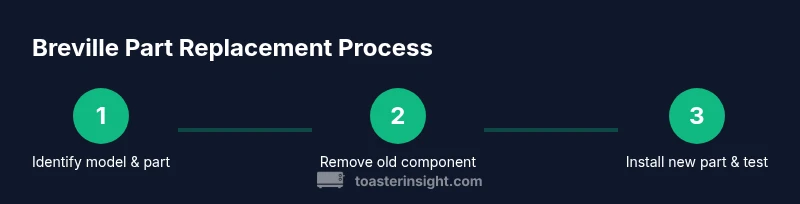
- Locate the model number and confirm part numbers. 2) Gather the required tools and the replacement part. 3) Disconnect power and ensure the oven is cool. 4) Photograph the current setup before disassembly. 5) Remove the old part, install the new one, and reassemble carefully. 6) Plug in, test the unit, and verify proper operation. 7) Clean up and store old parts for warranty support if needed.
Final notes on compatibility and care
Breville toaster oven parts require careful matching to model and features. Use genuine or retailer-verified parts, follow safety steps meticulously, and keep a simple maintenance log. With attention to compatibility and proper installation, your Breville oven can continue to deliver consistent browning and reliable performance.
Tools & Materials
- Breville model number or serial reference(Locate on door frame or back panel)
- Replacement part(s) matching model(Crumb tray, door gasket, bake element, etc.)
- Screwdrivers (Phillips and flat-head)(Precision set for small screws)
- Heat-resistant gloves(Protect hands during removal/installation)
- Non-slip mat or clean towel(Stabilize unit and protect surface)
- Multimeter (optional)(Test heating element continuity if needed)
- Soft cloth and mild cleaner(Clean parts before reassembly)
- Installation guide or manual(From Breville or retailer)
Steps
Estimated time: 30-45 minutes
- 1
Power down and prepare
Unplug the unit and let it cool completely before touching any components. Clear the workspace and lay down a towel to catch small parts. This reduces shock risk and prevents damage to surfaces.
Tip: Take a quick photo of the internal layout before disassembly for reference. - 2
Access the target part
Remove screws or panels as needed to access the replacement item. Keep fasteners organized in a labeled container to avoid misplacing them.
Tip: If screws are tight, apply gentle pressure and use a thread-release spray sparingly. - 3
Disconnect and remove old part
Carefully disconnect any connectors and slide the old part out of its mounting. Inspect neighboring components for wear or damage that may have triggered the failure.
Tip: Note connector orientation to ensure correct reattachment. - 4
Install the new part
Position the new part and secure it with the same screws or fasteners. Reconnect any wires, ensuring solid, color-matched joins where applicable.
Tip: Double-check that wiring insulation is intact and not pinched. - 5
Reassemble the oven
Replace panels and screws in the reverse order of disassembly. Wipe away dust and verify all parts sit flush and aligned.
Tip: Keep a spare screw from the workspace to avoid misplacing parts. - 6
Test safety and function
Plug in the unit, run a brief heating cycle, and observe for smooth operation without unusual noises or smells. If anything seems off, power down and recheck connections.
Tip: If you smell burning or see smoke, discontinue use immediately and consult a professional.
Your Questions Answered
Are Breville replacement parts model-specific?
Yes. Replacement parts are typically specific to the Breville model. Always verify the exact part number against your model before purchasing.
Yes, parts are model-specific. Check the exact part number for your Breville model before buying.
Can I use third-party replacement parts?
Third-party parts may fit some models, but they can affect performance and safety. Prefer genuine Breville parts or retailer-verified compatibles.
Third-party parts might fit, but they can impact performance. Prefer genuine Breville parts or retailer-verified compatibles.
Do I need professional service for heating element replacement?
If you lack electrical repair experience, consider hiring a qualified technician or contacting Breville support. DIY element replacement carries shock and fire risks.
If you’re not comfortable with electrical work, hire a professional.
What safety precautions are essential when replacing parts?
Unplug the unit, let it cool, and wear heat-resistant gloves. Avoid touching exposed circuits and use non-conductive tools where possible.
Always unplug and let it cool before you start, and use gloves.
Where can I source Breville replacement parts?
Check Breville’s official site, authorized retailers, and reputable appliance-part suppliers. Avoid dubious sellers without return policies or model details.
Look at Breville’s site or trusted retailers for parts.
Are damaged seals dangerous?
Worn gaskets can cause heat loss and uneven cooking, and in some cases smoke. Replace seals promptly to maintain performance and safety.
Worn seals can be a safety issue; replace soon.
Watch Video
Key Takeaways
- Identify model number before ordering.
- Prioritize genuine parts for reliability.
- Verify fit and return policies before purchase.
- Follow safety steps to avoid electric shock.
- Test function after installation and inspect for issues.