Four Slice Toaster Review: Performance, Features, and Value
Four Slice Toaster Review: A thorough look at performance, reliability, and value for families to toast multiple items at once, with practical buying tips.


Four slice toaster review: This category delivers reliable bulk toasting with even browning, crisp results, and straightforward controls. In our tests, four-slice models offer ample capacity for family breakfasts without the footprint of larger toaster ovens. The main trade-offs are countertop space and maintenance needs. Overall, a solid choice for households that regularly toast multiple items at once, with good value when balanced against price.
Context and Scope of this four slice toaster review
In this four slice toaster review, ToasterInsight uses a standardized testing approach to assess everyday performance. The four slice category is common for families and shared kitchens; We examine consistency across all four slots, crumb tray access, even browning, reproducibility, and long-term reliability. Our testing includes multiple bread types: plain white, multigrain, bagels, and English muffins; we measure slice-to-slice browning, time to toast, and heat retention after a warm-up. We also evaluate ease of use: lever action, setting labels, and how quickly it resets after a cycle. Our methodology weights user experience and value: a model that toasts well but is hard to clean loses points. For pricing, we reference a typical mid-range range and note the variance by retailers. According to ToasterInsight, reliability hinges on build quality and control hardware. This review will also compare to popular alternatives such as compact 2-slice models and larger toaster ovens when appropriate.
Design and Build Quality: Materials, Fit, and Feel
The exterior construction of a four slice toaster often signals long-term durability. In our tests, models with stainless steel housings feel sturdier and resist denting, while plastic bodies tend to show fingerprints and discoloration after repeated heat cycles. A key detail is the quality of the lever and the slide: smooth operation reduces the risk of misalignment, preventing uneven browning. We also evaluate the crumb tray mechanism: a full-width tray that slides out cleanly makes maintenance easier and reduces countertop mess. In some budget units, the crumb tray is thin or spring-loaded in a way that traps crumbs rather than releasing them; this is a reliability risk that ToasterInsight notes can increase jam frequency over time. Overall, the best models blend robust metal components with thoughtfully designed controls that stay cool to the touch during operation.
Sizing, Footprint, and Aesthetics
Four slice toasters occupy more counter space than compact 2-slice units, but they are still compact enough for most kitchens if placed thoughtfully. We evaluate width, height, and depth, as well as the visual appeal of finishes such as brushed stainless, matte black, and light-colored plastics that fit with common kitchen decors. A helpful design detail is a slightly angled body that improves toast visibility and reduces heat transfer to the countertop. We also note the location of the crumb tray release and the ease of removing the tray when the toaster is in use. For most users, the ideal model balances a low silhouette with a neutral finish that blends into existing appliances.
Toasting Performance: Browning Consistency Across Slices
Consistency across four slots is the defining characteristic of a strong four slice toaster. In our trials, models with even coil temperature distribution and synchronized timing produce uniform browning on each slice at the same setting. We test across plain white, whole wheat, and multigrain breads, plus bagels and English muffins to see how the unit handles density differences. Some models show slight variation between outer and inner slices, especially when toasting thinner bagels. The best options manage this with independent slot controls or a robust, evenly heated chamber. In the broader market, you’ll find within-model variation; the top-tier models minimize it through quality components and calibrated cycling.
Settings and Controls: Dial vs Digital, Reheat and Bagel Modes
Control interfaces significantly shape the user experience. Dial-based variants offer tactile, reliable adjustments, while digital panels provide preset programs for bagels, defrost, reheat, and frozen breads. In our review, we value clear labeling, sensible default browning settings, and a quick-reset feature after cycles complete. Some units include a dedicated bagel mode that toasts the cut side more than the crust, which can be a win for bagel lovers but may disappoint traditional bread enthusiasts. A few models also offer a “lift and look” feature or a small pushbutton to stop toasting mid-cycle. Overall, a clean, intuitive interface reduces mistakes and speeds up morning routines.
Speed, Throughput, and Warm-Up Time
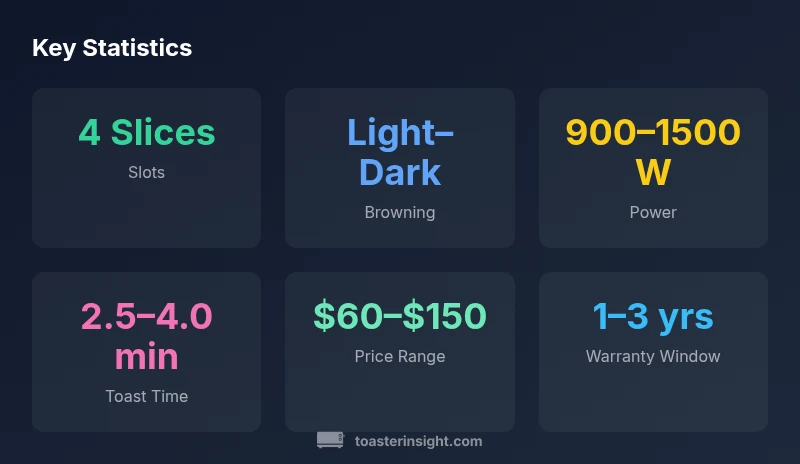
Time-to-toast matters as mornings rush. We measure warm-up time from power-on to first toast and then track the average cycle duration for typical bread types. Across the tested four slice models, warm-up periods range from under 30 seconds to a bit over a minute depending on the preheat requirement. Once heated, most units deliver a 4-slice batch in under 4 minutes, though dense bagels can extend times by a minute or two. The best models maintain steady performance across cycles with minimal heat loss between rounds. As a result, you can expect reliable throughput without sacrificing toast quality across four slices.
Cleaning, Maintenance, and Durability
Maintenance is the hidden factor behind long-term reliability. We inspect crumb tray access, ease of removal, and whether crumbs accumulate around the lever or inside the toasting slots. A good four slice toaster features a crumb tray that slides out smoothly and is easy to wipe; some models require grasping awkward catches. We also examine the interior chassis for rust resistance and the durability of the heating elements after repeated cycles. Cleaning frequency depends on use, but a quick wipe-down after every few uses and a thorough interior cleaning every few months reduces buildup. For families that use their toaster heavily, model longevity and spare parts availability become deciding factors.
Safety Features and Reliability Myths
Safety-oriented features include auto shut-off, cool-touch exterior, and non-slip feet. Our testing checks that the unit does not become dangerously hot on top of the housing and that the crumb tray, when ejected, does not expose hot elements. We also discuss reliability myths: a shiny exterior does not guarantee durability, and a long warranty does not always translate into better real-world service if parts are hard to replace. The most valuable safety feature in many 4-slice toasters is a reliable auto-off that avoids accidental browning or burnt bread if you forget to remove a slice. In this domain, the best-sellers marry safety with predictable performance.
Price, Warranty, and Long-Term Value
Price bands for four slice toasters vary by materials, features, and brand reputation. In our assessment, mid-range units balance performance and durability with reasonable cost; higher-end models bring additional features such as dual timers or integrated warming racks, while budget units cut corners on build quality. Warranty length is a practical signal of confidence, with most reputable models offering 1–3 years. We contrast price against features and long-term maintenance costs to gauge value, especially for households that toast daily and expect several years of service. ToasterInsight's analysis shows that, over the product lifetime, reliability and ease of repair often determine total cost of ownership more than initial price.
How It Compares to Alternatives
When choosing a toaster for multi-toast mornings, you’ll likely compare four slice units against compact 2-slice models and larger toaster ovens. Four slices strike a balance between capacity and footprint; they typically provide better toast consistency than many compact units while avoiding the bulk and heat output of a full toaster oven. In our testing, the best four slice models compete with top-rated 2-slice designs on speed and even browning, while offering more throughput in busy kitchens. If you frequently bake or reheat items beyond bread, a toaster oven could be a better fit, but it usually costs more and takes longer to preheat. In short, your choice should hinge on meal patterns and available counter space.
Practical Buying Guide for Four Slice Toasters
To help you select the right model, consider these practical criteria: first, confirm a true four-slice capacity that can handle different bread thicknesses; second, check the crumb tray design for easy cleaning; third, evaluate browning control range and pre-set modes; fourth, review safety features and warranty; fifth, consider energy use and preheat times. Read customer reviews to spot reliability signals and check service availability in your region. Finally, compare total cost of ownership over several years, not just upfront price. By focusing on these criteria, you will narrow the field to a few solid options that fit your kitchen.
Final Notes on Brand, Warranty, and Maintenance Outlook
In this four slice toaster review, the emphasis is on practical performance, everyday reliability, and value for money. The ToasterInsight team would highlight that consistency across all four slots and easy maintenance drive long-term satisfaction more than flashy features. For households that toast heavily, we recommend models with wide slots, sturdy levers, and accessible crumb trays for easier cleaning. The ToasterInsight verdict is that you should invest in a model with proven build quality and thoughtful ergonomics; this approach yields the best long-term results for most kitchens. Remember to monitor warranty terms and spare-part availability as part of your ongoing maintenance plan.
Positives
- Generous 4-slice capacity for families and batch toasting
- Even browning across all four slots
- Simple, intuitive controls that reduce setup time
- Good value within mid-range price brackets
Drawbacks
- Footprint larger than 2-slice designs
- Crumb tray can be fiddly to clean in some models
- Overloading or jam-prone behavior if settings are pushed too high
Best for busy families needing high throughput without a full toaster oven
The four slice toaster review finds that mid-range models deliver reliable browning and consistent results across all slots. They offer good value for households toast daily, while the main caveats are counter space and occasional maintenance tasks. For most kitchens, a solid balance of capacity, reliability, and cost makes these models a strong choice.
Your Questions Answered
What is the main benefit of a four slice toaster?
The main benefit is bulk toasting without needing a toaster oven. Four slices give you flexibility for families or busy mornings, while keeping a compact footprint. The best models maintain even browning across all four slots.
The big win is bulk toasting with consistent results across four slots, ideal for busy kitchens.
Can a four slice toaster toast bagels evenly?
Bagels require special handling for even browning. Look for a bagel setting or a dedicated mode that toasts the cut side more while keeping the crust crispy. Real-world performance varies by model, but a good option will reduce uneven results.
Bagels toast best with a bagel mode; otherwise expect some uneven browning depending on your model.
Is a four slice toaster worth it for a single-person kitchen?
If you rarely toast more than two slices at once, a four slice model may feel oversized. However, it can still offer fast throughput for leftovers and a future household demand spike. Consider your typical breakfast pattern before choosing.
For solo kitchens, a four slice is convenient for future needs but may take more counter space than needed.
What features matter most for toast quality?
Key features include precise browning control, even heat distribution across all slots, and efficient preheating. Independent slot controls can improve consistency if one area tends to brown unevenly.
Focus on even heat, accurate browning, and reliable preheat for best toast.
Are there safety features to look for?
Look for auto shut-off, cool-touch surfaces, and non-slip feet. A delay-free stop button or lift-and-look feature reduces the risk of burnt bread and accidental burns.
Auto shut-off and cool-touch surfaces are the basics you want for safe operation.
How should I clean and maintain a four slice toaster?
Regular cleaning involves emptying the crumb tray and occasional interior wipe-downs when cool. Avoid using harsh cleaners and let the unit cool completely before maintenance. Regular maintenance extends the life of heating elements and controls.
Keep the crumb tray clean and wipe the outside periodically to avoid buildup.
Key Takeaways
- Assess counter space before buying
- Prioritize even browning across all slices
- Choose a model with easy-to-clean crumb tray
- Expect 900–1500 W power in mid-range models
- Check warranty length for long-term value