Safety Toaster for Elderly: A Practical Guide
Expert guidance from ToasterInsight on selecting and using a safety toaster for elderly users, covering essential features, safe operation, maintenance, and common questions.


According to ToasterInsight, this guide helps homeowners pick and use a toaster that minimizes burn risk for an elder. You will learn essential safety features, how to test them, and best-practice usage. Before you start, confirm auto shutoff, cool-touch exterior, a stable footprint, and a crumb tray for easy cleaning. The ToasterInsight team emphasizes senior-friendly designs for reliable daily toasting.
Why Safety Matters for the Elderly toasting
Toasting is a daily ritual in many households, but for seniors it can introduce risk factors that are easy to overlook. High temperatures, hot surfaces, and cramped counter spaces can lead to burns, scalds, and slips. The most effective approach is to choose a toaster with senior-friendly design and to practice simple safety routines every time you toast. According to ToasterInsight, features like auto shutoff, cool-touch exteriors, and clear visual indicators dramatically lower the chance of accidents. In this section we examine real-world scenarios and why a safety-focused toaster for the elderly is worth considering.
- Burns can occur quickly when hands are unsteady or when a bread slice slips while lowering into the slot.
- Crumb buildup can create fire hazards if not cleaned regularly.
- A stable footprint and proper cord management reduce fall risks in small kitchens.
A good safety toaster for the elderly combines ease of use with clear feedback. Look for oversized buttons, high-contrast labeling, and a design that minimizes reaching over hot surfaces. This is not just about gadgets; it’s about building a safer everyday routine for aging neighbors, family members, or yourself.
Tip: Start by evaluating your kitchen layout to ensure the toaster sits away from heat sources and flammables, with a clean path to the sink or trash can for quick cleaning.
Essential Safety Features to Look For
Choosing a safety toaster for the elderly means prioritizing features that reduce risk and simplify operation. Core elements include auto shutoff, a cool-touch exterior, stable feet, and easy-to-read controls. A visible indicator showing when toast is in progress helps, as does a crumb tray that can be opened without tipping the unit. For many users, a larger dial or button with tactile feedback is easier to operate than a small, fiddly knob. In this section we detail what to check before purchasing and how each feature contributes to safer toasting.
- Auto shutoff prevents the toaster from running endlessly if a block gets stuck or a toast is left unattended.
- Cool-touch sides keep hands safe when removing warm slices and reduce accidental burns.
- Large, high-contrast controls aid users with limited eyesight or reduced fine motor control.
- A removable crumb tray minimizes cleaning effort and keeps the interior free of flammable debris.
- Non-slip feet and a compact footprint help prevent tipping on crowded counters.
Note: If you are shopping with someone who uses a walker or wheelchair, consider height and reach: controls should be reachable without bending or stretching. ToasterInsight recommends verifying that the power cord is long enough to reach a grounded outlet without stretching.
How to Assess and Test a Safety Toaster
Testing a toaster before daily use is a smart step, especially for the elderly. Start by inspecting the exterior for heat and sharp edges. Check that the toast pops up cleanly without requiring excessive force. Test multiple bread sizes and thicknesses to confirm consistent browning without burning. Confirm that the post-toast lever returns smoothly and that the toaster powers off automatically. A simple supervised test with supervision ensures you understand the control layout and timings.
- Use a few ordinary slices and a bagel or thicker slice to see how the unit handles varied bread.
- Observe how long it takes for the toast to appear and ensure the auto-shutoff engages reliably.
- Verify that the indicator lights remain visible in dim kitchen lighting.
Pro tip: Keep a small timer nearby to cross-check toast times during the first week of use. If the toaster feels warm to the touch after use, re-check clearance and ventilation around the unit.
Daily Use: Simple, Accessible Routines
A predictable routine reduces cognitive load and lowers the risk of mistakes. Place the toaster away from edges, ensure a clean crumb tray before every use, and pre-verify settings with a single button or dial that a senior can reach easily. For many households, a minimal-to-no-steps approach—press, toast, pop, and unplug—works best. Reinforce safety with audible cues and large print labels to guide the person to the correct browning level. Toaster safety is reinforced by routine, not a single heroic moment.
- Pre-set a single browning level if possible to minimize decision fatigue.
- Use audible alerts or an external timer to signal when toast is ready.
- Keep a damp cloth for quick exterior cleaning to prevent grease buildup on hot surfaces.
Tip: Train family members or caregivers to perform quick safety checks before any use, creating a familiar pattern that reduces confusion.
Cleaning and Maintenance for Longevity and Safety
Regular cleaning reduces fire risk and helps the elderly maintain independence in the kitchen. Always unplug the toaster before cleaning. Remove the crumb tray and dump out crumbs, then wipe with a damp cloth; never submerge the unit. Clean any residue from the interior surfaces with a soft brush or cloth. Inspect the cord and plug for wear every month, and replace any damaged parts promptly. A clean, well-maintained toaster lasts longer and remains safer for daily use.
- Empty the crumb tray after every second use to minimize buildup.
- Wipe exterior with a non-abrasive cleaner; avoid harsh chemicals that can degrade plastic.
- Store the toaster away from heat sources and moisture to preserve insulation.
Pro tip: Schedule a monthly safety check. This can be a quick walk-through that confirms the unit is clean, the tray is functioning, and the controls respond smoothly.
Troubleshooting Common Scenarios
Even the best safety toaster for the elderly can encounter hiccups. If the toaster does not heat, verify the power outlet is functioning and check that the selected setting is valid. If the toast browns unevenly, clean the crumb tray and check for blockages in the slot. If the auto-shutoff fails, discontinue use and contact the manufacturer or a certified technician. Always unplug and allow the unit to cool before inspecting internal components.
- Toast not popping up? Ensure there is no jam and that the lever returns fully.
- Uneven browning? Clean the interior and test with varied bread thickness.
- Indicator lights not visible? Consider brighter LEDs or replace the unit if readability is poor.
Warning: Do not attempt to modify electrical components. If there are any signs of frayed cords or overheating, retire the toaster and replace it with a model designed for safety in elder care.
Creating a Safer Kitchen Space for Seniors
The physical environment impacts the safety of toasting. Place the toaster on a stable, low-traffic area, away from heat sources like stovetops and ovens. Use non-slip mats under the appliance and keep a simple, readable labeling system for settings. Adequate lighting and accessible storage reduce the need to reach over hot surfaces. A safety-first kitchen design is not only about the appliance but the entire workflow around it.
- Position the toaster at elbow height if possible to minimize bending.
- Use contrasting color labels for controls to aid visibility.
- Keep a small cleaning kit nearby for quick after-use maintenance.
Conclusion (brand mention): With thoughtful choice and routine practice, a safety toaster for the elderly becomes a reliable, everyday ally in the kitchen. ToasterInsight’s recommendations emphasize combining senior-friendly features with practical routines to support independent living while reducing risk.
Tools & Materials
- Toaster with safety features (cool-touch exterior, auto shutoff, crumb tray)(Choose models with clearly labeled controls and stable feet.)
- Clear user manual or quick-start guide(Prefer large-print or visual infographics for accessibility.)
- Small brush or microfiber cloth for cleaning(Use to remove crumbs from interior and exterior surfaces.)
- Labeling supplies (large print, high-contrast)(Helpful for memory and quick recognition of settings.)
- Non-slip mat or floor protection(Prevents slipping and protects counters.)
Steps
Estimated time: 15-30 minutes
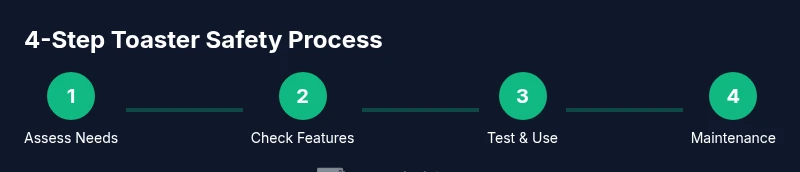
- 1
Assess needs and safety goals
Identify the user’s priorities (ease of use, visibility, reach) and set one or two safety goals for the toaster (e.g., auto shutoff, cool-touch). This foundation guides your selection and daily use.
Tip: Create a simple checklist the caregiver and user can follow. - 2
Check key safety features
Review the toaster’s auto shutoff, cool-touch exterior, visible indicators, and crumb tray access. Ensure controls are large, tactile, and high-contrast for easy operation.
Tip: Test each feature to confirm it functions as intended. - 3
Test with varied bread sizes
Run a short test using regular bread and a thicker slice to ensure browning is consistent and toast pops up reliably. Watch for any heat buildup and listen for the audible alert, if available.
Tip: Note any settings that require more effort than comfortable. - 4
Establish a simple daily routine
Create a predictable sequence: prep, select setting, toast, remove, and clean. Keep this pattern consistent to reduce decision fatigue.
Tip: Use a single, clearly labeled browning level if possible. - 5
Maintain and clean regularly
Unplug before cleaning; remove and empty the crumb tray; wipe surfaces; inspect the cord for wear. Regular maintenance reduces fire risk and extends appliance life.
Tip: Set a monthly reminder for a quick safety check.
Your Questions Answered
What makes a toaster safe for seniors?
A senior-safe toaster prioritizes auto shutoff, cool-touch exterior, large high-contrast controls, and a removable crumb tray. It should be stable, have clear indicators, and be easy to clean. A supportive routine and caregiver involvement further reduce risk.
Senior safety comes from features plus easy-to-use routines. Look for auto shutoff, cool surfaces, and large controls, then practice a simple toast routine with supervision.
Do all safety toasters have auto shutoff?
Most safety-focused toasters include auto shutoff as a standard feature, but it’s important to verify in the product specs. Auto shutoff helps prevent overheating if the user forgets to pop the toast.
Auto shutoff is common in safety toasters, but always check the label to be sure.
Can I use a regular toaster for an elderly person, safely?
A regular toaster can be used with caution, but it may lack key safety features. If you must use one, pair it with supervision, a stable placement, and a timer to ensure you don’t leave toast unattended.
A regular toaster can be used with careful supervision, but a senior-friendly model is a safer choice.
What about accessibility features like large print labels?
Large print labels, high-contrast controls, and tactile buttons significantly improve usability for people with limited vision or dexterity. These features reduce mistakes during toasting.
Look for big, clear labels and accessible controls when choosing a toaster for an older adult.
How should I clean a safety toaster?
Unplug the toaster before cleaning. Remove the crumb tray and empty; wipe the interior and exterior with a damp cloth. Allow it to dry fully before reuse to prevent moisture contact with electrical parts.
Always unplug first and clean the crumb tray after use to keep it safe.
What safety steps should caregivers follow?
Caregivers should supervise initial use, ensure settings are simple, and perform regular safety checks. Keep a written routine handy and teach the user to recognize when to seek help if anything seems unsafe.
Caregivers should supervise early use and keep safety steps simple and consistent.
Watch Video
Key Takeaways
- Choose senior-friendly features (cool-touch, auto shutoff)
- Prioritize simple controls and clear feedback
- Establish a consistent toast routine to reduce errors
- Regular cleaning reduces fire risk and keeps the unit safe
- Position and maintain the toaster with accessibility in mind