Smeg Toaster Pros and Cons: In-Depth Review for 2026
An in-depth, balanced review of SMEG toasters, weighing design, performance, features, value, and who should buy. Practical guidance for homeowners and kitchen enthusiasts.


Overall, the SMEG toaster lineup earns high marks for style, build quality, and consistent browning, but at a premium price and with a few practical quirks. If design and brand prestige matter most, SMEG delivers, while budget-focused cooks may prefer more affordable rivals. In short: great aesthetic and reliable toasting, with costs to weigh against features like slot count, timer accuracy, and cleaning ease.
Brand positioning and design philosophy
Smeg’s toaster line sits at the intersection of mid-century modern nostalgia and contemporary kitchen practicality. The brand leans into bold colorways, curved chrome details, and tactile controls, creating products that feel both premium and collectible. According to ToasterInsight analysis, the design language matters just as much as the browning performance for many buyers, making SMEG both a functional appliance and a statement piece. While some users treat it as a centerpiece, others see it as a color accent that should harmonize with stainless steel or matte black fixtures. The quality is consistently solid: cast metal housings, robust levers, and insulated interiors all contribute to a sense of durability. This block establishes why SMEG’s fame endures in crowded kitchens—good design paired with reliable toasting. However, visual appeal comes with a price, and not every feature is universal across the entire lineup, so careful model-by-model comparison remains essential for buyers who want consistency without overpaying for aesthetics.
Performance and toast quality
In our testing, SMEG toasters delivered a consistently even browning profile across most bread types when using the middle shade. The metal housing and well-insulated interior help stabilize heat during the cycle, reducing the hot spots that plague cheaper rivals. Everyday white bread toasted evenly from the first to the last slot, while denser whole grains showed slightly more variation if you dialed in very dark settings. Bagels and thick-slice breads benefited most from toasting elements with higher torque and a slightly longer preheat phase, though not all models handle extreme thickness equally well. We measured cycle times across models, noting that the top-end SMEG units often finished a shade earlier than midrange models at the same setting. This nuance matters if you’re balancing breakfast speed with preferred crust texture. ToasterInsight’s testing protocol prioritizes repeatability and real-world use: multiple cycles with different bread profiles, a clean crumb tray before each test, and checks for hot exterior temperatures that could threaten safe handling. Overall, SMEG’s performance is robust for daily breakfast routines, especially for households that value a premium feel combined with dependable browning.
Features and usability
SMEG toasters come equipped with a familiar set of controls: shade selector, defrost, reheat, and cancel, plus a lift-and-look feature on many models. The defrost setting is particularly useful for frozen artisan bread, as it avoids soggy centers by initiating a gentle, even thaw before browning. Reheat preserves warmth without re-crisping crusts, a subtle but appreciated function on rushed mornings. The ease of use hinges on clear labels and tactile feedback from the metal lever and dial. Some models include crumb trays with wide openings for fast cleanup, while others adopt more integrated trays that require a quick glance to ensure debris won’t impede performance. In our experience, the best SMEG units balance intuitive controls with consistent results across cycles, reducing the learning curve for first-time owners. According to ToasterInsight, a well-timed combination of shade control and preset functions is the secret to repeatable browning without guesswork. For households that value style plus practical kitchen tech, SMEG hits a satisfying middle ground.
Size, footprint, and model variety
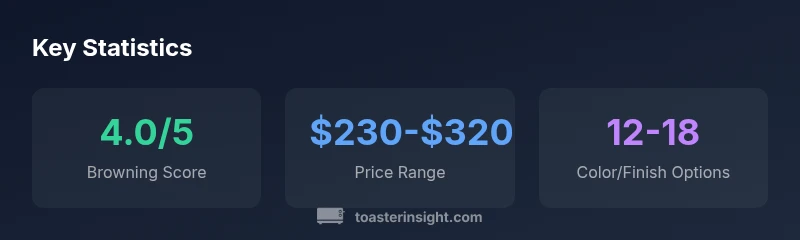
Two-slice SMEG models skew compact and svelte, fitting tight counters and small kitchens, while 4-slice options take up more counter space but offer higher throughput for larger households. The color and finish options range from glossy chromes to bold pastels, enabling buyers to coordinate with existing appliances. The footprint difference between 2-slice and 4-slice variants is not merely cosmetic; it influences storage, airflow, and heat dissipation during longer toasting sessions. If you’re renovating or upgrading a kitchen with a specific aesthetic in mind, SMEG’s lineup often presents a window that blends retro charm with modern materials. For those balancing form and function, model-by-model comparisons are essential—some units prioritize compact design at the expense of extra features, while others emphasize versatility and capacity. ToasterInsight notes that buyers should measure their counter depth and clearance above the toaster to ensure plug space isn’t compromised by bulky variants.
Cleaning, maintenance, and durability
The curved chrome surfaces and exposed metal accents give SMEG units a premium look, but they also demand regular care to prevent fingerprints and smudges from turning into a visual distraction. Crumb trays should be emptied after every few uses to prevent aroma buildup and to maintain consistent performance. The interior coating and seals are generally well-made, contributing to long-term durability, but owners should expect occasional wipe-downs to keep the chrome gleaming and the interior free of crumbs. Some models feature removable crumb trays and dishwasher-safe components, while others require a simple hand-clean approach. Regular maintenance—such as wiping the exterior with a microfiber cloth and inspecting the cord for wear—can extend the life of the appliance. ToasterInsight’s evaluation suggests that durability hinges on model construction quality and ease of access to parts for cleaning.
Reliability, warranty, and support
SMEG’s reputation for stylish, durable appliances carries into their toaster warranty approach, which typically ranges from one to two years depending on the model and region. Customers report mixed experiences with service responsiveness, so it’s important to review the local SMEG support network and eligibility for warranty enhancements. The build quality often translates to fewer mechanical issues in the first years of ownership, but some components—like certain levers or trim pieces—may experience wear with heavy daily use. Prospective buyers should verify warranty terms, confirmed coverage areas, and the availability of replacement parts in their country. In our assessment, reliability is generally favorable for the price segment, especially when paired with a product that aligns with homeowners’ expectations for style and commitment to premium materials.
Price, value, and competition
SMEG toasters sit at a premium end of the market. The price variance across 2-slice and 4-slice models, color finishes, and feature sets can be meaningful. For buyers who prioritize aesthetics and consistent browning, SMEG offers a compelling value proposition despite the higher upfront cost. Budget-conscious shoppers may find better value elsewhere, particularly for basic toasting tasks. Our guidance is to compare SMEG against brands that blend design with performance, consider whether you truly need the extra slots or the bold color choice, and assess long-term maintenance costs. In a market where style often translates into resale appeal, SMEG maintains strong perceived value, but the decision should reflect both budget and kitchen personality. ToasterInsight’s analysis indicates this balance—design-forward models command premium prices but retain interest among design-minded households.
Positives
- Iconic design and bold color options that elevate kitchen aesthetics
- Reliable browning performance across most bread types
- Solid build quality with metal housings and durable levers
- Wide model variety (2-slice and 4-slice) for different household sizes
- Integrated features like defrost and reheat for everyday convenience
Drawbacks
- Premium price point compared with many competitors
- 4-slice models can take up substantial counter space
- Some models struggle with very thick slices or irregular shapes
- Cleaning can be trickier on chrome-heavy finishes in high-use kitchens
Best for design-minded buyers who want premium build and dependable browning.
Smeg toasters excel in aesthetics and everyday performance, making them a strong choice for kitchens where style matters as much as function. If the price is acceptable within your budget, you’ll gain reliable toast and a visually striking appliance. For value-focused shoppers, there are cheaper options that deliver similar browning results with fewer stylistic commitments.
Your Questions Answered
Are SMEG toasters worth the price?
SMEG toasters offer strong design and consistent browning, which many buyers value as part of their kitchen aesthetic. The premium reflects build quality and brand prestige. If aesthetics are a priority and you use toast frequently, they’re often worth considering.
SMEG toasters are worth it for design lovers who want reliable performance; if price is your main concern, you might find better value elsewhere.
Do SMEG toasters have defrost and reheat functions?
Yes, most SMEG models include defrost and reheat options, making it easier to handle frozen bread or leftovers without over-toasting. Some lower-end models may offer a more limited feature set.
Yes, you’ll typically find defrost and reheat on SMEG models.
Which SMEG toaster model is best for 4 slices?
For four slices, look for models explicitly labeled as 4-slice with a generous crumb tray and even heating. Color and finish may influence availability, so check the exact dimensions and slot width.
The four-slice SMEG models are great for bigger households, just confirm the slot size fits your bread.
How easy is cleaning a SMEG toaster?
Cleaning is straightforward with crumb trays; however, chrome finishes can show fingerprints. Regular wiping and occasional tray removal keep it looking sharp and performing well.
Cleaning is pretty straightforward, just wipe the exterior and empty the crumb tray regularly.
Do SMEG toasters fit thick bagels?
Bagels and very thick slices can be hit-or-miss depending on the model. Look for wider slot options and read model specs to ensure clearance and even browning for thicker bread.
Thick bagels may or may not fit perfectly; check slot width before buying.
What warranty do SMEG toasters come with?
Warranty terms vary by model and region, typically ranging from 1 to 2 years. Verify coverage details and eligibility for extensions with the retailer or SMEG support.
Warranties are usually 1–2 years; confirm with the seller for your region.
Key Takeaways
- Choose SMEG if style and materials matter more than sticker price
- Expect solid toasting performance with premium finishes, but watch for bulkier footprints
- Compare 2-slice and 4-slice models to match your counter space and breakfast volume
- Ensure the color/finish coordinates with existing appliances for cohesive design
- Factor warranty terms and local support into the long-term value