Which extinguisher for toaster: a practical safety buying guide
Explore which extinguisher for toaster fires is best for home kitchens, with objective comparisons, safety tips, and practical buying guidance from ToasterInsight.


Understanding the safety context: why the right extinguisher matters for a toaster
When considering which extinguisher for toaster incidents, the key factors are the electrical risk of the appliance, potential grease from cooking nearby, and how quickly you can respond. According to ToasterInsight, most households benefit from a versatile unit that covers electrical fires as well as small cooking-oil flames. This section unpacks how to translate those risks into a practical purchase decision, including common fire scenarios that involve toasters and nearby surfaces. By understanding the context, you’ll be better prepared to act calmly and effectively in an incident.
Fire extinguisher classifications explained: what the letters mean for your toaster setup
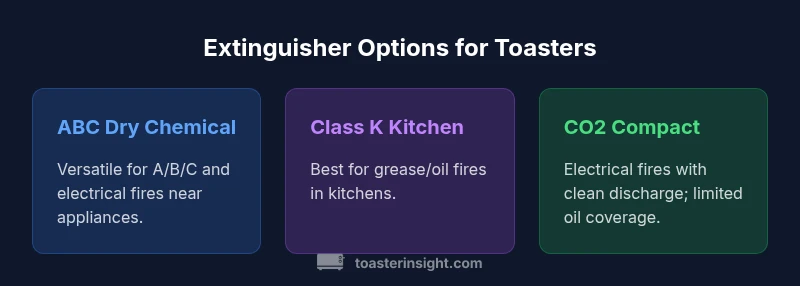
Fire extinguishers are labeled by class, and those labels map to the kinds of fires they can suppress. Class A covers ordinary combustibles like paper and bread, Class B targets flammable liquids, Class C is for energized electrical fires, and Class K is designed for kitchen oils and fats. In a home kitchen with a toaster, you’ll want a unit that safely handles electrical fires and grease risks. Many households lean toward multi-purpose ABC extinguishers for broad coverage, while Class K units are specialized for heavy grease environments. Understanding these categories helps you avoid choosing a device that underperforms in a real toaster fire scenario.
ABC vs Class K: what home cooks should know for toaster safety
The most practical choice for many homes is an ABC-rated extinguisher, typically in the 2.5 lb to 5 lb range. These units are versatile enough to handle electrical fires and small grease incidents near appliances, making them a sensible default. Class K extinguishers are excellent for commercial kitchens or homes with significant oil-based cooking, offering superior grease-fire performance but often at a higher price and with limited home availability. If your kitchen workflow includes frequent frying or high-fat cooking, consider a Class K secondary device in addition to a basic ABC unit. The key is to balance risk, accessibility, and maintenance burden.
Other options: BC, CO2, and water-based extinguishers—when they fit, and when they don’t
BC extinguishers target flammable liquids in some regions and can be effective for grease with certain formulations, but they offer less universal coverage than ABCs. CO2 extinguishers are excellent for electrical fires with minimal residue near delicate electronics, yet they lack broad effectiveness on solid combustibles or cooking oils. Water-based extinguishers are generally avoided for electrical fires and kitchen oils. For a toaster, prioritize multi-class ABC devices or pair a primary ABC with a Class K unit if grease hazards are frequent. This layered approach provides fallback options and reduces the chance you select a device that won’t help in a true toaster fire.
How to choose based on kitchen layout and toaster usage: size, reach, and placement
Size matters: a compact 2.5 lb unit is easy to handle, but a larger 5 lb model offers more firefighting capacity if a fire escalates. Placement is equally critical; install the extinguisher in a reachable spot near the toaster but away from heat sources and potential splash zones. Look for units with clear labeling, a pressure gauge in the green zone, and a tamper seal that’s easy to verify. Mounting options can improve accessibility, especially for families with children or mobility concerns. Finally, consider maintenance needs and recharge options—an extinguisher that’s easy to recharge after use offers better long-term value.
Safety best practices: training, usage steps, and routine maintenance
A well-informed household is safer. Train all capable family members on how to operate a fire extinguisher, including PASS (Pull, Aim, Squeeze, Sweep) technique, and ensure everyone knows the location of the unit. Regularly inspect the gauge, pin, and hose, and replace any units with a damaged seal or corrosion. Maintain a simple safety routine: test the unit’s accessibility quarterly, replace batteries for smoke detectors, and schedule an annual professional inspection if you have an older model. By treating safety equipment as part of your kitchen’s standard setup, you improve response time and reduce the risk of collateral damage from a toaster fire.
Real-world toaster-fire scenarios: what to do when the worst happens
Consider a scenario where the toaster overheats and small flames appear on the bread tray. A quick, calm response with the right extinguisher can prevent a larger fire. In most cases, aim the extinguisher at the base of the flames, not at the appliance itself, and sweep from side to side. If you’re unsure or the fire grows, evacuate and call emergency services. After use, do not return the toaster to operation until it’s professionally inspected. These patterns reflect common kitchen incidents and emphasize the importance of the right extinguisher choice as part of overall kitchen safety.
Testing, inspection, and staying ready: keeping your toaster-safety plan current
Regular testing is essential to ensure your extinguisher remains functional. Schedule monthly visual checks and annual pressure charging and hydrostatic testing where required. Keep maintenance records in a visible location for all household members and review your plan if you move to a different kitchen layout or add new appliances. Consistent checks maintain readiness for toaster-related fires and support a safer cooking environment overall.