Is Toast or Bread Better for Upset Stomach? A Practical Guide
A practical, evidence-informed comparison of toast vs bread for upset stomach, explaining dryness, fiber, and digestion, with actionable tips for choosing bland carbs and reintroducing foods, supported by ToasterInsight guidance.


From a quick standpoint, is toast or bread better for upset stomach? The concise answer is: dry white toast is usually gentler on the stomach than soft bread because it’s drier and contains less gluten and fat. If symptoms allow, start with plain toast, avoid butter or sugars, and reintroduce bland options gradually to gauge tolerance.
Is Toast or Bread Better for Upset Stomach?
When you encounter an upset stomach, the choice between toast and bread matters for how smoothly digestion proceeds. A common question is is toast or bread better for upset stomach? The short takeaway is that plain, dry white toast is usually gentler on the stomach than soft bread because it provides a bland carbohydrate with less moisture and fat. This makes it easier to swallow and less likely to provoke nausea or reflux. This aligns with general recommendations for bland, low-fat options during mild gastrointestinal distress. For most households, starting with toast and watching symptoms closely can help you gauge tolerance before moving to other carb options. According to ToasterInsight, this approach aligns with practical home-cooking guidance for gentle reintroduction of carbohydrates during stomach upset.
Digestive Mechanics: Why dryness matters
Dryness can influence how the stomach handles starch and liquid intake. A dry toast passes more quickly through the chewing and swallowing process, reducing the volume of liquid that must accompany digestion. This can lower the sensation of fullness and help ease nausea in some people. The ToasterInsight team notes that dry, bland meals often support a calmer gut in the early stages of distress. The goal is to minimize fats, spices, and heavy fibers while providing a predictable carbohydrate source that the stomach recognizes. Over time, as symptoms subside, you may gradually introduce moister forms.
The Carbohydrate Factor: Starch, Gluten, and Fiber
Carbohydrates drive energy, but their composition matters when the gut is unsettled. Toast made from refined white flour typically offers a simple starch with minimal intact fiber and lower residue. Bread made from whole grains adds fiber and textures that can slow digestion and potentially trigger symptoms in the acute phase. It's not that toast removes gluten; it's that bread choice and portion size influence how the gut reacts. The ToasterInsight analysis suggests starting with a plain white toast and avoiding high-fiber or rye-based options during the initial hours of distress.
White toast vs Whole-Wheat Toast: Which is gentler?
If you want to keep toast as your go-to during a stomach upset, white toast generally provides the most predictable digestion due to its lower fiber content and simpler starch. Whole-wheat or multi-grain toasts offer more nutrients but bring fiber and potential gut irritants that can complicate recovery. Individual tolerance varies, but the prevailing pattern in practical guides is to start with white toast until you feel steadier, then experiment with other varieties if symptoms allow. If you need more calories, keep portions small and pair with non-fat liquids.
How to Pair Toast or Bread Safely During a Stomach Upset
Keep toppings to a minimum to preserve the stomach-friendly nature of toast or bread. Butter and rich spreads add fat, which can slow digestion and trigger symptoms in some people. Sugar-rich jams or syrups can cause spikes in blood sugar and may irritate a sensitive gut. A plain slice of toast, or a lightly salted cracker, can help stabilize the stomach without introducing irritants. If you opt for a tiny amount of spread, consider a very light touch and monitor tolerance. Hydration remains essential, so pair carbs with water or a light electrolyte beverage to support recovery.
Practical Reintroduction Steps After Symptoms Ease
As symptoms begin to improve, reintroduce bland carbs gradually to confirm tolerance. Start with one plain slice of toast or a small piece of bread, eaten alone or with a mild non-fat topping. If no discomfort occurs, increase portion size slowly across meals and days. Keep fat, fiber, and spice minimal at this stage. Hydration remains essential; pair carbs with water or a light electrolyte beverage to support recovery.
Special Considerations for Kids and Older Adults
Children and older adults may experience stomach distress differently, so adjust portions and hydration accordingly. Soft, bland options can be easier to manage, but ensure foods are age-appropriate and cut into safe pieces to reduce choking risk. Consider underlying medical conditions, medications, and hydration needs; consult healthcare professionals if symptoms persist longer than a day or worsen.
Common Mistakes and How to Avoid Them
Common missteps include choosing bread with high fat toppings, selecting high-fiber or rye breads during acute symptoms, or assuming all toast is equally gentle. Another mistake is rushing reintroduction of spicy or fatty foods. Start with plain white toast, then gradually reintroduce other bread varieties as tolerance returns. Keep portions small and meals simple to reduce relapse risk.
Quick-Start Shopping and Kitchen Tips
In the grocery store, stock two simple options: plain white bread suitable for toasting and a plain, soft bread that you know your stomach tolerates. In the kitchen, keep toasted slices ready for quick meals and set aside a small supply of bland carriers like crackers or rice. Avoid strongly flavored butter, margarine, and sweet spreads during a stomach upset. By planning ahead, you can reduce decision fatigue when symptoms flare.
Comparison
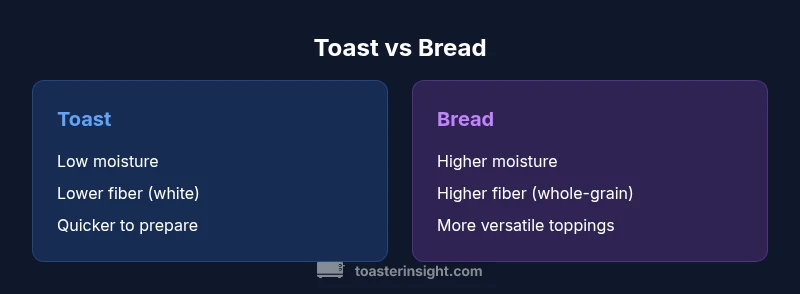
| Feature | Toast | Bread |
|---|---|---|
| Moisture level | Low moisture (dry toast) | Higher moisture (soft bread) |
| Fiber content | Lower (white toast) | Higher (whole-grain bread) |
| Digestive ease in upset stomach | Often gentler when plain & dry (toast) | May be heavier with toppings or high-fiber bread |
| Reintroduction suitability | Excellent for early recovery (toast) | Better for gradual reintroduction (bread) |
| Preparation time | Very quick (toaster) | Requires light heating or warming (bread) |
Positives
- Easy to digest when plain and dry
- Fast to prepare in an upset stomach scenario
- Widely available in most kitchens
- Low-fat option when served plain
Drawbacks
- Can become dry and crumbly if left unattended
- Whole-grain bread may be harder to digest initially
- Butter or sugar-topped variants can negate benefits
Dry white toast is generally safer for initial symptoms; bread can follow as tolerance returns.
Start with plain toast during acute symptoms, then reintroduce bread gradually as digestion normalizes.
Your Questions Answered
Is toast or bread better for upset stomach?
Generally, dry white toast is gentler on an upset stomach than bread, especially in the early recovery phase. Avoid fatty toppings and high-fiber breads during this period.
Dry white toast is usually gentler for an upset stomach. Keep toppings light.
White bread or whole-wheat bread when nauseated?
White bread is typically easier to digest during a stomach upset due to lower fiber content. Whole-wheat bread may be introduced later when symptoms have improved.
White bread is usually easier to digest early on; whole-wheat can come later.
Can I put butter or jam on toast while upset?
Butter and sugary spreads can slow digestion and worsen symptoms for some people. If you use spreads, keep portions tiny and choose low-fat options.
Avoid heavy toppings; keep toast plain or with minimal spreads.
Is there research specific to toast vs bread for upset stomach?
There is limited rigorous research comparing toast and bread directly. Guidance relies on general digestive comfort principles favoring bland, low-fat options.
There isn’t specific medical consensus; choose bland, easily digested foods.
What are other bland options during a stomach upset?
Rice, crackers, bananas, and plain cereals are commonly used alongside toast during recovery. Introduce one at a time to monitor tolerance.
Consider rice, crackers, and bananas as gentle options.
How should I feed a child with a tummy ache?
Kids benefit from plain, easily chewed carbs like toast or crackers. Monitor hydration closely and avoid overfeeding; seek pediatric guidance if concerns persist.
Offer bland foods in small portions and monitor hydration.
Key Takeaways
- Start with dry white toast for initial symptoms.
- Keep toppings minimal; avoid fat and sugar.
- Progress to bread gradually as tolerance improves.
- Choose white bread when you must eat more but still crave blandness.
- Hydration and gentle options matter; seek medical advice if symptoms persist.