Is Toaster Strudel Vegan? A Practical Guide for Home Cooks
Explore whether toaster strudel is vegan, what ingredients to watch, and practical tips to find or make vegan-friendly toaster pastries. Learn to read labels, recognize vegan certifications, and consider homemade options for reliable plant-based enjoyment.


The short answer to is toaster strudel vegan is: most traditional toaster strudel varieties are not vegan due to dairy, eggs, and milk-based frosting. Some brands offer vegan-certified pastries or dairy-free frostings, but ingredient lists can vary widely. Always check labels for whey, casein, or gelatin-based additives. If vegan is essential, seek explicit vegan labeling or bake your own.
Why the vegan question matters for toaster pastries
For many shoppers, the question is: is toaster strudel vegan? The answer affects meal planning, dietary restrictions, and grocery budgeting. According to ToasterInsight, the vegan status of toaster strudel depends on ingredient choices and manufacturing practices. Understanding the label language helps you separate dairy-heavy pastries from dairy-free, plant-based options. In this analysis, we explore why this topic matters for home cooks and how to read labels with confidence.
In practice, most frozen pastries rely on dairy ingredients to achieve texture and flavor; eggs are also common in pastry dough. The frosting often contains milk or cream, making some varieties non-vegan by default. However, the market is evolving. Vegan-certified pastries, plant-based frosting, and dairy-free fillings are increasingly available in mainstream grocery chains and online retailers. This variability is exactly why a careful reading of ingredients and a check for explicit vegan labeling matters. The goal is not to punish brands but to empower you with a clear framework to determine vegan status quickly during a busy shopping trip.
Brand diversity means some products marketed as vegan may differ by region or retailer, so your judgment should be based on the ingredient list and any vegan certification logos rather than brand reputation alone. The ToasterInsight team emphasizes that vegan status is a product attribute that can change over time as formulations shift or suppliers change.
What is typically inside toaster strudel
To understand vegan status, it helps to know what goes into a typical toaster strudel. The crust commonly relies on flour, water, sugar, and a fat source such as palm oil or vegetable shortening. The fruit filling usually contains fruit puree and sugar, while the top frosting often includes dairy-derived components like milk, butter, or whey. Some brands experiment with plant-based fats, dairy-free milks, or alternative flavorings, but dairy and egg derivatives remain common culprits.
From the perspective of ingredients, the line between “vegan-friendly” and “not vegan” is drawn first by whether dairy or eggs are present and second by whether any animal-derived processing aids are used (for example, certain emulsifiers or flavor enhancers). Because formulations vary widely by brand and even by batch, you cannot assume vegan status without checking the label. If you are strictly vegan, seek products with explicit vegan logos or those that clearly separate dairy and non-dairy production streams to avoid cross-contact.
Reading ingredient lists and hidden dairy
Reading ingredient lists carefully is the most reliable way to determine vegan status. Start by scanning for obvious dairy ingredients: milk, lactose, whey, casein, butter, milk fat, and ghee. Also watch for less obvious dairy derivatives like caseinates, whey protein concentrate, and rennet. For eggs, look for whole eggs, egg yolk, egg lecithin, or albumin. Even if a product lists “dairy-free,” it may still contain eggs or animal-derived flavors. Look for vegan-certified claims and check the ingredient panel on each package, as formulations can change without notice.
Other flags to consider include gelatin, isinglass, and certain colorings derived from animal sources. If a label says “may contain traces of dairy,” treat it as non-vegan for strict vegan diets. When possible, consult manufacturer websites or contact customer service for confirmation and up-to-date ingredient information before purchasing.
Vegan certifications and what they mean
Vegan certifications provide a quick signal but are not universal. A product bearing a true vegan logo has been evaluated to ensure it contains no animal-derived ingredients and that the manufacturing process avoids cross-contact with dairy, eggs, or other animal products. Some brands use dairy-free or plant-based labels that are not the same as vegan certification, so read the fine print. A dairy-free claim does not guarantee vegan status if eggs or animal-derived enzymes are used somewhere in the supply chain. In all cases, search for independent logos and verify the scope of the certification (ingredients, facility practices, and cross-contact controls).
Keep in mind that “plant-based” is often a marketing term used to appeal to a broader audience and may not carry the same strict exclusion of animal products as a vegan certification. When in doubt, opt for products with explicit vegan certification that includes both ingredients and facility practices.
How to find vegan options on store shelves
The best strategy is to search the frozen pastry section for explicit vegan labeling, then cross-check the ingredients list. If no vegan option is labeled, check the ingredient panel for dairy-free claims and absence of animal-derived ingredients. Some retailers group vegan products under “dairy-free” or “plant-based” sections, while others place them in the general frozen foods area. When shopping, bring a quick reference list of common non-vegan ingredients (milk, eggs, whey, casein, gelatin) to speed up decisions.
If you’re shopping with others, consider using a printout or notes on your phone that summarize what to look for on packaging. In regions with limited vegan options, you may need to rely on baked goods from the bakery counter or look for brands that explicitly advertise vegan pastry lines.
Finally, keep in mind regional variations. Availability and labeling conventions can differ by country, state, or retailer, so consider a mix of in-store checks and online product research to build a reliable vegan shopping routine.
Homemade vegan toaster strudel: a practical guide
If you want guaranteed vegan status, making toaster strudel at home is a practical alternative. Start with a vegan-ready pastry or puff pastry sheet. Prepare a simple filling (apple or berry) with apples, sugar, cinnamon, and a slurry of cornstarch for thickening. Use a dairy-free butter substitute or coconut oil in the dough and for the interior. Bake until golden, then whisk a dairy-free frosting using powdered sugar and a plant-based milk of your choice to drizzle on top. Rolling and sealing the pastry like a traditional strudel ensures a flaky texture, while using vegan frosting guarantees no animal-derived ingredients. This approach gives you full control over sweetness, fat content, and flavor balance, and it’s a reliable way to enjoy a vegan version without surprises at the store.
For speed, you can also buy pre-rolled vegan pastry sheets, assemble with your fruit filling, bake, and finish with the dairy-free frosting. The result looks and tastes like a classic treat while aligning with vegan dietary goals. If you experiment, document ratios and bake times so you can recreate your preferred balance consistently.
Common mistakes to avoid when shopping vegan toaster pastries
A frequent mistake is assuming a dairy-free claim equals vegan status. Dairy-free can mean eggs or other animal products are present, so verify every ingredient. Another pitfall is relying solely on marketing terms like “plant-based” without certification—these products may still not meet vegan standards. Also beware of cross-contact warnings on packaging; even if a pastry contains no dairy or eggs, shared production lines can introduce trace amounts of animal products. Finally, don’t overlook regional product changes; a vegan option in one month might be reformulated the next, so re-check labels periodically.
The future of vegan toaster pastries: trends to watch
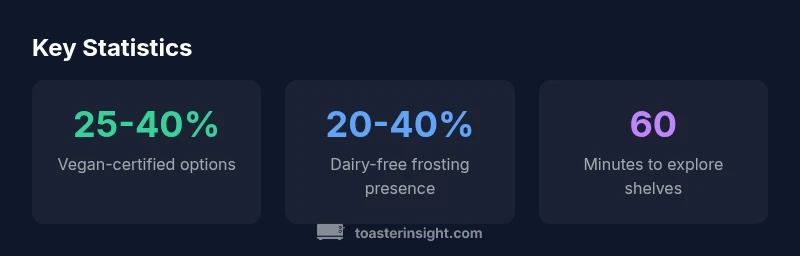
Consumer demand for vegan options continues to grow, pushing brands to reformulate existing products and to introduce dedicated vegan lines. The ToasterInsight team observes a rising number of vegan-certified pastries and increased availability of dairy-free frostings and fillings across major retailers. Expect more visible vegan labeling, clearer allergen information, and stronger supply-chain controls to minimize cross-contact. As recipes evolve, we anticipate better mimicry of traditional textures and flavors using plant-based fats and non-dairy milks. The long-term trend points toward a broader, more dependable vegan toaster pastry market that keeps pace with other dairy-free and plant-based snacks.
Comparison of vegan status across common toaster pastry options
| Variant | Vegan Status | Notes |
|---|---|---|
| Original Frozen Strudel | Typically Not Vegan | Contains dairy/eggs; check label |
| Vegan-friendly Frosting Option | Potentially Vegan | Seek explicit vegan claim; verify ingredients |
| Homemade Vegan Pastry | Vegan | Full control over ingredients and process |
Your Questions Answered
Is every toaster strudel vegan?
No. Most traditional toaster strudel varieties contain dairy or eggs. Some brands offer vegan-certified options, but always check the ingredient list and any vegan logos for confirmation.
Not every toaster strudel is vegan; read labels and look for certified vegan logos to be sure.
What does a vegan label really mean on frozen pastries?
A true vegan label indicates no animal-derived ingredients and controlled processing to avoid cross-contact. Some products may use plant-based terms without certification, so verify logos and ingredient lists.
A genuine vegan label means no animal products and careful production; check for official certification logos.
Are there vegan frostings for toaster strudel?
Yes, several frostings are dairy-free and vegan-certified. Always read the frosting ingredients and look for vegan certification on the packaging.
Yes, you can find vegan frostings, but always confirm the label.
Can dairy-free claims be trusted as vegan?
Dairy-free does not always mean vegan. Check for eggs, gelatin, or other animal-derived ingredients and look for a formal vegan certification when possible.
Dairy-free isn’t guaranteed vegan—check labels for eggs or other animal ingredients.
How can I make a vegan toaster strudel at home?
You can make a vegan version by using dairy-free pastry and frosting. A simple apple filling with sugar and cinnamon works well, and dairy-free butter substitutes keep the pastry tender.
Yes, making a vegan version at home is straightforward with dairy-free dough and frosting.
What about cross-contamination in manufacturing?
Factories that process dairy or eggs alongside vegan items can risk cross-contact. Look for explicit cross-contact statements and certified vegan production facilities when possible.
Cross-contamination happens; look for vegan-certified facilities or clear cross-contact warnings.
“Vegan status for toaster pastries hinges on dairy ingredients and how the product is processed; always verify packaging and certifications to avoid surprises.”
Key Takeaways
- Verify vegan status by reading the ingredient list.
- Vegan labeling is not universal; rely on certified logos when possible.
- Dairy-free does not guarantee vegan; watch for eggs and other animal-derived ingredients.
- Consider homemade vegan toaster strudel for full control.
- Market options are evolving; expect more vegan-certified choices over time.