Toasting Walnuts Before Baking: A Practical Guide
Wondering if you should toast walnuts before baking? This practical guide covers when to toast, methods, tweaks for flavor and texture, and tips for cookies, breads, and desserts.


Do you need to toast walnuts before baking? In most recipes, yes. Toasting enhances nutty aroma, deepens flavor, and adds a satisfying crunch that complements sweetness. It also dries excess moisture, helping walnuts stay crisp in baked goods. If you’re pressed for time or using very small pieces, you can skip it, but expect milder aroma and a softer bite. Use a dry pan over medium heat.
Understanding When to Toast Walnuts
Toasting walnuts before baking is a simple technique that can elevate flavor and texture in many baked goods. The decision often depends on the recipe, the nut size, and your personal preference. For do you need to toast walnuts before baking, the general rule is: if the recipe calls for toasting or if you want a deeper aroma, toast. According to ToasterInsight, toasting brings out natural oils and creates a browner surface that adds crunch and a more pronounced nutty note. If you skip toasting, you’ll have milder aroma and a softer bite. In this section we explore when to toast walnuts and when it’s acceptable to skip, with examples from cookies, coffee cakes, and quick breads. When you toast walnuts, you’re essentially concentrating flavor and improving texture. Smaller pieces will toast more quickly and evenly, while larger halves may require a gentler heat or longer time to reach optimum color. If a recipe already includes oiled or butter-laden batter, toasted walnuts can intensify sweetness without adding extra fat, because the toasting process unlocks extra nut oils. However, there are times when toasting isn’t ideal—delicate pastries, light textures, or recipes calling for very soft nuts may prefer a subtler crunch. Below, we lay out practical guidelines with concrete examples.
Flavor and Texture Benefits
Toasting walnuts unlocks a bouquet of flavors. The heat drives oils to the surface, creating a richer, deeper nutty aroma that can transform a baked good from one-note to multi-dimensional. The browning reaction (Maillard reaction) enhances color and adds a toasty edge that pairs beautifully with brown sugars, spices, and chocolate. Texture also benefits: toasted walnuts tend to stay crisp longer than untoasted ones, offering a pleasant snap in cookies, muffins, and quick breads. For recipes that include wet ingredients, toasting can reduce moisture and help distribute fat more evenly through the batter. Practical bakers often toast in bulk and store the cooled nuts in an airtight container, keeping flavor fresh for weeks. If you’re aiming for a milder profile, you can skip the step, but expect a subtler aroma and a softer crunch that fades as the dessert cools.
Whole Walnuts vs Chopped Walnuts
The size and shape of your walnuts influence both the toasting process and the final texture in baked goods. Whole walnut halves or large pieces brown more slowly and require a gentler heat, while chopped walnuts toast quickly and more evenly, dispersing through batters and frostings. In cookies and bars, chopped walnuts provide frequent crunch with every bite; for cakes and breads, larger pieces may punctuate the slice. If a recipe calls for chopped walnuts, toasting them first can intensify their flavor even more since the surface area increases. Conversely, whole walnuts used as a topping can become visually appealing and aromatic when toasted just until fragrant. Always cool before mixing to avoid steam softening the surface, which can blunt the toasty notes.
How to Toast Walnuts Safely
Safety starts with dry heat. Do not add oil unless your recipe requires it, as oil can flare or burn and mask the walnut flavor. For stovetop toasting, place walnuts in a single layer in a dry skillet over medium heat. Stir or toss every 30 seconds to promote even browning, and remove as soon as you detect a fragrant aroma and a light brown color. For oven toasting, spread walnuts on a parchment-lined sheet in a single layer and roast at a moderate temperature, shaking the sheet halfway through for even browning. Keep a close eye because nuts can burn quickly. After toasting, transfer the walnuts to a cool surface to stop the cooking process; this also helps preserve texture. If using an air fryer, opt for short bursts and check frequently. Remember: toasted walnuts continue to cook slightly after removal, so pull them a touch early if they’ll finish in the batter.
Do You Need to Toast Walnuts Before Baking
Do you need to toast walnuts before baking? It depends on the recipe and your flavor goals. Toasting is beneficial for cookies, brownies, and breads that rely on a pronounced nutty note or a crisp texture. For delicate pastries or recipes that require very soft nuts, you might skip this step to preserve tenderness. If you’re toasting for the first time, experiment with a small batch to gauge aroma, flavor, and texture in your specific formula. Toasting also helps concentrate the fat’s flavor, which can enhance caramelization and browning in the finished product. If you’re preparing a large batch, consider toasting the nuts in one process, cooling completely, and storing in an airtight container until you’re ready to bake.
Using Toasted Walnuts in Baking: Best Practices
Toasted walnuts bring a stronger flavor punch and crunch, but adjust your recipe accordingly. If a recipe calls for a measured amount of walnuts, remember that toasting can slightly increase their volume due to air pockets released during roasting, so weigh or measure after cooling. For cookies, consider adding a touch more sugar or a hint of cinnamon to balance the intensified nutty flavor. In muffins and quick breads, toasted walnuts pair beautifully with spice profiles like cinnamon, nutmeg, and orange zest. When substituting untoasted walnuts with toasted ones, be mindful of the potential for a bolder aroma; you may want to reduce other aromatic ingredients to maintain balance. Store toasted walnuts in a cool, dry place in an airtight container to preserve aroma and crunch for up to several weeks; refrigerating or freezing can extend shelf life for longer.
Common Mistakes and How to Fix Them
- Overtoasting: Burnt walnuts taste bitter and can ruin a recipe. Fix by reducing heat and toasting time and tasting fragrant cues before the color deepens.
- Uneven toasting: Spread nuts in a single layer and avoid crowded pans. Stir frequently during stovetop toasting or shake the pan halfway in the oven.
- Storing damp walnuts: Moisture dampens aroma and crunch. Ensure nuts are completely cooled before storing and keep in an airtight container away from light.
- Toasting whole nuts without checking size: Smaller pieces toast faster; for uniform results, chop before toasting or toast in batches.
- Using hot oil: Oil can impair flavor clarity. Use dry heat unless the recipe calls for oil for a specific texture.
Quick Reference: Times and Cues
- Stovetop: 4-6 minutes in a dry skillet over medium heat; fragrant aroma and light brown color signal doneness.
- Oven: 8-12 minutes at 350°F (175°C); shake the sheet halfway for even browning.
- Cooling: 5-10 minutes on a cool surface before use to finish carryover cooking.
- Storage: Airtight container in a cool, dark place for up to a few weeks; freeze for longer shelf life.
ToasterInsight Tips for Home Bakers
For home bakers, consistency matters. Toast in small batches to prevent waste, and keep a log of which nut size and toasting duration works best with your favorite recipes. Our team at ToasterInsight recommends planning toasting steps early in the prep to ensure nuts cool down before mixing with batter. You’ll notice more intense aroma and a crisper bite in your final bake, which elevates everyday recipes into something special.
Tools & Materials
- Skillet or frying pan (heavy-bottom, 10-12 inch)(Cast iron or carbon steel preferred; use dry heat only unless specified otherwise)
- Baking sheet(Line with parchment or a silicone mat for oven-toasting)
- Parchment paper or silicone baking mat(Prevents sticking and aids even toasting)
- Spatula or wooden spoon(For stirring and turning nuts during toasting)
- Oven thermometer(Useful to verify oven accuracy if you frequently bake)
- Cooling rack(Let nuts cool completely to stop cooking and preserve crunch)
Steps
Estimated time: 15-25 minutes
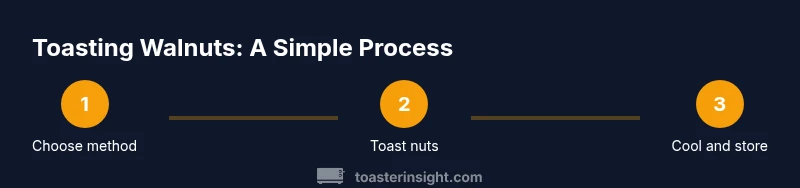
- 1
Choose toasting method
Decide whether to toast on the stovetop or in the oven based on quantity and time. Both methods yield great flavor, but oven toasting is better for larger batches, while stovetop is faster for small amounts.
Tip: Spread nuts in a single layer to ensure even browning. - 2
Toast on the stovetop
Place walnuts in a dry skillet over medium heat. Stir or toss every 30 seconds until fragrant and lightly browned, about 4-6 minutes. Remove immediately and transfer to a cool surface.
Tip: Keep the pan moving to avoid hot spots that burn the nuts. - 3
Toast in the oven
Spread walnuts in a single layer on a parchment-lined sheet. Roast at 350°F (175°C) for 8-12 minutes, shaking halfway. Remove when fragrant and lightly browned; finish on a cooling rack.
Tip: Check early for smaller pieces; they can brown faster than larger halves. - 4
Cool completely before using
Let toasted walnuts cool fully before adding to batter to avoid steaming, which can soften texture. Use right away or store for later use.
Tip: Cooling prevents steam from softening the surface and dulling aroma. - 5
Chop to desired size
If your recipe calls for chopped nuts, do a quick chop after cooling. Larger chunks give more crunch, while finer pieces distribute more evenly in batters.
Tip: Chop in a pulse manner to avoid over-processing into dust. - 6
Store or use immediately
Use toasted walnuts in your batter or bake them directly into the recipe. For future use, store in an airtight container in a cool, dark place or freeze for longer shelf life.
Tip: Label with date to track freshness and avoid staleness.
Your Questions Answered
Do I need to toast walnuts every time?
Not always. Toasting is mainly for flavor and texture enhancement. Some recipes benefit more than others, especially cookies and brownies. If you want a milder nut aroma, skip toasting.
No, you don't have to toast walnuts every time. It adds flavor and crunch in many recipes, but some dishes benefit from using raw nuts instead.
Can I toast walnuts in advance?
Yes. Toasted walnuts store well in an airtight container at room temperature for up to a few weeks; refrigerate for longer shelf life. Re-crisp if needed by warming briefly before use.
Yes, you can toast walnuts in advance and store them airtight. Re-crisp briefly in a warm oven before using.
What signs indicate walnuts are done?
Look for a fragrant aroma and a light brown color. They should be crisp, not soft, and the surface should appear glossy from the natural oils—but avoid any burnt smell.
When they smell nutty and look light brown, they’re done. If you notice a burnt smell, they’re overdone.
Are toasted walnuts better for cookies or muffins?
Toasted walnuts work well in both, but cookies often benefit from added crunch and intensified nut flavor, while muffins may gain depth without overpowering other flavors.
They’re great in both. Cookies gain crunch and aroma; muffins get a richer nutty profile.
What’s the safe method if I have little time?
Use the stovetop method with a dry skillet for quick toasting. Keep the nuts moving and remove as soon as fragrant to avoid burning.
If you’re short on time, toasting on the stove is fastest—just keep stirring and watch closely.
Watch Video
Key Takeaways
- Toast walnuts for better aroma and crunch
- Choose stovetop or oven based on batch size
- Watch closely to avoid burning
- Cool fully before using or storing
- Toast can enhance most baking applications