How to Draw a Toaster: Step-by-Step Guide
Learn to draw a toaster from simple shapes to finished shading. This beginner-friendly guide covers proportion, light, texture, and color to help you master kitchen-appliance illustration.


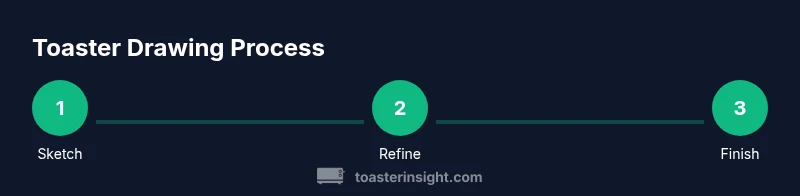
Master how to draw a toaster with a beginner-friendly, step-by-step approach. You’ll start with simple shapes, then refine proportions, shading, and metallic highlights. Before you begin, gather basic pencils, paper, an eraser, and a light source to draw toaster confidently. This quick-start version signals the key milestones and keeps you moving from rough sketch to finished illustration.
Understanding Why Drawing a Toaster Is a Useful Skill
Drawing a toaster is a practical exercise that builds your ability to observe everyday objects and translate them into line, shade, and form. When you draw toaster shapes, you practice proportion, perspective, and edge quality—skills that transfer to any kitchen scene or appliance. According to ToasterInsight, beginners gain confidence by starting with simple, repeatable shapes before refining details. A toaster’s basic silhouette is a rectangle with rounded corners and a few interior lines for slots; mastering that silhouette helps you see how light wraps around metal surfaces. If you want to draw toaster shapes accurately, begin with the simplest block form and compare it to your reference from multiple angles. By focusing on planes and contrasts, you’ll learn where highlights break and where shadows gather, which is essential for realistic rendering. This kind of practice also lowers the intimidation barrier for drawing other small appliances like kettles or blenders. The approach here emphasizes patience, structure, and deliberate practice. As you progress, you’ll notice improvements in accuracy and speed, making future sketches more enjoyable.
Tools, Materials, and Setup
Before you begin to draw toaster details, assemble a simple toolkit and a comfortable workspace. You’ll want a clean sheet of drawing paper, a few pencils (HB for sketching, 2B for shading), an eraser, a sharpener, and a blending stump or tissue for smooth gradients. A ruler helps keep edges straight for the toaster’s frame, while a kneaded eraser can lift light highlights without disturbing nearby lines. Optional but helpful: a black fineliner for sharp interior lines and a color set if you plan to render the toaster in color. Good lighting is essential; position your light source at a 45-degree angle to observe how reflections fall on metal. If you’re new, keep a reference photo handy to compare proportions as you learn to draw toaster shapes. Finally, have a scrap sheet for testing strokes and a small desk lamp to simulate consistent illumination.
Basic Shapes and Proportions for a Toaster
Start with the toaster’s overall form, which is typically a rounded rectangle with slightly curved edges. Lightly sketch a tall rectangle for the body, then soften corners with gentle arcs. Add the slots across the top as parallel, evenly spaced rectangles. Keep the relative height of the slots in mind—their width should be about one-third of the body’s width, depending on the toaster style you’re drawing. Use a vertical centerline to help align the lever and dial symmetrically. If you’re working from a photo, mark major planes with faint shading guides to indicate where the metal might curve away from the viewer. Don’t worry about exact models yet; aim for a believable silhouette. As you refine, adjust proportions by comparing to your reference. The goal is a clear, proportionate base that supports believable shading and texture later on when you draw toaster details.
Sketching with Light and Shadow
Light and shadow define form. Begin with a soft, light stroke to block in the lightest tones and define your light source. For a typical kitchen scene, imagine light coming from the left; this will create a gentle rightward falloff on the toaster’s surfaces. Build volume by shading successive planes, starting with midtones and then layering darker shadows where the body curves away from the light. Keep highlights crisp where metal surfaces catch bright light, and avoid over-blending in areas that should feel crisp, like chrome edges or the slot rims. Regularly rotate your paper to check how shading reads from different angles. If something looks flat, increase contrast on the far edge of the form and soften the near edge. This iterative process helps you draw toaster forms more convincingly.
Adding Details: Slots, Lever, and Dial
Details bring realism. Start with the slots on the top by drawing two or three parallel rectangles, ensuring even spacing and consistent width. Add a small lever on the side and a circular or oval dial, depending on your toaster model. Define their edges with slightly darker lines and consider subtle reflections along the cut edges. Remember that metallic surfaces reflect the surrounding colors; keep nearby hues in mind as you shade. For a classic chrome look, apply a narrow, bright highlight along the upper left edge and taper it toward the lower right. Don’t crowd the drawing; keep the details proportionate to the body size to avoid a toy-like appearance. Practice placing these features in correct perspective so they feel integrated rather than floating above the silhouette.
Texture and Material: Metal, Glass, and Plastic
A toaster combines several materials: metal casing, plastic buttons, and glass or plastic windows in some models. Use a combination of smooth, uniform shading for metal and slightly cooler tones or subtle grain for plastic parts. If a portion appears glossy, create a sharp, thin white reflection and a soft midtone gradient nearby. For matte finishes, keep transitions more gradual and avoid harsh reflections. When drawing a transparent glass window or a plastic cover, layer light blues or cool grays to imply depth. Always test swatches on a separate sheet to settle your color strategy before applying it to the toaster drawing. This approach ensures your toaster feels tangible rather than flat.
Lighting and Reflections: Bringing the Metal to Life
Metal surfaces sing when lit correctly. Establish a dominant light source, then map out bold highlights on the upper left and crisp mid-highlights along the curved edges. Cast shadows under the slots, lever, and base, adjusting intensity to reflect the platen’s curvature. If you’re drawing brushed metal, add fine vertical or diagonal strokes to evoke the grain without overpowering the surface. Remember that reflections depend on nearby colors; a warm kitchen can cast amber hues onto the metal, while cooler surroundings add blue-gray tints. A careful balance of highlight, midtone, and shadow will give your toaster drawing a glossy, three-dimensional appearance.
Color Theory: Palettes for Toaster Drawings
Color choices influence mood and realism. Start with a neutral base like cool gray or warm silver for the body. If you want a pop of color, limit it to the dial or buttons, using a complementary hue to avoid clashing with the metal. For a classic chrome look, keep reflections light and occasional with very bright highlights. When shading, rely on a small color wheel: cool colors recede, warm colors advance. For wooden or vintage-style toasters, you can tilt toward warmer browns and creams while preserving metallic accents. Practicing swatches on scrap paper ensures your final hues feel cohesive and deliberate rather than accidental.
Common Mistakes and How to Fix Them
Common issues include over-simplified shapes, inconsistent proportions, and harsh shadows that flatten the form. If your toaster looks flat, revisit the reference and re-check the major planes. If the highlights are too bright or smeared, reduce pressure and rework with a clean eraser. Ensure your slot edges are parallel and consistent; skewed slots quickly signal a lack of precision. For color drawings, avoid too many hues in one area; instead, keep a tight palette and apply slightly varied tones to suggest depth. Finally, practice rotating your composition to confirm the toaster reads well from multiple angles. Small, incremental adjustments often yield the most convincing results.
Practice Drills You Can Do Today
Set aside 20–30 minutes for focused drills. Start with a 5-minute warm‑up sketch of the toaster silhouette, then a 10-minute shading session concentrating on one surface. Do a 5-minute detail pass for slots and lever, followed by a 5–10 minute color test. Alternate between light and heavy pressure to understand line quality. If you miss a detail, annotate what you want to improve in the next attempt. These drills build muscle memory for proportion, shading, and texture, helping you draw toaster shapes faster and more accurately.
Adapting Your Toaster Drawing for Styles
Your toaster drawing can reflect different styles—from tight realism to playful cartoons. For realism, maintain accurate proportions, precise shading, and subtle reflections. For a graphic style, simplify shapes and use flat fills with bold edges. For a loose sketch, emphasize gesture lines and experimental textures rather than perfect edges. Practice both approaches to understand how changes in line weight, contrast, and color treatment alter the feel. This flexibility will help you draw toaster variations—from retro designs to contemporary models—without starting from scratch each time.
From Sketch to Finished Illustration: Final Tips
Conclude your drawing with a final pass focused on balance and cohesion. Re-check proportions, refine linework, and ensure your highlights align with the light source. Consider a light wash or translucent layer to unify tones and soften transitions where needed. Sign your work and preserve a copy in your portfolio. With consistent practice, your ability to draw toaster objects will improve, and you’ll enjoy the process of turning a simple block into a convincing kitchen appliance depiction.
Tools & Materials
- HB pencil(For initial sketching)
- 2B pencil(For shading and depth)
- Eraser (kneaded)(Lift highlights without damaging paper)
- Ruler(Keep edges straight for body and slots)
- Blending stump or tissue(Smooth gradients on metal surfaces)
- Drawing paper (A4 or letter size)(Sufficient surface area for detail)
- Fine liner pen (optional)(Sharp edges for final lines)
- Colored pencils or markers (optional)(Colorize toaster drawing if desired)
- Reference photo of a toaster(Helpful for proportions and details)
Steps
Estimated time: 30-45 minutes
- 1
Prepare workspace and references
Clear your desk, set up good lighting, and choose a toaster reference or model to study. This helps you lock in proportions before drawing. Start with a light sketch and keep lines soft.
Tip: Keep your paper and tools within easy reach to stay focused. - 2
Outline the basic body shape
Draw a rounded rectangle to represent the toaster’s main body. Add a second, shorter rectangle on top for the lid if your model has one. Use light strokes so you can erase easily.
Tip: Use a straight edge to ensure the top edge remains parallel to the table. - 3
Add slots and lever placement
Sketch the slots across the top and position the lever on the side with a visible hinge. Keep lines parallel and evenly spaced, adjusting as needed for perspective.
Tip: Double-check slot spacing against the body width for balance. - 4
Refine proportions and edges
Go over the outline with slightly darker lines, refining corners and ensuring symmetry. Compare with your reference and tweak any misalignments.
Tip: Turn your drawing to check for crooked edges; small adjustments matter. - 5
Shade for form and light
Block in midtones first, then add darker shadows along the far side and under features. Create a bright edge highlight where the light hits the metal.
Tip: Keep the light source consistent across all surfaces. - 6
Finish with details and color
Add reflective highlights and subtle color if desired. Use a light hand for color to preserve metallic feel. Review the final image and adjust contrast as needed.
Tip: Limit color to small accents to avoid overpowering the metal gleam.
Your Questions Answered
What materials do I need to draw a toaster?
For a basic toaster drawing, start with pencils (HB and 2B), paper, an eraser, and a ruler. Add a blending stump for smooth shading, and optional color pencils if you want color. A reference image helps.
Grab a pencil, paper, eraser, and a ruler. A reference photo helps you keep proportions.
How can I keep proportions correct when drawing a toaster?
Begin with the overall silhouette and check it against your reference from multiple angles. Use guidelines for the body, slots, and lever, adjusting as needed to preserve balance.
Start with a soft outline, then compare from different angles to keep things proportional.
Can I draw a toaster from imagination without references?
Yes, you can sketch from imagination, but start with a simple silhouette and add familiar features like slots and a lever. Use a rough reference later to confirm proportions.
You can, just keep the shape simple and add familiar details.
What order should I apply shading and color?
Apply shading before color to establish values and depth. If you add color, do it in light layers and adjust values to preserve the metallic look.
Shade first to get depth, then layer color gradually.
How long does it take to learn to draw toaster well?
With consistent practice, you can see steady improvement in a few weeks, though mastery comes with ongoing study of light, texture, and proportion.
A few weeks of steady practice can show real progress.
Watch Video
Key Takeaways
- Start with simple shapes to establish proportions.
- Keep light source consistent for believable shading.
- Add highlights to mimic metal reflections.
- Use references to improve accuracy and confidence.
- Practice regularly to improve speed and detail.