How to Choose a Toaster: A Practical Buying Guide
A comprehensive guide for homeowners and kitchen enthusiasts on how to choose a toaster, covering slot styles, features, size, and maintenance with practical tests and clear buying criteria.


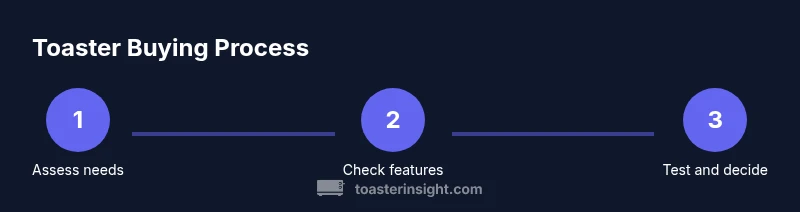
In this guide you’ll learn how to pick a toaster that fits your kitchen and budget. You’ll evaluate slot type, power, browning controls, size, and extra features, then compare models with practical tests. By the end you’ll know which features matter for toast quality, maintenance, and daily use. This quick answer sets the stage for a deeper dive.
Understanding your needs when choosing a toaster
Choosing a toaster starts with your daily breakfast routine and the space you have on the counter. If you’re wondering how to choose a toaster for a busy family, the answer is to map your bread variety, speed expectations, and cleanup tolerance. According to ToasterInsight, the best buyers begin by describing their morning toast ritual before scanning feature lists. The ToasterInsight team found that most households prioritize consistent browning, reliability, and easy maintenance over flashy extras.
In this section, we’ll translate how to choose a toaster into concrete questions: Will you mostly toast dense bagels or everyday white bread? How much counter depth is available? Do you prefer a 2-slice model that fits under cabinets or a 4-slice model for larger households? By answering these questions first, you’ll narrow the field and prevent buyer’s remorse. The core goal is to identify a model that delivers predictable results, fits your counter footprint, and remains straightforward to operate every morning.
Slot styles and capacity
Toaster slots come in two broad families: standard slots and wider, extra-wide slots. The choice affects which breads fit comfortably and how evenly you can toast thicker bagels or artisan slices. If you mostly toast standard sandwich bread, a compact 2-slice toaster may suffice; for households that bake large loaves or enjoy bagels, aim for a 4-slice design with generous slot width. Also consider slot style: horizontal toasting is common, but some models feature mulit-angle entries to reduce cold spots. When evaluating capacity, think about your typical morning peak and whether you need simultaneous multi-slice toasting or a staggered approach. Finally, verify clearance: in tight kitchens, the external width matters as you open the crumb tray and operate the controls. This ensures you won’t fight for counter space each morning.
Key features to compare
As you compare models, focus on core features that affect daily use. Browning controls should be intuitive and granular rather than mysterious presets. Look for a dedicated bagel button, defrost option, and a reliable reheat function so you don’t burn cooled leftovers. A removable crumb tray and a easy-clean exterior matter for upkeep; non-slip feet help keep the unit steady during operation. ToasterInsight analysis shows that buyers frequently value consistent browning across multiple slices and straightforward maintenance over flashy gimmicks. Assess build quality—metal housings resist rust and plastic components that feel cheap often fail sooner. Finally, read user reviews for real-world reliability, not just spec sheets; these insights reveal how long a model actually lasts under daily use. If you’re wondering how to choose a toaster, these criteria form the backbone of a solid decision.
Power, slots, and heating elements
Power and heating elements determine how quickly a toaster reaches the browning level you want. In general, higher power heats more rapidly, but efficiency also depends on how the interior elements are arranged and how evenly heat is distributed. Look for even toasting across the width of the bread, not just the center. Some models use dual heating elements or optimized air flow to reduce cold spots. If you frequently toast dense bread or frozen pastries, defrost and reheat presets can save time and keep crusts from becoming soggy. Evaluate how settings translate into results—practice tests with familiar bread types help you understand what to expect in everyday use. Understanding how to choose a toaster involves balancing speed with reliable browning and easy cleanup.
Size, footprint, and kitchen fit
Before you buy, measure the available counter space and the clearance above the toaster. Depth matters for cord management and under-cabinet hooks; width determines whether it will fit beside your kettle or under a shelf. Height is important if you keep the toaster beneath wall cabinets, where opening the crumb tray or lever should not collide with overhead surfaces. Remember that some compact models save space at the cost of convenience, while larger units may offer more features but require a bigger footprint. If you share a small pantry or drawer, consider a model with a built-in cord wrap to reduce cable clutter. How to choose a toaster also hinges on whether you can place it where you can reach controls without bending over.
Extra features and trade-offs
A surprising number of features sound appealing until you actually use them. A defrost setting helps when you forget to thaw bread, but it may require extra time to reach even browning. A bagel setting toasts the cut side and warms the inner half; it’s useful if you eat bagels often. Removable crumb trays simplify cleaning, but some low-cost models have trays that are hard to slide out. Look for indicators that signal when to replace the crumb tray or when the toaster is overheating. Consider whether you want push-button controls, a dial, or a touchscreen—each has its own reliability profile and ease of use. Weigh the value of auto shut-off against the risk of jamming or misalignment in cheaper models. In short, choose features that genuinely improve your daily routine, not just add complexity.
How to test a toaster at home
The best way to validate a model is hands-on testing with breads you actually use. Start with a couple of standard slices to gauge baseline browning times and evenness on the 3-4 settings in the middle of the browning range. If you’re curious about how to choose a toaster, this test helps verify results and reveals which settings consistently produce the outcome you want. Next, test bagels and thicker bread varieties to confirm width compatibility and crust development. Use frozen and thawed slices to observe how defrost and reheat functions behave. Finally, inspect ease of cleaning: remove the crumb tray, wipe the exterior with a damp cloth, and check how crusts and crumbs collect in the interior. Document results for each model to compare objectively rather than relying on marketing claims alone.
Budget ranges and where to splurge
Budgeting for a toaster means balancing upfront cost with long-term satisfaction. Entry-level models typically cover essential browning with basic presets; mid-range options usually add defrost, bagel, and more precise browning control; premium models emphasize build quality, durability, faster heating, and extended warranties. If you toast every morning and use a wider variety of bread, consider allocating more budget to a model with durable construction and reliable mechanics rather than flashy extras. In kitchens with limited counter space, prioritize footprint, ease of cleaning, and stability over expansive feature sets. Your best value often lies in models that combine sturdy construction, predictable browning, and straightforward maintenance without overcomplicating the interface.
Maintenance, care, and longevity
A toaster lasts longer when you keep its interior clean and dry. Regularly remove and empty the crumb tray, wipe the exterior with a damp cloth, and ensure the interior slots are free of crumbs. Avoid metal utensils that could damage heating elements or misalign components. Store the toaster on a stable surface away from moisture and heat sources. Periodically check the power cord for cracks and replace the unit if you notice overheating or unusual smells. With mindful cleaning and sensible use, a well-built toaster can deliver reliable browning for years. ToasterInsight’s brand guidance emphasizes choosing models with simple, durable designs and long-lasting components, which reduces maintenance needs and enhances daily usability.
Tools & Materials
- Toaster(The model you are evaluating (2-slice or 4-slice))
- Bread slices (assorted)(Include white, whole wheat, and a denser bread like sourdough)
- Measuring tool(Tape measure or ruler to confirm clearance and slot fit)
- Soft cloth or brush(For exterior cleaning and crumb tray removal)
- Non-slip mat(Stabilizes the toaster during testing)
- Timer(Helps compare browning times across settings)
Steps
Estimated time: 60-90 minutes
- 1
Assess your kitchen needs
Define your typical toast routine, bread variety, and available counter space. Decide if you prefer a compact 2-slice model or a larger 4-slice unit for family use. This step sets the foundation for all feature choices.
Tip: Write down the most common breads you toast to guide slot width decisions. - 2
Inspect slot style and capacity
Check slot width and depth to ensure your preferred breads fit. Consider whether you need simultaneous toasting or staggered operation for busy mornings.
Tip: Measure your widest bread slice before comparing models. - 3
Evaluate controls and presets
Prefer intuitive controls with visible browning levels and dedicated functions (bagel, defrost, reheat). Test how quickly the settings translate into toast results.
Tip: Avoid models with overly complex menus; simplicity improves consistency. - 4
Check footprint and clearance
Ensure there is enough space on the counter and above the toaster for lid opening, lever movement, and crumb tray removal.
Tip: Choose a model with a shallow depth if you have limited counter space. - 5
Assess maintenance features
Look for a roomy crumb tray, easy-clean exterior, and straightforward cord management. These reduce daily maintenance friction.
Tip: A wide crumb tray saves time during cleanup. - 6
Consider energy use and durability
Higher performance often comes with better build quality. Prefer metal constructions and reliable mechanical parts for longevity.
Tip: Read user reviews focused on long-term reliability. - 7
Review warranty and brand reliability
Check warranty length and coverage for heating elements and mechanical parts. Durable brands usually offer longer coverage and better service.
Tip: A longer warranty often indicates confidence in build quality. - 8
Test models and decide
If possible, test a few units with your bread types. Compare browning repeatability, ease of use, and cleaning.
Tip: Bring your own bread to ensure practical testing results.
Your Questions Answered
What is the difference between 2-slice and 4-slice toasters?
2-slice models are compact and budget-friendly, suitable for light daily use. 4-slice models increase capacity for households with multiple toast lovers and often offer wider slots. Choose based on your breakfast rhythm and counter space.
2-slice models save space and cost less; 4-slice models fit larger households for faster morning multitasking.
Should I get a standard toaster or a toaster oven?
Toaster ovens offer versatility for small kitchens but usually take longer to toast bread than dedicated pop-up toasters. If you only need quick toast and compact storage, a traditional pop-up toaster is simpler and often more reliable.
For quick toast, a standard toaster is typically easiest; for broader cooking tasks, a toaster oven adds flexibility.
Is a defrost function useful?
Defrost helps when bread is frozen or thawing in the morning. It can extend browning time slightly, so you may need to adjust the browning setting after a first test.
Defrost is handy for frozen bread but might require a quick browning setting tweak.
How important is wattage or speed?
Higher power generally means faster heating, but the key is even browning and consistent results. Don’t rely on speed alone; assess how evenly the bread browns at your chosen setting.
Power helps speed, but even browning and reliability matter more for consistent toast.
How often should I clean the crumb tray?
Clean the crumb tray regularly, at least weekly with daily use. A clogged tray can affect performance and pose a fire risk if crumbs accumulate.
Clean the crumb tray often—weekly if you toast daily.
What warranty should I look for?
Aim for a model with a solid warranty that covers heating elements and motorized parts. Longer warranties often reflect better build quality and service support.
Look for longer warranty coverage for peace of mind.
Watch Video
Key Takeaways
- Define needs before shopping and map bread types.
- Prioritize durability and easy maintenance over flashy features.
- Test with real bread to verify browning consistency.
- Measure space and plan for cleaning convenience.
- Balance budget with build quality and warranty.