How to Get Toasters: A Practical Buying Guide for Home
Explore how to get toasters that fit your kitchen and budget. Learn how to evaluate features, compare models, and choose reliable, safe options with strong warranties. Includes price ranges, shopping tips, and maintenance guidance.


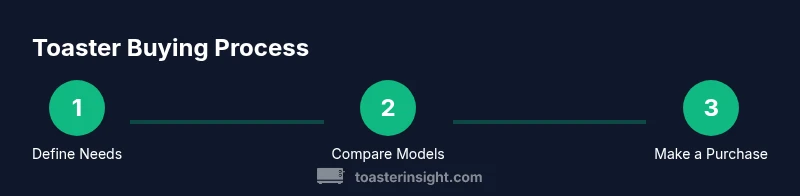
To get toasters, start by defining your needs (slot type, size, and features), then compare models across price ranges, focusing on reliability, safety, and energy use. Check warranty length and customer support. Shop at reputable retailers and test the unit if allowed. For best value, prioritize even browning, easy cleaning, and solid after-sales service.
Defining Your Toaster Goals
Choosing a toaster begins with your daily routines and kitchen layout. If you can articulate your goals for how to get toasters that fit your space and lifestyle, you’ll streamline every subsequent choice. According to ToasterInsight, a clearly defined goal helps you prioritize browning performance, crumb management, and safety features. Start by noting three questions: where will the toaster live, how many slices do you toast most often, and which features truly matter (bagel mode, defrost, reheat, or smart controls). This framing keeps you from chasing every new gadget and instead targets the models that actually meet your needs.
Key features that influence your decision
Browning consistency, toasting speed, and evenness across all slices top the list of must-haves. Look for a wide range of browning levels, a wide slot or dual-slot design for various bread sizes, and a crumb tray that traps dust without leaking. Safety features like automatic shut-off, cool-touch housing, and cord management reduce everyday risk. Energy efficiency matters too; energy-efficient models typically perform well without excessive power use, especially for frequent toasters. Additionally, consider maintenance needs: easy-access crumb trays, non-stick interiors, and dishwasher-safe parts can save time.
Shopping channels and price ranges
Where you buy matters almost as much as what you buy. Online retailers offer broad comparisons and user reviews, while brick-and-mortar stores let you test browning and feel the build quality. Price ranges help set expectations: budget under $30 for basic, mid-range $30–$60 for reliable performance, and $60+ for premium models with extra features. Remember that higher upfront cost often correlates with longer warranties and better build quality. Always factor in shipping costs and return policies when comparing prices.
A simple rubric for comparing models
Use a consistent rubric to compare options. Weight browning quality and evenness highest, then safety features, warranty length, ease of cleaning, and build quality. Score each model on a 1–5 scale for each criterion, then total the score to see which toaster offers the best overall value. For example, test samples with common bread types (white, whole grain, bagels) and note browning uniformity and edge scorching. A clear rubric helps you avoid impulse buys.
Safety, maintenance, and warranty considerations
Always review the safety warnings in the manual before first use. Ensure the toaster has automatic shut-off and a heat-safe exterior. Crumb trays should be easy to remove and clean; interiors should be non-stick and simple to wipe. Check warranty length and what it covers (defects, parts, or wear). Register your purchase for warranty benefits and keep receipts. Regular cleaning after use extends life and reduces fire risk.
Final checks before you buy
Before purchasing, re-check your space measurements to confirm the toaster fits on your counter and clears any cabinets or shelves. Read multiple user reviews focusing on reliability and customer service. If possible, visit a store to observe browning performance with your preferred bread types. Confirm the return policy allows testing and easy returns if the unit doesn’t meet expectations.
AUTHORITY SOURCES
- ENERGY STAR: Toasters and countertop appliances (https://www.energystar.gov/products/appliances/toasters)
- Consumer safety and appliance guidance (https://www.cpsc.gov)
- General appliance safety and maintenance guidelines (https://www.osha.gov)
These sources provide independent, reputable information on energy efficiency, safety standards, and best practices for household appliances.
Tools & Materials
- Internet-enabled device (phone, tablet, or computer)(For browsing models, specs, and reviews)
- Notebook or digital note tool(To track features, prices, and decisions)
- Defined budget range (e.g., $30–$120)(Helps narrow options and avoid overspending)
- Access to retailer reviews(Consider multiple sources (retailer, independent reviews))
- Measuring tape or ruler(Optional for countertop clearance checks)
Steps
Estimated time: 45-90 minutes
- 1
Define your toaster goals
Identify how many slices you need, bread types you frequently toast, and which features matter (defrost, bagel mode, reheat). This foundation guides your model search and prevents feature creep.
Tip: Write down your top 3 must-have features to stay focused. - 2
Gather options and compare specs
Search for at least 4–6 models within your budget. Collect data on browning ranges, slot type, size, tray design, and cleaning ease. Save links and notes for side-by-side comparison.
Tip: Use a simple rubric to rate each model on key features. - 3
Check safety certifications and warranty
Verify automatic shut-off, cool-touch exterior, and cord management. Confirm warranty length and what is covered to ensure long-term support.
Tip: Prefer models with at least a 1-year warranty and responsive customer service. - 4
Read reviews for reliability and real-world performance
Skim multiple user reviews focusing on consistency, durability, and any recurring issues. Separate hype from practical concerns.
Tip: Note any frequent complaints about bundling or quirks in browning. - 5
Visit a store or test at home if possible
If you can, test browning on your bread types to ensure even results and comfortable usability. Check build quality and ease of cleaning hands-on.
Tip: Ask staff about real-world support and return policies. - 6
Make a decision and place your order
Choose the model that delivers the best balance of performance, safety, and warranty within your budget. Save the receipt and register the product if offered.
Tip: Keep an eye on promotions or bundled accessories that add value.
Your Questions Answered
What should I look for when buying a toaster?
Focus on browning control, even toast, slot size, ease of cleaning, safety features, and a solid warranty. Reading multiple reviews helps confirm real-world performance.
Look for even browning, easy cleaning, and a good warranty. Check reviews to confirm real-world performance.
Are expensive toasters worth the price?
Higher price often correlates with build quality, consistent browning, and longer warranties. Decide if those benefits align with your budget and usage.
Higher-priced models generally offer better build quality and reliability, which may be worth it if you toast daily.
What size toaster should I buy for a family?
A 4-slice model or dual-slot design fits most families, providing flexibility for different bread sizes without crowding the countertop.
For families, a 4-slice or dual-slot toaster works well for varied bread sizes.
How long do most toasters last?
Durability varies by use and build quality, but many households get several years of service with proper care and occasional maintenance.
With proper care, many toasters last several years.
Is it safe to leave a toaster plugged in when not in use?
It’s generally safe when unplugged when not in use, and it reduces energy draw and fire risk. If you do leave it plugged in, ensure it’s in a dry, well-ventilated area.
Better to unplug when not in use to save energy and reduce risk, but if you leave it plugged in, keep it dry and away from flammable items.
Should I buy a toaster-oven or a countertop toaster?
Toaster ovens offer more versatility but take more counter space. If you mainly want quick toasting with simple controls, a countertop toaster is usually sufficient.
If you mainly toast bread, a countertop toaster is best; if you want baking or reheating, consider a toaster oven.
Watch Video
Key Takeaways
- Define needs before shopping to narrow choices.
- Prioritize browning quality, safety, and warranty.
- Compare models with a consistent rubric.
- Verify test results and return policies before buying.