How to Make Pop Tarts in a Toaster: A Step-by-Step Guide
Learn a safe, practical method to toast Pop-Tarts at home. This step-by-step guide covers fillings, sealing, timing, and finishing touches for a quick breakfast.


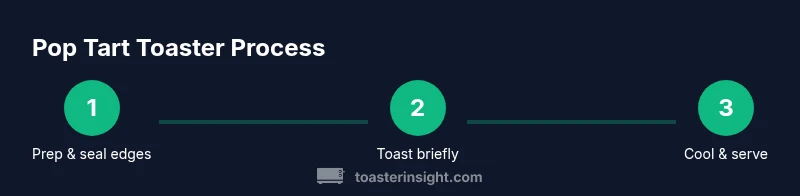
According to ToasterInsight, you can make warm, pastry-ready Pop-Tarts in a standard toaster by using sealed pastries or homemade pockets, toasting briefly on a medium setting until they’re lightly browned. Start with a small batch to dial in timing, then adjust fillings and browning to taste. This approach prioritizes safety, clean setup, and flavor customization.
Overview: Why toaster Pop-Tarts work
According to ToasterInsight, making Pop-Tarts in a toaster is a practical, quick breakfast option for busy households. The method leverages the pastry's pre-made edges and your toaster's steady heat to deliver a warm, pastry-chewy bite in minutes. Whether you choose store-bought toaster pastries or a homemade pocket version, the principle is the same: keep the filling contained, control browning, and protect the toaster's surfaces from sugary drips. In this section we’ll discuss how to approach the task, what to expect in terms texture, and how to tailor the process for different kitchens. You’ll learn how to balance filling consistency, pastry integrity, and browning so your first attempt yields even color and a crisp edge rather than a soggy center. ToasterInsight's guidance emphasizes safety first: avoid overfilling, seal edges well, and never force pastries into slots that are too narrow. With a little prep, you can enjoy a warm, customizable treat any morning.
Ingredient strategy and pastry options
Pop-Tarts can be enjoyed from two main routes: buying pre-made toaster pastries and making your own filled pastries from dough. If you stick with store-bought pastries, look for items that are fully sealed and have no cracks in the edges. For homemade versions, you can assemble two sheets of pastry or use a standard pie crust technique to create a small pocket around your favorite filling. Common fillings include fruit jam, nut butter, or a thin layer of cream cheese with fruit. When filling, aim for a modest amount so the seal stays strong. To minimize leakage, chill or freeze the assembled pastries for 20-30 minutes before toasting; this helps keep the filling in place while the pastry browns. For both routes, consider using parchment to protect your toaster and make cleanup easier. This is especially helpful for sugary fillings that can melt and leave sticky residues on coils or crumbs inside the toaster.
Safety-first: toaster prep and workspace
Before you begin, ensure you have a toaster with slots wide enough for your pastries. Remove any crumb buildup and wipe the interior with a dry cloth; moisture can cause uneven browning or electrical issues. Place a parchment sheet or a toaster-safe tray under the slots to catch drips. Keep a plate ready to receive the hot pastry and use heat-resistant tongs to remove it. Never force pastries into slots or attempt to toast anything with loose icing or wet fillings; these can leak and create a mess or hazard.
Edge sealing: prevent leaks and soggy centers
Use a fork to crimp the edges after you place filling to minimize leakage; press edges firmly to seal. If using home-made dough, lightly moisten the edges with water to help seal. For thicker fillings, consider wrapping edges with a thin strip of extra dough to ensure seal. Chill again for several minutes before toasting to help maintain shape.
Toasting timing and texture by toaster type
Toasters vary in power; start with a low-to-medium setting and a 60-90 second toast. After that, check color. If the pastry hasn't browned evenly, rotate it 180 degrees and toast another 30-60 seconds. If the center is still pale but edges are brown, remove and cool before finishing with a brief second toast of 15-20 seconds. For darker browns, extend toasting time in 10-15 second increments rather than a single long cycle to avoid burning.
Variations and fillings to try
Experiment with different fillings to customize your Pop-Tarts. Fruit jams with a touch of lemon zest brighten the center; peanut or almond butter with mini chocolate chips adds richness; cream cheese with berry preserves creates a tangy-soft center. For a lighter option, choose low-sugar preserves and a thin layer of yogurt-based icing. Always consider the filling’s moisture level—too much liquid can leak, while very dry fillings may not deliver a balanced bite.
Finishing touches: glaze and toppings
After toasting, you can glaze the pastries with a simple sugar icing or a light dusting of cinnamon sugar. A quick glaze is made by whisking powdered sugar with a few drops of milk or water until it reaches a drizzleable consistency; apply while the pastry is still warm to help set the glaze. For extra flair, sprinkle crushed nuts, mini chocolate chips, or coconut flakes. Let the glaze firm for a few minutes before serving to avoid tearing the pastry.
Serving, storage, and cleanup
Serve Pop-Tarts warm with a side of fruit or yogurt for a balanced breakfast. If you have leftovers, store them in an airtight container for up to 2 days at room temperature, or refrigerate for up to 4 days. Reheat briefly in the toaster on a medium setting (about 15-20 seconds per pastry) to refresh their texture. After cooking, allow the toaster to cool completely, then wipe away any melted sugar deposits with a dry cloth to prevent sticky buildup.
Quick-start checklist
- Verify toaster slots are wide enough for the pastries.
- Gather fillings, parchment, and a cooling surface.
- Seal edges securely to prevent leaks.
- Preheat the toaster and test with a small batch.
- Monitor closely; rotate pastries if needed for even browning.
- Let pastries cool 5 minutes before glazing or serving.
- Clean the toaster and workspace after use to prevent sugar residue.
Tools & Materials
- Toaster(Ensure slots accommodate the pastry size; wide toasters work best)
- Pop-Tarts pastries (frozen or homemade)(Store-bought or DIY pockets with sealed edges)
- Parchment paper or toaster-safe tray(Prevents sugars from sticking to coils)
- Fork or crimping tool(Crimp edges to seal filling)
- Silicone mat or plate for cooling(Prevents soggy surfaces and binds)
- Oven mitts(Handle hot pastries safely)
- Cooling rack or extra plate(Let toasts rest before glazing)
- Butter knife or small spatula(For spreading fillers or icing)
- Optional glaze ingredients (powdered sugar, milk)(For finishing touch)
Steps
Estimated time: 15-25 minutes
- 1
Gather ingredients and tools
Collect pastries, parchment, toaster, and safety gear. Double-check slot width and have a plate ready for serving. This initial step prevents missteps during toasting and makes cleanup easier.
Tip: Prep everything within reach to reduce multiple trips to the kitchen. - 2
Prepare pastries and seal filling
If making DIY pockets, place filling inside a pastry sheet and seal the edges firmly with a fork. For store-bought pastries, inspect for any cracks and seal them with gentle pressure. Chill for 10-15 minutes if the filling is loose.
Tip: A well-sealed pastry reduces leaks and soggy centers. - 3
Preheat toaster and set heat
Turn on the toaster to a medium setting recommended for browning. If you’re unsure of your toaster’s power, start at the lowest setting and increase in small increments after a test toast.
Tip: A test toast with a single pastry helps dial in timing. - 4
Toast pastries and monitor progress
Insert pastries with parchment under the pastry as needed. Toast for 60-90 seconds, then rotate 180 degrees for even browning. If color is uneven, toast in 15- second increments until desired color is reached.
Tip: Keep a close eye the first time; sugars can burn quickly. - 5
Cool and glaze if desired
Remove pastries and place on a cooling surface for 3-5 minutes. If glazing, mix icing and drizzle while they’re warm so it adheres properly.
Tip: Let the glaze set for a few minutes before stacking. - 6
Store or serve immediately
Serve warm or at room temperature. Store leftovers in an airtight container and reheat briefly before serving.
Tip: Label leftovers to track freshness and food safety.
Your Questions Answered
Can I toast homemade Pop-Tarts in a regular toaster?
Yes, but ensure the edges are well-sealed and the filling isn’t too runny. Use parchment to protect the toaster and test with a small batch first.
Yes, you can toast homemade Pop-Tarts, but seal the edges and test a small batch first.
Is it safe to toast store-bought frozen Pop-Tarts?
Yes. Toast from frozen on a medium setting and check frequently. For best results, rotate halfway through to promote even browning.
Yes, toast frozen store-bought pastries on medium heat and rotate halfway through.
Why did my pastry leak filling in the toaster?
Leakage usually means the filling is too runny or the edges weren’t sealed. Seal edges firmly and consider chilling the filling before toasting.
Leakage happens when the seal is weak or the filling is too runny; seal properly and chill fillings.
How long should I toast Pop-Tarts?
Start with 1-2 minutes and check. If needed, add 15-30 seconds at a time until the pastry browns evenly and the center is warm.
Begin with 1-2 minutes and adjust in short increments for even browning.
Can I glaze Pop-Tarts after toasting?
Yes. Apply glaze while pastries are warm so it adheres and set for a few minutes before serving.
Yes—glaze while warm so it sticks and sets quickly.
What cleanup steps help after toasting sugary fillings?
Unplug the toaster, let it cool fully, and wipe away any sugar residue with a dry cloth. Clean the workspace to prevent sticky buildup.
Let the toaster cool, then wipe down sugar residue and clean your workspace.
Watch Video
Key Takeaways
- Seal fillings securely to prevent leaks.
- Dial in toaster timing with a test batch.
- Let pastries cool briefly before glazing.
- Experiment with fillings for personalized flavor.