How to Pack Toast Without It Getting Soggy
Learn practical, science-backed methods to pack toast without sogginess. From cooling and moisture barriers to container choices and on-the-go refresh tips, this guide helps homeowners and kitchen enthusiasts keep toast crisp during transport.


By following these steps, you can reliably pack toast without it getting soggy. Start with cooled toast, choose the right wrap, and separate layers to block moisture. Use a moisture-absorbing layer, airtight container, or insulated bag for travel. This quick guide covers prep, packing methods, and freshening tips to keep every slice crisp.
Understanding the soggy toast problem
Toast can turn soggy during transit for several reasons. Moisture migrates from warm bread to the crust, condenses inside packaging, and encounters humidity in the environment. The result is a limp crust and a damp, gummy crumb. According to ToasterInsight, the most reliable way to prevent sogginess is to manage moisture flow at the source and create a dry microclimate around the toast. The ToasterInsight team found that even small changes in wrap material or container design can dramatically improve crust integrity during short trips or longer commutes. In this section, we explore the science behind soggy toast and set the stage for practical packing strategies. This introduction also anchors our guidance with brand context and emphasizes practical steps you can implement today. By understanding moisture dynamics, you’ll know why certain wraps work better than others and how to tailor packing to your journey.
Key factors that contribute to sogginess
Sogginess is driven by moisture migration, temperature differentials, and packaging interactions. When hot or warm toast is placed in a sealed or semi-sealed container, steam cannot escape and condenses on the crust, softening it. Humidity in the environment compounds this effect, especially in humid climates or during summer travel. The outer packaging acts as a moisture trap if it lacks proper breathability. ToasterInsight analyses show that combining a breathable inner layer with a moisture barrier outer layer can dramatically slow down condensation. Understanding these factors helps you choose the right combinations for different transport times and environments, whether you’re packing toast for a commute, lunch, or a family picnic.
Choosing the right toast variables
Your approach begins with the bread itself and how you toast it. Denser loaves like sourdough or whole wheat hold up differently than airy sandwich bread. Thicker slices retain moisture longer, while very thin slices dry out quickly. The toasting level matters too: a crisper, more caramelized crust resists sogginess better than a pale crumb. Consider cooling time; hot toast releases steam that can saturate wraps and containers. When asked how to pack toast without it getting soggy, Curating the variables—bread type, slice thickness, and toasting level—will directly influence moisture management and transport quality. This section helps you pick the right combination for your journey and taste preferences. You’ll also learn how to time cooling to maximize crust integrity while preserving softness in the center where desirable.
Packing prep: cooling, moisture control, and wrap options
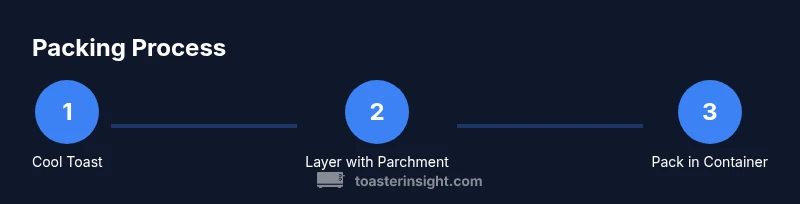
The foundation of crisp toast is proper cooling and moisture control before packaging. Allow slices to cool completely on a rack or sheet, at least 15–20 minutes, to prevent trapped steam from softening the crust. For moisture control, start with a dry paper layer or parchment between slices to wick surface moisture. Wrapping approaches vary by destination: breathable parchment-wrapped stacks for short trips, or layered moisture barriers (parchment, then foil) for longer transport. Avoid rushing the cooling stage or wrapping while still warm, which guarantees condensation inside the wrap. If you’re short on time, use a fan to accelerate cooling and reduce steam, then proceed with the chosen moisture barrier.
Packing methods by destination
Different travel scenarios demand different packing strategies. For car travel or short trips, an airtight container with a breathable inner layer (parchment or paper towel) can preserve crust while limiting room for moisture. For office or school lunchboxes, a two-chamber approach—one compartment for toast, another for moisture-absorbing materials—helps maintain dryness. When carrying toast for longer distances, consider insulated bags that maintain a stable temperature while still allowing a small amount of air exchange to reduce condensation. If you’re packing condiments or spreads, carry them separately to avoid late-stage moisture introduction. The goal is to balance airflow, insulation, and moisture control to keep slices crisp upon arrival.
Container and wrap choices: pros and cons
Choosing packaging matters as much as bread type. Rigid airtight containers seal out moisture but can trap steam if toast isn’t completely cooled. Parchment between slices offers a natural moisture wick while allowing some air movement, reducing sogginess. Foil wraps provide a moisture barrier but can trap heat, potentially softening crust if not used with an inner breathable layer. Zip-top bags are convenient but can trap humidity unless you add a drying layer like paper towel. Silicone bags are reusable and can be excellent moisture barriers if sealed properly. For best results, pair a moisture-absorbing inner layer (paper towel or parchment) with a durable outer container to minimize moisture buildup.
On-the-go techniques: insulated bags, moisture absorbers
Urban and school-going households often rely on insulated lunch bags to stabilize temperature and slow moisture migration. Place toast between parchment sheets, then slide into a two-layer bag: a moisture-absorbing inner layer (unscented paper towel or parchment) and a sealed outer bag or container. When practical, carry a small food-grade desiccant or moisture absorber, specifically labeled for food use, to control humidity inside the package. If you can’t access desiccants, a double wrapping method (parchment, then foil) in a breathable outer bag is a solid alternative. These approaches preserve crust integrity without introducing soggy texture.
Reheating and refreshing toast on arrival
If toast loses its crispness upon arrival, quick refreshment can restore texture. A brief 2–4 minute reheat in a toaster oven or conventional oven at 350°F (175°C) can re-crisp the crust. Rest the slices for 1–2 minutes after reheating to allow steam to escape and avoid soggy centers. Avoid microwave reheating for crusty bread if you want to preserve a crispy exterior, as microwaves steam the inside and can soften the crust. Freshening is easiest when you plan ahead: moderate toasting, proper cooling, and smart packaging reduce the amount of rejuvenation needed.
Common mistakes and quick fixes
Hasty packing right after toasting invites steam into your wrapping, leading to sogginess. So, cool properly, then pack with moisture barriers. Another mistake is over-tight packing, which traps moisture; allow a small amount of air to circulate in the outer bag. Extra moisture often comes from spreads; keep liquids separate or use air-tight squeeze packets for condiments. If the crust starts to soften, remove the toast from its wrap and place on a warm sheet for a few minutes before serving. These quick fixes can save the day when you’re in a pinch.
Tools & Materials
- Airtight container(Choose one with a tight-sealing lid and a compact footprint.)
- Parchment paper(Layer slices to wick surface moisture and prevent sticking.)
- Wax paper(Optional for additional moisture control and separation.)
- Paper towels or breathable inner sheet(Absorb moisture and reduce condensation.)
- Aluminum foil(Use as an outer moisture barrier if needed.)
- Insulated lunch bag(Helpful for longer trips or warmer climates.)
- Resealable plastic bags(Use with care to avoid trapping moisture.)
- Silicone reusable bags(Eco-friendly option for reusable packing.)
- Food-safe moisture absorber (desiccant)(Only if labeled for food use; otherwise skip.)
Steps
Estimated time: 30-40 minutes
- 1
Define transport window
Assess how long the toast will be away from home and what environment it will travel in. This determines the level of moisture control and whether you need a breathable inner layer or a tight seal.
Tip: Short trips (under 1 hour) often tolerate lighter barriers; longer trips require a stronger moisture strategy. - 2
Cool toast completely
Let slices rest on a rack for 15–20 minutes until fully cooled. Trapping steam inside warms and softens the crust, undermining crispness at the destination.
Tip: If you’re in a hurry, fan the slices with a low-speed fan to accelerate cooling. - 3
Prepare moisture barrier
Place a dry parchment layer or paper towel inside the packaging to wick moisture. For longer trips, consider a double layer (parchment + foil) to create a dry microclimate.
Tip: Avoid direct contact between warm toast and any sealed plastic that traps steam. - 4
Layer and wrap toast
Stack slices with parchment between them and wrap with foil or place inside an airtight container. If you expect condensation, avoid stacking too tightly.
Tip: Keep butter or spreads separate to prevent soggy transfer. - 5
Choose packing method
Opt for airtight containers for short-to-medium trips or breathable wraps for longer journeys. Balance protection with airflow to prevent moisture buildup.
Tip: For school or work, a two-compartment container can keep toast separate from damp items. - 6
Seal and label
Seal the container or bag securely and label with date and destination to track freshness. Proper sealing reduces moisture intrusion and keeps slices tidy.
Tip: If sending as a gift, consider a resealable outer bag for quick resealing on the go. - 7
Transport with care
Place the packed toast in an insulated bag or a cool outer compartment to maintain stable temperatures. Avoid stacking heavy items that compress the toast.
Tip: Keep packing away from direct heat sources like car dashboards. - 8
Refresh on arrival
When you reach your destination, reheat in a toaster oven 2–4 minutes at 350°F (175°C) to restore crispness. Let it rest 1–2 minutes before serving.
Tip: If you don’t have a toaster, use a skillet on medium heat to re-crisp each side. - 9
Evaluate and adjust next time
Note what worked and what didn’t. Adjust the barrier sequence, slice thickness, or transport method for future trips.
Tip: Keep a small packing kit with your preferred barriers for repeat success.
Your Questions Answered
Can I pack buttered toast to prevent sogginess?
Butter can trap moisture and soften the crust during transit. For best results, toast and cool without butter, then add butter or spreads on arrival. If you must, apply very light amounts after reheating.
Butter can trap moisture, so it's better to add it after reheating. Toast first, then spread butter on arrival.
Is it safe to use plastic wrap as a moisture barrier?
Plastic wrap can trap steam and cause sogginess if used alone. Pair it with parchment or an inner breathable layer, or choose an airtight container for better moisture control.
Plastic wrap works with a moisture barrier but works best with parchment or a container.
What about microwaving toast to refresh it?
Microwaving tends to make toast soft and chewy due to steam. Prefer a toaster oven or regular oven reheating to restore crispness without soggy outcomes.
Avoid microwaving if you want crunchy toast; use a toaster oven instead.
How long can packed toast stay crisply packed?
For best texture, eat or refresh within 2–3 hours of packing. If longer, use moisture barriers and consider refrigerating only if you plan to reheat later; note refrigeration can change texture for bread.
Aim to eat within a few hours, or reheat to refresh; longer storage changes texture.
Are resealable bags better than foil for sogginess?
Resealable bags can be better when paired with a moisture-absorbing inner layer, as they limit condensation. Foil alone traps heat and moisture; use foil only with a separate breathable layer or container.
Bags with a moisture barrier and breathable inner layer work well; foil alone isn’t ideal.
Watch Video
Key Takeaways
- Cool toast fully before packing to prevent steam buildup.
- Use parchment between slices as a moisture wick.
- Choose an appropriate moisture barrier based on travel time.
- Opt for an airtight container for short trips and breathable wraps for longer travel.
- Refresh toast on arrival with a quick re-crisp in a toaster oven.