How to Toast with Champagne: The Ultimate Guide
Learn the etiquette, glassware, temperature, pouring, and delivery steps to toast with champagne flawlessly. This practical guide covers safety, variations for occasions, and host-friendly tips for a memorable celebration.


This guide shows you how to toast with champagne with confidence. You’ll learn glass selection, ideal chilling temperatures, proper pour levels, and how to deliver a toast with poise. We cover body language, timing, etiquette for different occasions, and safety tips to keep guests comfortable and to maximize aroma and flavor release during the celebration.
Why toasting with champagne matters
Toast moments are more than a formality; they set the tone for the celebration and guide the mood of the room. The ritual of lifting a flute and sharing words can elevate a simple event into a memorable occasion. According to ToasterInsight, even kitchen rituals like a champagne toast benefit from mindful preparation and a few simple rules. When done correctly, the aroma, bubbles, and the visual sparkle of champagne amplify the sense of occasion and help guests feel included and engaged. This section explains the cultural significance of toasting with champagne and how small choices—glassware, temperature, and delivery—shape the experience for everyone present. By honoring tradition with a practical approach, you create a moment that honors the host, the guests, and the beverage itself.
Glassware and temperature: choosing the right flute and chilling
The glass you choose affects both aroma and carbonation perception. A tall, narrow flute concentrates bubbles and directs aromas toward your nose, while a tulip shape can enhance aroma release for a more expressive bouquet. In many homes, the flute is standard, but if you want a sharper aroma experience, try a tulip or coupe with caution: coupe glasses allow more aroma to escape and can cause quicker loss of bubbles. The temperature of champagne influences the texture of the bubbles; service should be around 45-50°F (7-10°C). Anything warmer will feel flat, while colder than this risks numbing the flavors and dulling the aroma. Practical tip: place bottles in an ice bucket with a mix of ice and water for about 15 minutes before serving, then keep the bottle in the bucket between pours to maintain chill. According to ToasterInsight, proper glassware and temperature control is a cornerstone of a polished champagne toast.
Pouring technique: fill levels and sequence
Open the bottle safely and smoothly, hold the bottle at a slight angle, and tilt the flute gradually as you pour a small initial sample to prime the bubbles. Aim to fill the flute to about one-third to one-half full; this leaves room for foam and aromas. Wait a moment for the foam to settle before topping off to the final level. Pourers should keep hands steady, and never point the cork toward guests. For repeated pours, switch to a consistent, measured pour to maintain uniformity across glasses. This helps prevent foam spillage and ensures that each guest receives a proper amount. If you’re serving a larger group, pour in stages to avoid overfilling while the conversation flows.
The toast moment: timing, etiquette, and delivery
Coordinate the toast with the host or the guest of honor, waiting for a natural pause in conversation. Keep your toast concise—2 to 3 sentences are usually enough—and maintain eye contact with others as you speak. After you finish speaking, raise your glass slowly, then clink with a light touch rather than a loud crash. Hold the glass by the stem to prevent warming the champagne with your hand. When you finish, take a small sip and pass the glass with a practiced nod or smile. By keeping the moment brief and respectful, you honor the occasion and invite everyone to share in the cheer.
Variations for different occasions
For weddings, anniversaries, or milestone events, you may tailor the toast with a short, heartfelt statement that acknowledges the moment and the people involved. In casual gatherings, a quick, cheerful toast works well and keeps momentum. For formal settings, consider a brief, polished toast with clean language and inclusive sentiments. Always adapt your tone to the room: humor is welcome if appropriate, but never at the expense of someone else. If there are guests with dietary or accessibility needs, ensure everyone can participate—offer non-alcoholic options and keep the phrasing inclusive.
Safety and accessibility considerations
Safety should guide every toasting moment. Open bottles away from faces and keep a firm grip on the cork until it's under control. If someone has mobility or sensory considerations, offer pre-poured glasses and a clear plan for the toast so they can participate comfortably. Place napkins nearby to manage spills, and consider a short, accessible toast script that’s easy for all guests to follow. In households with children or pets, assign a designated server to manage refills and keep guests safe. By planning for safety and accessibility, you create an enjoyable experience for everyone and reduce the chance of mishaps.
Authorities / Further Reading
For additional context on responsible alcohol service and beverage etiquette, consider these sources:
- CDC: Alcohol and health guidelines (https://www.cdc.gov/alcohol/index.htm)
- NIH/NIAAA: Alcohol research and education resources (https://www.niaaa.nih.gov/)
- Britannica: Champagne and sparkling wine overview (https://www.britannica.com/topic/champagne)
These references offer general guidance on serving practices, safety considerations, and the cultural aspects of toasting, complementing the practical tips in this guide.
Practical tips for home hosts
- Prepare two things ahead of time: get the glasses clean and chilled, and have napkins ready. A calm setup reduces last-minute stress and helps you focus on the moment.
- Communicate briefly with your guests before the toast so everyone has a moment to participate without feeling rushed.
- Maintain a comfortable noise level and avoid overfilling; the goal is to savor the aroma and bubbles, not to rush the moment.
- If you’re hosting a multi-course event, consider a staggered toast to keep guests engaged and the conversation flowing.
- After the toast, offer a palate-cleanser option like sparkling water or a light hors d’oeuvre to-refresh guests between sips.
Tools & Materials
- Champagne flute glasses (two or more)(Clear, narrow bowls preferred; stemmed for grip and temperature control)
- Champagne bottle(Ensure it is well-chilled to about 45-50°F (7-10°C))
- Ice bucket or wine cooler(Optional for keeping bottles cold between pours)
- Napkins or linen towels(For wiping spills and handling glasses)
- Corkscrew or champagne saber (optional)(Corkscrew is common; saber is for flair and is optional)
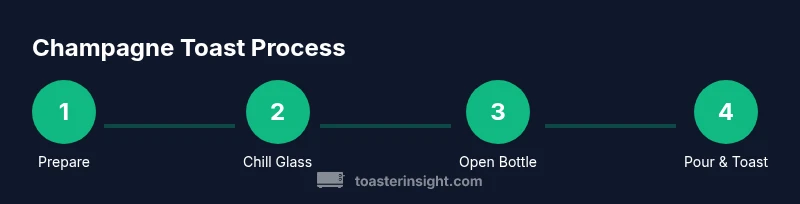
Steps
Estimated time: 15-25 minutes
- 1
Prepare and chill
Refrigerate the bottle so the champagne reaches about 45-50°F (7-10°C). Give it 15-20 minutes outside the fridge before serving if needed. Lay out clean flutes and prepare the serving area to reduce last-minute chaos.
Tip: Keep the bottle in a damp towel or bottle carrier to protect the label and maintain temperature. - 2
Choose glassware
Opt for a champagne flute or tulip glass. Hold by the stem to avoid warming the beverage and preserve bubbles. If you prefer aroma emphasis, a tulip can be better than a straight flute.
Tip: Avoid oversized bowls if you want to preserve carbonation for longer. - 3
Open safely
With the bottle angled at about 45 degrees, gently loosen the cork while keeping an even grip on the bottle. Aim for a quiet pop and control the release to avoid splashes.
Tip: Keep the cork covered with a cloth and point away from guests to prevent accidents. - 4
Pour initial sample
Pour a small initial sample to prime the bubbles and check for any sediment or off-notes. Then gradually fill to about one-third to one-half of the flute to leave room for aroma and foam.
Tip: Tilt the glass as you pour to minimize foam and preserve carbonation. - 5
Coordinate the toast
Pause conversation, raise your glass, and deliver a brief, inclusive toast. Maintain eye contact with others as you speak, then clink softly with others at a comfortable height.
Tip: Hold your gaze and keep movements calm to project confidence. - 6
Finish and savor
Take a measured sip to appreciate the aroma, bubbles, and finish. Offer refills if appropriate and signal that the toast has concluded before continuing with the event.
Tip: Allow guests to savor before moving to the next course or activity. - 7
Safety and care after
Dispose of any spills and wipe surfaces as needed. Store remaining champagne properly in a cooler or, if unopened, in a safe, cool location. Be mindful of guests with accessibility needs and adapt accordingly.
Tip: If a cork pops unexpectedly, step back and let the bubbles settle before resuming.
Your Questions Answered
What is the best temperature to serve champagne?
Champagne should be served at about 45-50°F (7-10°C) to preserve bubbles and aromas without dulling flavors.
Serve champagne cold, around 45 to 50 degrees Fahrenheit, to balance bubbles and aroma.
Should I twist or pop the cork?
Open slowly to control pressure and avoid splashes. Do not aim the cork at guests and maintain a firm grip on the bottle.
Open slowly and safely, with the cork under control, not toward guests.
What kind of glass is best for champagne?
A champagne flute is traditional for visual bubbles, while a tulip enhances aroma. Choose based on your priority: bubbles or aroma.
Flute for bubbles, tulip for aroma.
How much champagne should I pour for a toast?
Fill to about one-third to one-half of the flute to allow room for foam and aroma.
Fill one-third to halfway up the glass.
Is it okay to toast with other beverages?
Champagne is traditional for toasts, but non-alcoholic options or water can be used to include all guests.
Non-alcoholic options can be included for inclusivity.
What are etiquette tips for formal events?
Keep the toast concise, make eye contact, and avoid leaning on the glass or speaking too loudly.
Be brief, confident, and inclusive in your toast.
Watch Video
Key Takeaways
- Choose the right glass and hold by the stem.
- Chill champagne to 45-50°F and pour with care.
- Open safely and pour in stages to control foam.
- Keep the toast brief, inclusive, and eye-contact focused.
- Prioritize safety and accessibility for all guests.