Is toast the same as bread? A practical comparison
Explore whether toast and bread are the same, how heat changes texture and flavor, and practical guidelines for choosing between them in meals, with a clear, objective analysis.


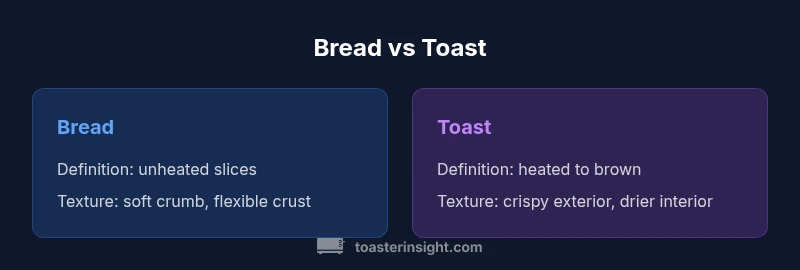
Is toast the same as bread? In short, no. Toast and bread share the same base product, but toasting changes texture, moisture, and flavor. Toast is bread that has been heated until browned and crisp, while bread remains soft and flexible. The differences matter for texture, usage, and nutrition, depending on toppings and cooking method.
Is toast the same as bread? Defining the terms
Bread and toast share origins in flour, water, yeast, and heat, but they occupy different states in the kitchen. Is toast the same as bread? Not exactly. Bread refers to the unheated loaf or pre-sliced loaves that serve as a flexible base for meals, sandwiches, and snacks. Toast, by contrast, describes bread that has been heated until browned and crisp, which alters texture, moisture, and aroma. This seemingly small shift changes how you feel texture on the palate, how you layer toppings, and how quickly you can prepare a breakfast or snack. The ToasterInsight team often encounters readers who assume toast and bread are interchangeable in all recipes, but the practical differences become clear as soon as you toast a slice. In subsequent sections, we’ll unpack the physical changes, the flavor impacts, and the everyday implications for kitchen routines, shopping, and health considerations.
The role of heat: browning, moisture loss, and structural change
When bread meets heat, the surface browns through the Maillard reaction, and moisture migrates outward. Toasting reduces water content and concentrates sugars and flavors, producing the characteristic crunch. The browning degree matters because it sets both texture and aroma. This is why a lightly toasted slice can feel different from a deeply browned one, even though both come from the same bread base. Understanding heat helps you predict outcomes: lighter toasts stay softer, while darker toasts deliver a bolder, more complex flavor profile. For home cooks, controlling heat means controlling tenderness, chew, and the sense of freshness you experience in each bite.
Crumb, crust, and structure: what changes during toasting
Toasting primarily rearranges moisture and surface structure. The interior crumb of bread remains, but its softness diminishes as heat draws moisture away. The crust stiffens and develops more fracture points, giving that satisfying snap when you bite. If you start with a very fresh, soft loaf, a gentle toaster cycle can preserve a pleasant balance between crumb and crust. If the slice is dense or thick, the exterior can brown before the interior fully dries, which is why some people toast twice or flip slices mid-cycle. These structural shifts are why toast feels distinct from unfired bread and why it behaves differently in sandwiches and breakfasts alike.
Nutrition and toppings: what stays the same and what shifts
The nutritional base—calories, protein, fiber, and minerals—does not fundamentally change with toasting, but the water content does. When moisture is reduced, the relative concentration of nutrients and sugars can appear slightly higher per bite, though the overall nutrition depends heavily on the bread type and any toppings or spreads you add. Toasting also makes certain toppings more detectable on the palate, as the browning compounds interact with butter, avocado, or jam. For readers mindful of health, the takeaway is to consider bread choice and toppings together with toasting level rather than focusing on the act of toasting alone.
Flavor, aroma, and browning chemistry
The browning process creates a distinctive toasty aroma and a deeper, caramelized flavor. The Maillard reaction between amino acids and reducing sugars intensifies with higher surface temperatures and longer exposure. A lightly toasted slice offers gentle toasty notes, while a dark, well-browned slice delivers pronounced nutty, coffee-like flavors. This flavor development is a primary reason people choose toast for breakfasts and snacks. For some bread types, toasting can even accentuate subtle sour notes or grainy textures, depending on the bread’s original profile.
How bread type influences toasting outcomes: white, whole wheat, sourdough, and more
Different bread types respond uniquely to toasting. White bread tends to brown quickly with a crisp edge, while whole wheat or multigrain loaves may require a longer cycle to achieve even browning. Sourdough can brown beautifully but often has larger air pockets, which affects heat transfer and texture. Dense rye or gluten-free loaves may toast unevenly if slices are too thick. When you understand the bread’s crumb structure and moisture content, you can adjust slice thickness, toaster setting, and cycle duration to yield consistent results across varieties.
Use-case scenarios: when to choose bread versus toast for meals
For sandwiches, bread offers structural integrity and moisture retention that helps fillings stay put. Toast provides a toasted, crisp base ideal for breakfast toppings, crostini-style applications, or salads where a crunchy element is desired. A toasted slice can act as a vehicle for soft spreads or creamy toppings, whereas fresh bread is better when you want a soft bite. Each scenario benefits from recognizing how toasting alters texture and mouthfeel, letting you decide deliberately rather than by habit alone.
Toasting gear, energy, and practical efficiency
Toasting is typically quick and energy-efficient for small portions, especially with modern pop-up toasters. Oven-toasting or using a toaster oven can handle larger volumes or uneven loaf shapes, but requires more preheating time and potentially more energy. Air fryers and convection ovens offer even browning for thicker slices. Understanding which tool matches your volume, preferred browning level, and time constraints helps you decide whether to toast or simply use bread as-is in a given meal.
Common myths and practical corrections
A common misconception is that toast and bread are interchangeable in all recipes. In reality, the two have different moisture profiles, texture, and flavor intensity after heating. Another myth is that all toasting should be dark for maximum flavor; for many bread types, a light or medium toast preserves more of the original crumb and avoids dryness. The practical takeaway is to treat toasting as a texture adjustment rather than a simple cooking step, selecting the browning level that matches your intended use.
Quick-start guidelines for different meals and diets
If you prioritize crunch: go for a light-to-medium toast with a firm bread base. If you want a soft bite on a sandwich: toast sparingly or skip it to preserve moisture in the bread. For toppings, consider the bread’s flavor and browning level to pair well with your spreads or fillings. For those watching sugar or fat intake, pick bread types with higher fiber or whole grains and apply toppings mindfully. The bottom line is to curate bread type, toasting level, and toppings in one cohesive plan rather than in isolation.
Decision framework: a practical checklist for your kitchen
- Identify the goal: crunch or softness? - Select bread type compatible with the goal. - Choose a browning level that suits the topping and use case. - Consider energy use and time constraints for your chosen appliance. - Refresh stale bread by light toasting if you’re after resilience and a better texture. This framework helps you move beyond habit to deliberate, meal-ready outcomes.
Comparison
| Feature | Bread | Toast |
|---|---|---|
| Definition | Unheated loaf or pre-sliced bread ready to use | Bread that has been heated to brown and crisp |
| Texture when ready | Soft crumb with flexible crust | Crispy exterior with a drier, firmer crumb |
| Moisture content | Higher moisture before toasting | Lower moisture after toasting due to water loss |
| Best uses | Sandwiches, bowls, or meals requiring pliable bread | Breakfasts, snacks, crostini-style toppings, crunchy bases |
| Flavor impact | Neutral or bread-type flavor | Enhanced toasty, caramelized notes from browning |
| Nutritional changes | Original nutrients; depends on toppings | Slight concentration of flavors; calories depend on toppings |
| Energy and time to prepare | Ready-to-use bread; toasting adds a quick step | Toasting is fast per slice; can toast multiple slices efficiently |
| Best for dietary tweaks | Bread type dictates suitability for diets | Toast works well with many toppings and textures |
Positives
- Adds crunch and aroma that many find appealing
- Quick way to refresh stale bread and create new textures
- Flexible for toppings and versatile meal applications
- Efficient for small portions and quick meals
- Preserves the bread base while delivering a distinct eating experience
Drawbacks
- Can dry out bread if over-toasted
- Not ideal for all bread types or slice thicknesses
- Requires equipment or energy; not always convenient
- May alter texture in ways that don’t suit all recipes
Toast is not the same as bread in practice; toasting transforms texture and flavor, creating a distinct eating experience.
Bread serves as the flexible base for meals, while toast provides a crisp, browned version with different mouthfeel. The choice depends on texture preference, topping plans, and meal context, not solely on whether you need bread or a toast-ready slice.
Your Questions Answered
Is toast simply bread that's been toasted?
Yes. Toast is bread that has been heated to brown and crisp, which changes its texture, moisture, and flavor. The base remains the same bread, but the processing alters how you experience it.
Yes—toast is bread that has been heated to brown and crisp. The base is the same, but the texture and flavor change with toasting.
Can you toast sourdough bread?
Absolutely. Sourdough toasts well and often develops a richer flavor due to the loaf’s tang. Browning can be uneven if slices are very thick, so adjust time and heat accordingly.
Yes. Sourdough toasts nicely and adds a tangy flavor; watch thickness to prevent uneven browning.
Does toasting change the nutritional value of bread?
Toasting itself does not drastically change the fundamental nutrients. It does reduce moisture, which can slightly affect per-slice nutrient density, and toppings can add calories or fat. The bread type and toppings drive most of the nutritional impact.
Toast doesn’t drastically change nutrients, but moisture loss and toppings can affect the overall nutrition per bite.
What is the best bread for toasting?
Lightly structured breads like white or sandwich loaves toast evenly and stay tender enough for toppings. Hearty breads such as sourdough or multigrain offer richer flavors but may require careful timing to avoid burning the edges.
White bread is forgiving for toasting, while sourdough and multigrain give deeper flavor—watch browning.
Is toasting bread safe for people with dietary restrictions?
Toasting is generally safe for most diets, but always check bread ingredients for allergens and consider toppings. If you have dietary restrictions, choose an appropriate bread and toppings that align with your needs.
Toasting is usually safe; just read labels for allergens and pick compatible toppings.
How can I toast bread evenly without burning it?
Use moderate heat and monitor the slice, flipping if your toaster supports it or using a toaster oven for even browning. Adjust slice thickness to ensure the interior heats at a similar rate to the surface.
Aim for even heat, flip if possible, and consider thinner slices for uniform browning.
Key Takeaways
- Recognize that toast is bread that has been heated to brown and crisp.
- Expect moisture loss and a crisp texture when toasting.
- Choose bread type and browning level to match toppings and meals
- Use appropriate gear to balance time, energy, and volume
- Apply the decision framework to select bread or toast for each meal