Where to Put a Toaster in the Kitchen: A Practical Guide
Discover safe, convenient spots for your toaster in the kitchen. Learn countertop vs storage options, outlet placement, ventilation, and cord management to keep surfaces clean and breakfast flowing smoothly.


By following this guide, you’ll identify a safe, convenient spot for your toaster that minimizes heat exposure and clutter. We'll cover countertop vs storage options, outlet proximity, ventilation, and cord management, then provide a step-by-step plan to place or relocate your toaster in a typical kitchen.
The Why and Where: Why placement matters
Understanding where to put toaster in kitchen matters for safety, efficiency, and daily routines. A well-chosen spot reduces heat exposure to nearby surfaces, keeps crumbs off prep zones, and speeds breakfast. According to ToasterInsight, placement also helps protect cabinets from heat and minimizes counter clutter. By prioritizing workflow—where you stand, what you reach for, and how you clear crumbs—you’ll improve both safety and convenience. Think of placement as part of a kitchen system: it should be near an accessible outlet, out of reach of the sink splash zone, and away from the stove heat plume. If you entertain or time-crunch mornings, having the toaster within arm’s reach of your main prep area reduces trips across hot surfaces and speeds meal assembly. Keep a dedicated space for crumbs and a nearby mat to catch spills. The goal is a calm, organized workspace where the toaster feels like a natural extension of your cooking area. The ToasterInsight team notes that consistent placement streamlines daily use.
In most layouts, prioritizing accessibility means you place the toaster in a zone that minimizes crossings and distractions. This reduces clutter on your most-used work surfaces and makes it easier to prep bread, butter spreads, and toppings while you monitor the toast. Visualize your morning routine: you grab bread, slide it in, and push the lever—without stepping away from the counter. This planning mindset helps you avoid afterthought placement and makes the kitchen feel effortless.
Countertop vs cabinet storage: Pros and cons
Most homeowners start with the countertop, because it’s the most accessible and convenient. Placing a toaster on the counter keeps it visible for quick use and makes it easy to retrieve bread and bagels. On the downside, it consumes valuable prep space and increases the risk of crumbs spreading during food prep. Cabinet storage or a pull-out tray can hide the appliance and protect countertops, but it adds a step to every use and may require more effort to reach for daily tasks. If you decide to store the toaster in a cabinet or on a shelf, choose a ventilated space and ensure it has room for the outlet and cord. This helps avoid overheating and allows air to circulate around hot parts after use. In many kitchens a hybrid approach works well: keep the toaster on the counter in a dedicated zone, but use a shallow pull-out tray or a small shelf to store it when not in use.
Safety considerations for placement
Heat exposure, water, and small children are common safety concerns when choosing a toaster location. Do not place the appliance near the sink, faucet, or any area where water could splash. Keep it away from the edge of the counter to avoid accidental knocks. Ensure there is adequate clearance above the toaster so steam and heat do not rise toward cabinets or curtains. Use a heat-resistant mat or trivet under the toaster to protect the surface. When unplugging and moving the toaster, switch it off and let it cool before handling to prevent burns. If you have pets or kids in the home, a dedicated zone with simple access control helps keep the toast routine safe and efficient.
Ideal spots for most kitchens
A practical, versatile setup places the toaster near a convenient outlet on or near the main food-prep area. In many layouts, this means the toaster lives between the coffee station and the cutting board, within easy reach of bread and spreads. Favor locations that allow you to slide bread directly into the appliance without stepping away from the counter. An open space in front of the toaster ensures you won’t bump into mugs or jars while loading. If counter space is tight, consider a compact, wall-mounted shelf at a comfortable height or a slim cabinet with an unobstructed front edge. This keeps the toaster accessible for daily use while preserving food-prep surfaces for cooking, chopping, and seasoning. ToasterInsight analysis shows that kitchens with a well-placed toaster report smoother morning routines and less countertop clutter.
Small kitchens: optimizing space
In small kitchens, the key is to maximize vertical space and keep the workflow tight but uncluttered. A narrow wall shelf or a vertical canister rack near power outlets can host the toaster without hogging the counter. Consider a compact toaster or a toaster oven with a dedicated front-facing slot to minimize the footprint. Use slim storage solutions for crumbs and replacements bread that tuck into a cabinet panel but keep the outlet clearly accessible. If possible, position the toaster near the edge of the work triangle—between the fridge, sink, and stove—to streamline prep without forcing you to weave around other appliances. Remember to provide a clear crumb-catching area and remove any items that could accidentally fall into the heating elements.
Cord management and ventilation
Cord length matters: ensure the cord comfortably reaches the outlet without pulling the appliance forward. Use clips or Velcro ties to secure excess slack behind the toaster and prevent it from dangling into prep zones or toward the edge of the counter. Ventilation is essential; a covered or enclosed space can trap heat, so avoid closed cabinetry without airflow. If you must tuck the toaster away, choose a ventilated shelf or an open-front cabinet that allows air to circulate around the device after use. Clean the crumb tray regularly and wipe down the exterior to maintain performance and reduce smoke odors.
Visualize before you move: planning your layout
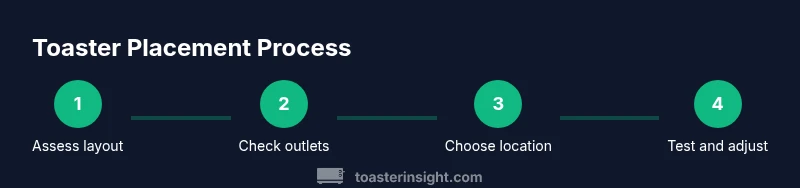
Take a few minutes to sketch a simple layout of your counter and nearby outlets. Mark potential spots for the toaster, noting proximity to the sink and stovetop. Consider daily routines: where will you set bread, butter, and jam? Placeholders on the sketch help you compare different options quickly. If you have a kitchen with multiple work zones, try placing the toaster near the breakfast station while ensuring it remains out of water paths. This pre-move planning helps you avoid repositioning the appliance later and keeps your morning routine smooth.
Maintenance after relocation
After you settle the toaster in its new home, perform a quick check to verify clearance and cord safety. Wipe crumbs from the surface and check the mat for residue. Periodically inspect the power cord for wear and replace the appliance if the cord is damaged. Keep the area clean and dry to prevent slips and to reduce the risk of fire. Regularly empty the crumb tray and run a brief toasting cycle without bread to dislodge dust. Maintaining a tidy, accessible space helps your toaster last longer and makes the kitchen feel calmer.
Design touches: blending with your kitchen aesthetic
Your toaster placement can support or disrupt your kitchen design. Choose a location and a mat that complements your color palette and textures, whether you prefer stainless steel, matte black, or cream. A small shelf with a lip can keep your toaster at the same height as your coffee maker, creating a cohesive breakfast zone. Add subtle cable covers for a clean look and consider a magnetic crumb tray or a removable tray that makes cleaning easier. The result should feel intentional and integrated, not an afterthought. The ToasterInsight team recommends maintaining that dedicated zone to keep meals efficient and surfaces safe.
Tools & Materials
- Toaster(Ensure unplugged while repositioning; place on heat-resistant surface during work)
- Heat-resistant mat or trivet(Protect countertop from heat and crumbs)
- Cable management clips or Velcro ties(Keep cord tidy and away from prep zones)
- Measuring tape or ruler(Optional for planning clearance and alignment)
- Notepad and pencil(Sketch layout and record chosen spot)
- Flashlight or phone light(Check clearance behind appliances)
Steps
Estimated time: Estimated total time: 20-30 minutes
- 1
Clear the workspace
Remove items from the counter around the toaster area. Wipe the surface to remove crumbs and prepare a clean base for planning. This prevents misjudging space when you move the appliance.
Tip: Take a quick inventory of nearby items that could fall during repositioning. - 2
Check power accessibility
Identify a nearby outlet that won’t be clogged by a newly placed toaster. Avoid outlets controlled by wall switches that could surprise you during use. Ensure the outlet is in good condition and not overloaded.
Tip: If you must use an extension cord, ensure it is rated for appliance use and kept away from water. - 3
Assess water proximity
Survey the sink and any beverage stations for splash risk. Do not place the toaster where water could accidentally reach the cord or surface. Clear spaces around the outlet to minimize spills.
Tip: Keep a damp cloth nearby for quick spill cleanup. - 4
Choose candidate locations
Select two or three spots that meet outlet and clearance criteria. Visualize reach from the main prep area and assess traffic flow in front of the workspace. Note how the bread, spreads, and utensils will align with each spot.
Tip: Use painter’s tape to outline the footprint of each option on the counter. - 5
Move the toaster to the chosen spot
Relocate the toaster to the top candidate location. Ensure there’s space in front for loading and unloading bread. Check that the cord reaches the outlet without pulling the appliance toward the edge.
Tip: Pause to cool the toaster if it has been recently used. - 6
Set up a heat-resistant mat
Place a mat or trivet beneath the toaster to guard the surface from heat and crumbs. Align the toaster so crumbs fall onto the mat rather than the countertop. This reduces staining and makes cleanup easier.
Tip: Choose a mat with a non-slip bottom to prevent movement. - 7
Tidy the cord
Coil excess cord beneath the appliance or secure it with clips to avoid tangling with utensils or spills. Ensure the cord length allows easy reach without creating a tripping hazard. Do not force the cord into tight bends.
Tip: Hide visible cords with a simple cord cover for a cleaner look. - 8
Test toaster function in place
Plug in the toaster and perform a brief test toast cycle away from the edge of the counter. Observe heat buildup and ensure there’s no unusual vibration or movement. Verify safe clearance around the sides and back.
Tip: If you notice overheating in any area, reconsider placement immediately. - 9
Document layout and adjust if needed
Take a quick photo or sketch your final setup. Compare it to your planned workflow and adjust if the toaster blocks utensils or crumbles reach. Keep the space organized with a simple routine for daily use.
Tip: Leave space for crumbs to fall away from the edge for easy cleanup.
Your Questions Answered
Is it unsafe to put a toaster under cabinets?
Yes, placing a toaster under cabinets can trap heat. If you must, ensure there is ample ventilation and airflow to prevent heat buildup near cabinetry.
Putting a toaster under cabinets isn't ideal because heat can build up; provide proper ventilation if you choose that spot.
Can I store a toaster in a cabinet?
Storing a toaster in a ventilated cabinet is possible, but avoid enclosed spaces without airflow. Ensure the outlet and cord have enough room and never block heat exhaust paths.
You can store a toaster in a ventilated cabinet, just make sure it has airflow and access to the outlet.
What is the safest distance from water sources?
Keep the toaster away from sinks, faucets, and wet areas. Maintain a dry, stable surface and ensure the cord won’t reach water.
Keep the toaster away from sinks and other wet areas; keep it dry and secure.
How can I manage cords effectively?
Use cord clips or Velcro ties to secure excess length and route cables away from the edge of the counter. This prevents tugging and tripping hazards.
Clip and tidy the cord so it stays out of the way and easy to reach.
Are toaster ovens placement different?
Toaster ovens may generate more heat and require more clearance. Follow the manufacturer’s guidance and ensure adequate ventilation and distance from heat-sensitive surfaces.
Toaster ovens often need more space; check the manual for recommended clearance.
How often should I clean the crumb tray?
Empty and clean the crumb tray regularly, especially after heavy use. Wipe the exterior and interior surfaces to reduce odors and prevent buildup.
Clean the crumb tray regularly after use and wipe down the exterior.
Watch Video
Key Takeaways
- Choose a spot with easy outlet access and clear separation from water sources.
- Use heat-resistant surfaces and tidy cords for safety and aesthetics.
- Plan your layout before moving to minimize rework.
- Maintain the area with regular cleaning to prolong appliance life.