Air Fryer vs Convection Toaster Oven: Which Is Right for You in 2026
Air fryer vs convection toaster oven: an analytical guide comparing capacity, speed, texture, and versatility to help homeowners choose the right countertop appliance in 2026.


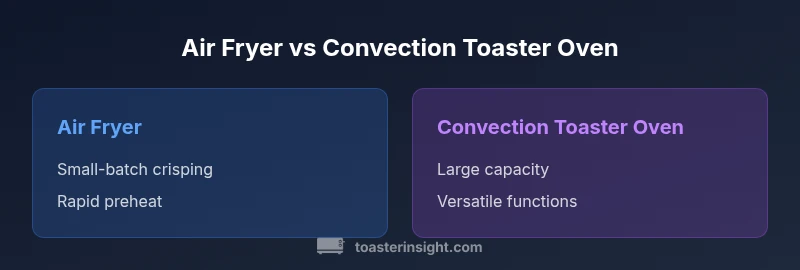
Air fryer vs convection toaster oven: the air fryer excels at quick, crisp results for small batches using rapid hot air, while convection toaster ovens offer larger capacity and broader cooking functions like baking and roasting. For most households, a convection toaster oven serves as the better all‑rounder; air fryers shine for quick, oil‑lean bites.
The core distinction between air fryer and convection toaster oven
Across modern kitchens, the terms air fryer and convection toaster oven are sometimes used interchangeably, yet they describe distinct concepts that influence how you cook. The air fryer relies on a compact chamber with a powerful, high-velocity fan that circulates hot air around food placed in a perforated basket. This creates a rapid, crisp exterior with limited oil. By contrast, a convection toaster oven uses a larger cavity and still employs a fan to move hot air, but it preserves the traditional oven envelope: racks, crumb tray, and multiple cooking modes. According to ToasterInsight, the core distinction you’ll notice is not only speed but also scale. If you frequently cook for several people or want roasting and baking options, the convection toaster oven offers more flexibility. If you primarily crave snack-ready, crispy bites with minimal oil, the air fryer is the sharper tool. The ToasterInsight team found that understanding your typical batch size and preferred cooking tasks is the best predictor of which appliance will serve you better in daily life. In 2026, many households now own at least one of these devices as a supplement to a full-size oven, not a replacement, emphasizing that the choice largely hinges on use cases and kitchen space.
- 180-210 words
Comparison
| Feature | Air fryer | Convection toaster oven |
|---|---|---|
| Primary function | Crisp, oil-free results for small batches | All-around cooking with air-forced heat and multiple racks |
| Capacity | Small to medium batches (1-3 servings) | Larger meals and multi-dish capacity |
| Cooking speed | Often faster for small items | Slower for many items but flexible |
| Crispiness and texture | Excellent crispiness on snacks | More even browning with oven-like texture |
| Versatility | Limited to crisping and similar tasks | Broad baking/roasting/grilling capabilities |
| Energy use | Typically lower for tiny loads | Higher when using multiple racks or longer cook times |
| Preheating | Usually quick preheat; many models reach temp in minutes | Preheating depends on size; can take longer |
| Ease of cleaning | Crumb tray and basket; easier cleanup | More racks/trays; cleaning more involved |
| Best for | Small meals, quick crisping | Versatile cooking and larger portions |
Positives
- Sharper crisping for small batches with minimal oil
- Fast preheat and shorter cook times for quick meals
- Compact footprint fits small countertops
- Versatility in some models (reheating, baking small items)
- Lower energy use for small tasks
Drawbacks
- Limited capacity compared with full-size ovens
- Convection toaster ovens can take longer to preheat for large loads
- Cleaning can be more involved due to multiple racks and trays
- Some models have smaller internal cavities that limit bigger dishes
Convection toaster ovens win as the all‑around pick; air fryers excel for speedy, crisp results on small batches
If your cooking needs lean toward versatility and larger portions, choose a convection toaster oven. If your priority is rapid, crisp results for small portions with minimal oil, an air fryer is the better fit. The best solution for many kitchens is to own both in complementary roles.
Your Questions Answered
Which appliance cooks faster for small meals: air fryer or convection toaster oven?
For small batches, air fryers generally deliver faster results due to the compact chamber and high-velocity air. Convection toaster ovens can still be quick, but their larger cavity means prep and cycling can take longer when you’re cooking just a few servings.
Air fryers usually win speed for small portions; convection ovens catch up when you’re cooking more at once.
Can I replace a full-size oven with an air fryer or convection toaster oven?
Convection toaster ovens can handle many typical baking tasks and smaller roasts, but they rarely match a full-size oven’s capacity for large batches. An air fryer cannot replace an oven for large roasts or sheet-pan meals, but it can supplement with crisping on smaller items.
A convection toaster oven can cover many mid-size tasks, but a full-size oven is still needed for large meals.
Is preheating necessary for both devices?
Preheating is common for both, though air fryers often reach target temperature faster due to smaller interior. Convection toaster ovens may require longer preheat, especially on higher cooking temperatures.
Both heat up quickly, but air fryers usually preheat in minutes; convection ovens might take a bit longer depending on size.
Which saves more energy overall: air fryer or convection toaster oven?
Energy use depends on batch size and cooking time. Air fryers typically use less energy for small, crisping tasks, while convection toaster ovens can be more energy-efficient for larger meals when used efficiently.
Smaller tasks favor air fryers energy-wise; bigger meals tilt the edge to convection toaster ovens if used well.
Are air fryers safe for apartments or small kitchens?
Yes, air fryers are popular in compact spaces due to their small footprint and quick cooking. Ensure adequate ventilation and follow manufacturer guidelines for safe operation.
Yes—great for small spaces, just keep it ventilated and clean.
Can a convection toaster oven replace a microwave?
A convection toaster oven can replace some microwave tasks, especially reheating or crisping leftovers, but it is slower for reheating liquids or very quick foods. For speed-critical tasks, a microwave may still be preferred.
It can replace some reheating tasks, but not all microwave jobs.
Key Takeaways
- Assess batch size to choose capacity needs
- Prioritize versatility for everyday cooking
- Expect faster results from air fryers for small items
- Plan cleaning around rack configurations for convection models
- Consider energy use based on typical load and duration