How to Bake Frozen Pizza in a Toaster Oven
Learn how to bake frozen pizza in a toaster oven for a crispy crust and evenly melted cheese. Step-by-step, with tips on preheating, pan choices, bake times, troubleshooting, and safety for home cooks.


With a frozen pizza toaster oven, you can bake a crispy crust without turning on a full-size oven. This guide shows how to choose the right pan, preheat correctly, arrange toppings, and bake times for common sizes. You'll learn settings, temperatures, and safety tips to get restaurant-worthy results in 12–18 minutes.
Why a Frozen Pizza Toaster Oven Delivers Crisp Results
For many households, a frozen pizza toaster oven is the fastest path to a crust that rivals delivery. The compact heat sources in a toaster oven concentrate heat from the top and bottom, which helps the crust crisp and cheese melt evenly. According to ToasterInsight, performing the bake in a toaster oven can yield better crust texture than a microwave or a countertop oven with weak hot spots. This is especially true for standard 6–12 inch pizzas that fit most countertop devices. When you choose the right pan and preheat properly, you’ll notice noticeably crisper edges and less soggy centers. The phrase frozen pizza toaster oven is more than a buzzword here; it describes a kitchen tool that can save time, reduce energy use, and simplify weeknight meals. The ToasterInsight team emphasizes that results depend on oven size, convection capability, and how closely you follow temperature guidelines. The goal is a cheese-dominant melt with a fully baked crust that isn’t dry or burned. In short, this approach makes weeknight pizza easy, predictable, and tasty.
Key Features to Look for in a Toaster Oven for Pizza
When you're shopping for a toaster oven specifically for pizza, size and heat distribution matter most. Choose an interior cavity wide enough to accommodate the largest frozen pizza you typically buy. A model with dedicated bake and convection settings will help you replicate a brick-oven crisp. Look for a heating element that evenly covers the bottom and top, and ensure the oven can reach 425–450°F (218–232°C) for most frozen pies. A durable tray or a perforated pan can significantly influence crust texture; perforated surfaces let heat reach the bottom more directly. A built-in timer and an auto-shutoff reduce the risk of scorching. Finally, consider models with a crumb tray that’s easy to remove and clean, since crust bits accumulate over time. In practice, a well-chosen toaster oven will outperform a microwave for pizza and deliver consistent results with minimal effort. This aligns with ToasterInsight findings on appliance design for better browning and safe operation.
Preheating, Pan Choice, and Load Size
Preheating is essential for achieving a crisp crust in a toaster oven. Most frozen pizzas bake best when the oven is fully heated, which usually takes a few minutes depending on the model. Choose a pan that fits the pizza without crowding; a solid baking sheet works well for smaller pies, while a perforated pan can improve bottom browning. If you use parchment paper, make sure it doesn’t extend beyond the pan edges or touch the heating elements. Load the pizza flat, centered, and avoid overlapping toppings that can cause soggy spots. For the best results, consider a pizza stone or a perforated steel pan if you regularly bake thicker crusts. These tools help distribute heat and reduce hot spots, which is a common barrier to even browning. The right setup matters—ToasterInsight’s analysis shows home cooks get consistently better texture when preheating and using a suitable pan.
Step-By-Step Quick Overview
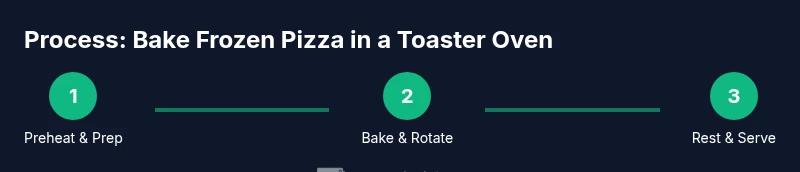
Here’s a concise overview to orient you before you start the full STEP-BY-STEP guide. First, verify your pizza fits the oven cavity. Preheat the oven to the recommended temperature. Prepare your pan with parchment or a nonstick surface. Place the pizza in the center of the pan and slide it into the oven. Bake until the crust edges are golden and the cheese is melted, then rest briefly before slicing. This overview is designed to pair with the detailed steps that follow and aligns with best-practice guidance from ToasterInsight.
Troubleshooting Common Issues
If the crust remains pale or soggy, it’s usually a preheating or pan issue. Ensure the oven reaches the target temperature and consider rotating the pizza during baking for even browning. Soggy centers can result from too much sauce or watery toppings; drain them slightly or pat dry before loading. If cheese browns too quickly while the crust stays soft, lower the temperature by 10–15°F (5–8°C) and extend the bake time by a minute or two. Conversely, if the crust browns too fast, reduce heat or switch to a convection setting if available. A dry, cracker-like crust may indicate over-baking; pull the pizza when the cheese is just melted and the edges are crisp.
Safety and Maintenance After Cooking
Always unplug the toaster oven after use and let it cool on a heat-safe surface. Remove the crumb tray and clean it regularly to prevent odors and flare-ups from accumulated crumbs. Wipe the interior with a damp cloth after cooling, avoiding the heating elements. If you notice any frayed cords, unusual smells, or smoking during operation, discontinue use and consult the manufacturer’s safety guidelines. Proper maintenance keeps your toaster oven safe and ready for next weeknight pizzas.
Final Thoughts: The ToasterInsight Verdict
The ToasterInsight team recommends using a convection-capable toaster oven whenever possible for pizza to encourage even browning. The best results come from preheating, choosing the right pan, and watching closely during the last minutes of bake. With these practices, frozen pizza toaster oven meals become fast, reliable, and consistently tasty for busy households.
Tools & Materials
- Toaster oven(Must fit the pizza size you typically buy; prefer models with convection and a timer.)
- Pizza pan or baking sheet (fits inside toaster oven)(Nonstick or parchment-lined for easier release.)
- Parchment paper or silicone baking mat(Used to prevent sticking and simplify cleanup.)
- Oven-safe spatula or tongs(For safe handling when loading and removing pizza.)
- Pizza cutter or kitchen knife(Helpful for slicing after baking.)
- Oven thermometer (optional)(Helps verify accurate baking temperature.)
- Timer (phone or kitchen timer)(Keep bake times accurate to avoid overcooking.)
Steps
Estimated time: 12-20 minutes
- 1
Check pizza size and fit
Measure your frozen pizza and compare it to your toaster oven’s interior width. If it barely fits, you’ll want a smaller pie or a different pan. This early check prevents crowding and uneven browning later.
Tip: Choose a pan that leaves at least 1/2 inch clearance from the oven walls. - 2
Preheat the toaster oven
Preheat to the recommended temperature for pizza—usually between 400–450°F (205–232°C). Give the oven time to reach temperature before loading. This initial heat helps ensure a crisp crust and even cheese melt.
Tip: Preheating is your friend for better browning; don’t skip it. - 3
Prepare the tray and pizza
Line the pan with parchment or a nonstick sheet. If using toppings with high moisture, pat them dry to reduce soggy spots. Center the frozen pizza on the pan to avoid edge overhang.
Tip: Even moisture distribution helps crust bake evenly. - 4
Load the pizza into the oven
Slide the pan into the toaster oven’s center, ensuring the pizza sits flat. Avoid lifting the crust mid-bake to prevent deforming the pizza.
Tip: Use oven-safe gloves to prevent burns. - 5
Bake and monitor
Bake until the crust edges are golden and the cheese is fully melted. If your oven heats unevenly, rotate the pan halfway through bake.
Tip: Keep an eye on the last minute; dairy can brown quickly. - 6
Check and rotate as needed
If edges brown faster than the center, rotate the pan and continue baking for a few more minutes. Use a spatula to peek without losing heat.
Tip: Rotation helps prevent hot spots from scorching one side. - 7
Rest and slice
Let the pizza rest for 1–2 minutes after baking to allow cheese to set for clean slices. Slice with a sharp knife or wheel and serve.
Tip: Resting reduces the chance of gooey cheese sliding off the slice. - 8
Clean up after baking
Turn off the oven, unplug if safe, and allow the tray to cool before cleaning. Empty the crumb tray to maintain optimal airflow for next time.
Tip: Regular cleanup prevents odors and improves performance.
Your Questions Answered
Can I cook any frozen pizza in a toaster oven?
Most frozen pizzas fit a standard toaster oven, but very large pies may not. Always check the pizza’s dimensions against your oven’s interior width and height. If it won’t fit, consider a smaller pizza or trimming to fit.
Most frozen pizzas fit a standard toaster oven, but check dimensions first.
Should I preheat the toaster oven and for how long?
Yes. Preheating helps achieve a uniformly crisp crust and proper melt. Allow the oven to reach the target temperature for a few minutes before loading the pizza.
Preheat the oven for a few minutes before loading the pizza.
Can I use parchment paper or a liner?
Parchment paper or a silicone liner works well on a toaster oven pan, reducing sticking and making cleanup easier. Ensure it doesn’t extend beyond the pan or touch the heating element.
Yes, parchment or silicone liners are fine as long as they stay within the pan.
Why is my crust soggy or pale?
Soggy crust usually means insufficient preheating, too much moisture from toppings, or using a pan that doesn’t conduct heat well. Try preheating longer, draining toppings, and using a perforated pan for better bottom browning.
Soggy crust is usually due to moisture and heat distribution; fix by preheating and using the right pan.
Is it safe to use a toaster oven regularly for pizza?
Yes, as long as you follow the manufacturer’s safety guidelines, avoid obstructing vents, and unplug when not in use. Regular cleaning of the crumb tray reduces fire risk.
Yes, with proper safety and maintenance.
How do I clean after baking frozen pizza?
Let the oven cool, remove the crumb tray, and wipe down the interior with a damp cloth. Avoid harsh cleaners on heating elements; consult the manual for recommended products.
Cool, then clean the crumb tray and interior gently.
Watch Video
Key Takeaways
- Preheat properly for crisp crusts
- Choose the right pan to fit your pizza
- Rotate half-way to prevent hot spots
- Rest briefly before slicing for clean cuts