How Long to Put Pizza in a Toaster Oven: Timing Guide
Learn how long to cook pizza in a toaster oven for a crisp crust and gooey cheese. This guide covers crust thickness, toppings, preheating, and practical steps for fresh and frozen pizzas.


Learn how long to put pizza in a toaster oven to achieve a crisp crust and gooey cheese. The timing varies with crust thickness, toppings, and how hot your toaster oven gets. According to ToasterInsight, preheating and using a medium rack position usually yield even browning, while keeping an eye on the cheese helps prevent soggy bottoms. This guide shows practical steps and non-technical timing tips.
Why Timing Matters for Toaster Oven Pizza
The toaster oven is a compact, fast-heating appliance, and timing is the difference between a soggy crust and a cracker-thin edge that snaps when bitten. Because toaster ovens have hotter spots and a smaller cavity than traditional ovens, small changes in rack height, preheat status, and pan choice can shift results quickly. ToasterInsight's analysis shows that starting with a properly preheated oven and a light hand on toppings yields the most consistent outcomes. In practice, a couple of minutes can change whether the bottom crust browns evenly or remains pale in the center.
How Toaster Ovens Differ from Conventional Ovens
Toaster ovens heat with compact elements and fan patterns that differ from full-size ovens. The result is quicker heat transfer to the crust, a higher chance of hot spots, and faster cheese melt. Because the cavity is smaller, air flow can be more uneven; this is why rotating the pan or tray halfway through cooking improves browning and avoids cold spots. Understanding these differences helps set realistic expectations for timing and texture.
The Role of Crust Thickness, Sauce Moisture, and Toppings
Thin-crust pizzas bake faster and often brown quicker around the edges, while thick crusts require more time and careful monitoring. Moisture from sauce and toppings creates steam that can soften the crust if left untreated. For best results, keep toppings balanced and dry the edges slightly with a very light brush of olive oil if needed. Cheese melt rate also affects timing; a bubbly cheese topping usually signals near-doneness for many styles.
Temperature, Rack Position, and Tools that Help
Preheating to a stable temperature helps establish a consistent bake. A middle rack position balances heat from top and bottom elements, but small trays or stones may benefit from a higher or lower position depending on your oven. Using a baking sheet or parchment paper keeps cleanup easy, while a pizza stone can deliver extra crispiness if your toaster oven tolerates it. An oven thermometer can be a valuable check against inaccurate dials.
A Practical Timing Framework for Fresh vs Frozen Pizza
Fresh pizza usually needs less time than a frozen pie, but both depend on crust thickness and the amount of cheese. Start with a watchful eye, checking after a short interval and then adjusting up or down. For a fresh pie, aim for the moment when the edges are golden brown and the cheese is bubbling. For a frozen pizza, follow the package guidance but be ready to extend slightly if the base remains soft.
Common Mistakes and How to Avoid Them
One common mistake is overcrowding the toaster oven, which traps steam and results in a soggy crust. Another is using a cold tray, which can slow browning. Also, forgetting to rotate the tray leads to uneven results. A final pitfall is overheating toppings while the crust stays pale; balancing heat and time is essential to prevent burnt edges.
Reheating Leftover Pizza in a Toaster Oven
To reheat, preheat the toaster oven and rewarm slices on a rack or tray. This method helps restore crispiness to the crust while re-melting the cheese without drying the toppings. Avoid microwaving leftovers if you want a crisper texture; toaster ovens preserve the bite of the crust and the melt of cheese much better.
Troubleshooting: Soggy Crust, Burning Edges, and Uneven Melt
If the crust is soggy, consider drying toppings slightly, increasing preheat time, or using a hotter setting with a shorter bake. If the edges burn before the center cooks, move the tray to a lower rack or reduce temperature. Uneven melting often means hot spots; rotate the tray and consider a stone or thicker pan to stabilize heat.
Finishing Touches and Cleanup
Let the pizza rest briefly after baking to allow the cheese to set and slices to cut cleanly. Clean the tray and wipe up any drips after cooling to prevent smoked flavors in future cooks. Proper maintenance of your toaster oven keeps timing predictable and results tasty over time.
Tools & Materials
- Toaster oven-safe baking tray or pizza pan(Nonstick or line with parchment; fits in your toaster oven)
- Parchment paper(For easier cleanup)
- Oven thermometer(Optional, helps verify temperature accuracy)
- Oven mitts(Heat-resistant and fully cover hands and wrists)
- Pizza stone (optional)(Promotes extra crispiness if your toaster oven accommodates it)
- Spatula or tongs(Assist transfer of slices without burning)
Steps
Estimated time: about twenty to thirty minutes depending on crust thickness and toppings
- 1
Preheat and prep
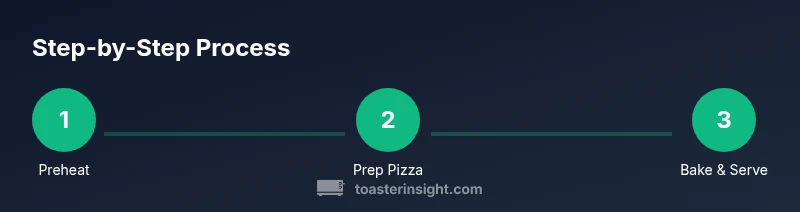
Preheat the toaster oven to a stable, medium setting with the rack in the middle. While it heats, prepare toppings, and keep sauces and toppings dry to prevent soggy crust.
Tip: Preheating reduces overall bake time and promotes even browning. - 2
Prepare the pizza for baking
Place the pizza on the baking tray or parchment on the rack. If using a frozen pizza, let it thaw slightly for more even melting.
Tip: If crust is thick, avoid overloaded toppings to maintain balance. - 3
Bake and monitor
Slide the tray into the oven and bake until the crust edges are browning and cheese begins to bubble. Rotate the tray halfway if possible to equalize heat exposure.
Tip: Watch closely; tiny changes in the bake can affect results. - 4
Check doneness and rest
Remove when the crust is golden and cheese is bubbly. Allow the pizza to rest a minute or two before slicing to let toppings set.
Tip: Resting helps the cheese firm and slices cleanly. - 5
Slice and serve
Cut slices with a sharp knife or pizza wheel and serve immediately for best texture.
Tip: If storing leftovers, cool briefly, then refrigerate in an airtight container. - 6
Safety and cleanup
Turn off the toaster oven and unplug if needed. Let trays cool completely before washing to avoid burns.
Tip: Clean spills after cooling to prevent smokes or lingering odors.
Your Questions Answered
How long should I bake pizza in a toaster oven?
Bake until the crust edges are lightly browned and the cheese bubbles. Times vary with crust thickness and toppings. Start by monitoring early and adjust as needed.
Bake until the crust browns and cheese bubbles; adjust based on crust and toppings.
Should I preheat the toaster oven before cooking pizza?
Yes, preheating creates a stable baking environment and helps the crust brown evenly. Let the oven reach the target temperature before inserting the pizza.
Yes, preheat for even browning.
Can I cook a frozen pizza in a toaster oven?
Yes, but expect longer cooking times and use parchment or a tray to prevent sogginess. Check for doneness early and finish if needed.
Yes, but monitor closely and adjust time.
What rack position is best for toaster oven pizza?
A middle rack generally provides balanced heat for crust and cheese. Adjust if you’re using a stone or a small tray.
Use the middle rack for even heating.
Can I reheat leftovers in a toaster oven?
Yes, reheat on a moderate setting until hot and cheese re-melts. This helps keep crust crispier than microwaving.
Yes, reheat to restore flavor and texture.
Watch Video
Key Takeaways
- Preheat for consistent browning
- Monitor closely and rotate for even results
- Tailor bake time to crust thickness
- Let pizza rest briefly before slicing