How to Use a Toaster Oven for Bagels
Learn how to use a toaster oven for bagels with a practical, step-by-step guide covering preheating, timing, flipping, and finishing toppings for a crispy crust and chewy center.


Learn how to use a toaster oven to perfectly toast a bagel. You'll need a toaster oven, a bagel (fresh or frozen), a knife for optional toppings, and a little patience. This guide covers preheating, timing for various bagel thicknesses, buttering strategies, and finishing tips for a crisp crust and tender crumb.
Why the Toaster-Oven Bagel Method Works
According to ToasterInsight, using a toaster oven for bagels gives home cooks a controllable, small-batch option that can rival café-prepared results. The method relies on even heat transfer and a compact cooking space, which makes it easier to track browning without overheating. The ToasterInsight team found that the key to consistent results is a reliable preheat, an appropriately sized tray, and careful monitoring of browning levels. With bagels, texture matters: you want a crusty exterior that preserves a chewy interior. A toaster oven, unlike a microwave, creates that contrast by delivering direct heat to the crust while leaving the crumb soft. The technique also suits a range of bagels—plain, sesame-topped, poppy, or cinnamon-raisin—so long as you adapt time to thickness and moisture content. In this section, you’ll learn how to set up for success and why small adjustments can yield big flavor gains. By following a steady process, you’ll minimize the guesswork and maximize consistency across batches.
Prepping Bagels: Fresh, Frozen, or Sliced
Bagels vary in density and moisture depending on freshness and whether they are pre-sliced. Start with a clean, dry bagel, and remove any excess packaging that could trap moisture. If you’re using a fresh bagel, a quick dry surface helps browning by giving heat something to grab onto; pat gently with a clean towel. For frozen bagels, you have two options: thaw briefly for 10–15 minutes or toast directly with a slightly longer time. Slicing bagels before toasting can speed browning on the cut side and give you greater control over texture. If you prefer a softer crumb, toast with a lighter touch; for a crisper bite, allow a longer toast by a minute or two. Consider your toppings after the bagel emerges from the toaster oven; spreading butter or cream cheese while still warm can help seal in flavor.
Preheating and Rack Setup: The Foundation of Even Browning
Preheating is non-negotiable for consistent results. Set your toaster oven to a mid-range temperature (usually around 350–375°F) and let it reach that level before you start toasting. The rack position matters too: use the middle rack to balance heat from the top and bottom elements. If your toaster oven runs hot, you may want to start at 325°F and adjust in subsequent batches. Place the bagel on a small baking sheet or directly on parchment paper to minimize sticking, and ensure there’s space around the bagel for air circulation. This setup helps achieve even browning without scorching the crust. Remember, the goal is a uniform crust with a tender interior, not a burnt exterior.
Toaster-Oven Timing: Mapping Bagel Types to Browning Points
Timing will depend on your toaster oven, bagel size, and whether you start with a sliced or whole bagel. A typical approach is to toast the cut side first for 2–4 minutes, then flip and toast the other side for another 1–3 minutes. Thin, plain bagels may finish sooner, while denser varieties or sesame-topped bagels might need a touch longer. If you’re starting from frozen, add 1–2 minutes per side. Keep a visual watch on the color of the crust rather than relying solely on the clock; heat can vary between models and even between batches in the same oven. If you like a very crispy crust, you can nudge the timer a bit longer, but monitor closely to avoid scorching.
Finishing Touches: Flavor, Texture, and Serving Ideas
Once the bagel reaches your preferred shade of brown, remove it carefully and consider a brief rest on a cool rack. A light coating of butter adds flavor and helps accentuate the crust, while cream cheese or avocado can introduce moisture and richness. If you’re adding toppings like sesame or Everything bagel seasoning, apply them immediately after toasting or while the bagel is still warm so they stick effectively. For a breakfast-inspired finish, top with smoked salmon, a dollop of cream cheese, and capers. If you’re serving later, cut the bagel and store in a breathable container to preserve texture. Remember, the best bagel is the one that meets your preferred balance of crust and chew.
Troubleshooting and Common Mistakes: Quick Fixes for Better Results
Even after practicing, you might encounter a few hiccups. If your bagel browns unevenly, rotate the tray halfway through to promote even browning. If it’s underdone or pale, extend the time in 30-second increments on the same heat setting. Burnt edges are a sign you toasted too long or used too high a temperature; lower the temperature and shorten the time in future batches. Excess moisture can cause soggy crust; pat the bagel dry before toasting and avoid stacking bagels on the tray. Finally, always use a tray or parchment to prevent messes and promote easier cleanup. With careful adjustments, you’ll calibrate your toaster oven to your bagel preferences for consistent results in every batch.
Tools & Materials
- Toaster oven(Ensure it has a baking tray and rack)
- Bagel (fresh or frozen)(Slice if desired; pat dry if frost has moisture)
- Butter knife(For toppings after toasting)
- Parchment paper or silicone mat(For easier cleanup)
- Tongs or oven-safe spatula(To handle hot bagels safely)
- Thermometer (optional)(Check internal temp if needed (not required for bagels))
Steps
Estimated time: 8-12 minutes total
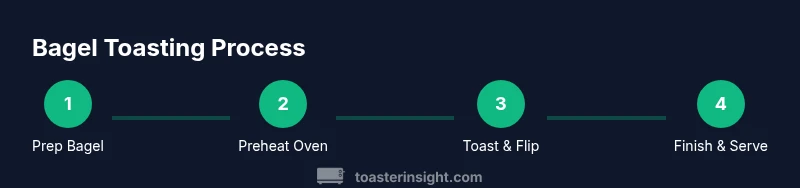
- 1
Place bagel on tray
Place the bagel on a parchment-lined tray, cut side up. Ensure even contact with the surface so browning happens uniformly without steaming the crumb.
Tip: Center the bagel on the tray for even heat exposure. - 2
Preheat toaster oven
Preheat the toaster oven to 350–375°F on the middle rack. Preheating ensures consistent browning and prevents the bagel from steaming as it hits a cold surface.
Tip: Do not skip preheating; it makes a noticeable difference in texture. - 3
Toast first side
Toast the cut side until it shows a light golden color, usually 2–4 minutes depending on bagel size. The goal is browning without drying out the interior.
Tip: Keep an eye on color rather than relying on time alone. - 4
Flip the bagel
Open the toaster oven and flip the bagel using tongs or a spatula to expose the other side to heat. This promotes even browning across both surfaces.
Tip: Hold the bagel gently to avoid crushing the crust. - 5
Toast second side and monitor
Toast the other side until the exterior reaches your preferred brownness. If you like extra crunch, extend by 30–60 seconds while watching closely.
Tip: If your oven varies, compensate by 30-second checks. - 6
Finish and serve
Remove the bagel, optional toppings can be added while warm, and serve immediately for best texture. If not eating right away, cool completely on a rack to avoid sogginess.
Tip: Butter or cream cheese while warm to improve spreadability.
Your Questions Answered
Can I use frozen bagels in a toaster oven?
Yes, you can toast frozen bagels in a toaster oven. For best results, thaw briefly or increase toasting time by 1–2 minutes and monitor closely.
Yes, you can toast frozen bagels in a toaster oven. Just add a bit of extra time and watch closely.
What temperature is best for bagels in a toaster oven?
A mid-range temperature around 350–375°F works well for most bagels. If you have a thick bagel, start lower and adjust upward as needed.
Most bagels toast well at about 350 to 375 degrees.
How long should I toast a bagel in a toaster oven?
Typically 3–6 minutes total, flipping once for even browning. Thickness and toppings affect time.
Usually three to six minutes, flipping halfway.
Cut side up or cut side down?
Toast with the cut side facing up on a flat tray for best browning. Cut side down can work if you want a softer crust.
Cut side up gives the best browning, but you can try cut side down for softer crust.
Can I add toppings before toasting?
You can spread butter or cream cheese before toasting for extra flavor; add sesame seeds or seasoning after toasting so they stick.
Spread butter or cream cheese before toasting if you want flavor; seeds go on after.
How can I prevent burning?
Start with a lower temperature and shorter times, check early, and use a timer. If your toaster oven runs hot, begin at 325°F.
Set a timer and start lower if your oven runs hot.
Watch Video
Key Takeaways
- Begin with proper preheating for even browning
- Slice or prep bagels to suit texture preference
- Monitor color, not just time, for consistent results
- Finish with toppings after toasting for better flavor
- Adjust time based on bagel type and oven behavior