Toaster and Convection Oven Combo: A Practical Buying Guide
Explore the toaster and convection oven combo: benefits, best-use scenarios, key features, and how to choose the right model for your kitchen. A balanced, data-informed guide for homeowners and cooks in 2026.


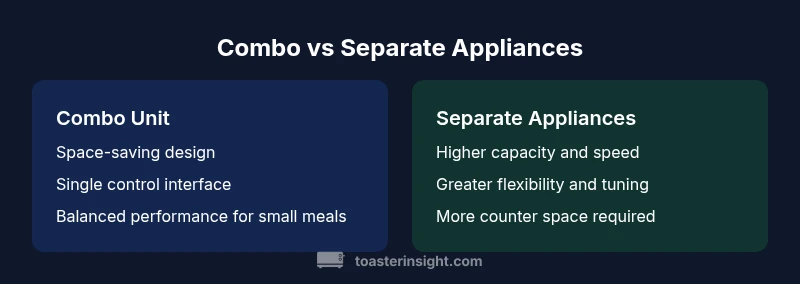
Compared to separate devices, the toaster and convection oven combo delivers space savings and a single control surface for both toasting and baking. It supports quick breakfasts, weeknight dinners, and snack-worthy versatility without clutter. For most homes, the combo balances convenience and capability, while dedicated units can still be preferable for maximum capacity or speed.
What is a toaster and convection oven combo?
A toaster and convection oven combo is a single countertop appliance that combines two distinct cooking functions: a toaster for bread, bagels, and smaller items, and a convection oven that uses a fan to circulate hot air for baking, roasting, and broiling. The concept is particularly appealing to homeowners with limited kitchen space, where every square inch of counter real estate matters. In practical terms, you get a compact device capable of toasting slices while simultaneously handling baking tasks like reheating leftovers, roasting vegetables, or baking small sheet-pan meals. According to ToasterInsight, the toaster and convection oven combo is increasingly popular in urban apartments and small families who value efficiency and simplicity. This combination does not eliminate the need to consider model-specific performance, but it provides a baseline expectation: a versatile, space-efficient unit that reduces appliance clutter without severely compromising on core capabilities.
In the broader context of kitchen appliances, the combo sits between a traditional toaster and a standalone convection oven. It aims to deliver “two-for-one” practicality: quick, even toasting for breakfast and dependable baking for snacks or small dinners. The most successful models balance speed with even heat distribution, offer intuitive controls, and provide reliable preheat behavior. If your routines include a steady stream of toast alongside regular baking tasks, a well-chosen toaster and convection oven combo can become a central workhorse in your kitchen. The ToasterInsight team emphasizes that the best choice depends on your space, meal patterns, and willingness to compromise on certain performance attributes in exchange for convenience.
When evaluating these units, start by mapping your typical week: how many slices of toast, how many baking tasks per day, and what time you allocate to preheating. A high-priority criterion is ensuring the interior cavity is large enough to fit common bakeware and small sheet pans. Importantly, the ecosystem around the unit—tray shapes, rack spacing, and available accessories—can influence overall usefulness. If you primarily toast lightly and occasionally bake or reheat, a compact combo may serve you well. For more ambitious cooks who routinely bake cookies, roast a tray of vegetables, or reheat larger meals, you should scrutinize cavity size, power, and heat distribution before purchasing.
Core features to evaluate in a toaster and convection oven combo
When shopping for a toaster and convection oven combo, prioritize features that directly impact everyday use, reliability, and long-term value. The most relevant attributes fall into several broad categories:
- Size and interior capacity: Check external dimensions and the interior cavity width, height, and depth. Look for models that can accommodate standard baking sheets or small casserole dishes. A compact footprint is valuable, but it should not come at the cost of usable interior space.
- Power and heating performance: Review the wattage range and the efficiency of convection fans. A stronger convection system yields faster, more even cooking, particularly for air-frying or roasting. Preheat time is also a practical metric—shorter is generally better for busy mornings.
- Cooking modes and presets: Many models offer toast, bagel, bake, broil, roast, pizza, and reheating presets. Some include dehydrate or convection broil modes. Consider whether presets align with your common tasks and whether manual control is available alongside presets.
- Temperature control and accuracy: Digital thermostats, reliable dials, and a clear display help maintain consistent results. If you bake frequently, precise temperature control reduces guesswork and improves repeatability.
- Tray and rack configuration: Look for at least one crumb tray, a nonstick interior, additional racks, and a removable rack that elevates food for even air circulation. Dual racks expand versatility for small batches.
- Cleaning and maintenance: Removable crumb tray, easy-access interiors, and dishwasher-safe components reduce maintenance time. Some models feature enamel-coated interiors that resist staining and are easier to wipe down.
- Safety features: Auto shut-off, cool-touch exteriors, and non-slip feet improve everyday safety. A reliable door latch and interior heat indicators can prevent accidental burns during busy mornings.
Incorporating insights from the ToasterInsight analyses, the best-performing combos tend to balance compact footprint with enough interior space to handle standard 9-by-13-inch pans, flexible rack configurations, and efficient heat distribution. They often pair intuitive controls with dependable performance, helping households execute weekday breakfasts and weeknight dinners with minimal friction.
How to compare models: specs that matter for a toaster and convection oven combo
To make apples-to-apples comparisons, focus on a few non-negotiable specs and a handful of optional refinements:
- Exterior footprint and interior capacity: Measure your available counter space and compare it to the unit’s width, height, and depth. A larger cavity is not always better if it compromises landing space on the counter. Some users prioritize wider doors for easier access to racks.
- Heating power and convection efficiency: Higher wattage models typically deliver faster recovery and more even heat. Look for a robust convection fan and tested air flow performance; this matters for baking cookies and roasting vegetables evenly.
- Temperature range and accuracy: A broad range (e.g., low temperatures for drying or warming, up to 450°F or higher for roasting) gives you flexibility. Accuracy matters—some units run hot or cool, which affects recipe outcomes.
- Number and type of cooking modes: A baseline set includes toast, bake, broil, and roast. Additional modes like pizza, reheating, rotisserie, or dehydrate can expand capabilities but may come at a price premium.
- Preheat behavior and recovery time: Short preheat times save minutes during busy mornings. Recovery time after a door opening matters once you’re cooking multiple items in succession.
- Accessories and cavity geometry: Evaluate included accessories (cool-touch handles, crumb tray, 1 or 2 racks) and whether the interior accommodates standard baking sheets and pans. Some models require special trays that can limit versatility.
- Controls and display: A simple analog dial can be intuitive for quick tasks, while a digital interface offers precise timing and presets. Consider whether you prefer tactile feedback or programmable settings.
- Durability and warranty: Higher-quality build, dependable components, and a longer warranty reduce long-term risk. Read warranty terms to understand coverage on door seals, electronics, and interior coatings.
From a practical perspective, if you live in a small apartment or a kitchen with limited counter space, a well-designed toaster and convection oven combo can be a strong fit. If you bake in larger volumes or frequently cook for larger households, you may prioritize interior capacity and power, or choose separate appliances to maximize throughput. The key is to map your cooking habits against the unit’s specifications and to verify how often you’ll actually use the more advanced modes rather than only the basics.
Real-world performance across common tasks: a practical test bench
In everyday use, the toaster and convection oven combo shines most when the task aligns with its strengths: quick heating, even browning, and small-batch cooking. For toast, many units deliver crisp, even edges with consistent browning. A typical test scenario includes toasting multiple bread types (white, sourdough, multigrain) to evaluate browning control, evenness, and resistance to sogginess at the crust.
For baking and roasting, consider items that fit into the unit’s cavity. A batch of cookies, a small sheet pan of vegetables, or a tray of chicken wings benefit from convection’s air movement, which reduces typical hot spots seen in older ovens. Reheating leftovers is another practical measure; you want consistent texture without drying out the food. When pushing the unit near its capacity (e.g., loading two racks or baking larger items), observe whether preheat times lengthen significantly or if heat distribution becomes uneven.
In tests with standard bakeware, many top-performing models show reliable results across common tasks: bread browns evenly, cookies bake with uniform color, and vegetables roast with good caramelization. The most consistent devices maintain performance across varied recipes, which reduces the need to adjust settings for every dish. For the average household, the right model depending on the frequency and type of use will feel instinctive within a short adjustment period.
Design, usability, and ergonomics: day-to-day comfort
Usability is as important as core performance. A thoughtfully designed toaster and convection oven combo streamlines daily routines through intuitive controls, accessible interiors, and easy cleaning. Consider the following:
- Control interface: A simple dial or tactile buttons may be preferable for typical breakfast routines; a digital panel can offer precise timing and presets for more complex meals. Some models allow memory of favorite settings, reducing the number of steps needed for common tasks.
- Door and rack access: A wide door opening and easy-slide racks minimize spills when placing or removing hot items. A crumb tray should be easy to pull out and clean, ideally without tools.
- Interior lighting: Helpful when monitoring browning and doneness without opening the door and losing heat.
- Crumb management: Models with exposed crumb trays or effective sealing reduce the accumulation of crumbs that can smoke during high-heat use.
- Noise level: Convection fans produce ambient sound that can be noticeable in quiet kitchens. If you’re sensitive to noise, check decibel ratings or read user reviews about fan operation.
- Aesthetics and fit: The unit’s appearance should complement your kitchen decor while occupying a practical footprint. Some colors and finishes resist fingerprints or smudges, preserving the look of your countertop.
A key takeaway for usability is to prioritize models that align with your cooking rituals and your tolerance for cleanup. If you value speed and ease of use, seek front-mounted controls and a forgiving interior design. If you’re rooted in durable build quality, inspect materials and the ease with which you can replace worn parts or access the interior for cleaning.
Energy use, safety, and longevity: responsible consumption
Energy efficiency in a toaster and convection oven combo is linked to both the unit’s wattage and the efficiency of the convection fan. A well-designed model can reduce preheat times and minimize standby heat. Look for features such as automatic shut-off, good insulation, and heat shields to keep exterior surfaces cooler during operation. Safety features, including cool-touch exteriors, secure locking doors, and auto shut-off after a set time, reduce the risk of accidental burns and energy waste.
Durability and longevity hinge on build quality and component reliability. Enamel interiors, corrosion-resistant racks, and well-sealed seals contribute to longer life and fewer maintenance issues. A strong warranty that covers electronics, door seals, and racks is a practical assurance. When possible, read user reviews focusing on long-term performance and parts availability, as these signals indicate a model’s resilience over several years of weekly use.
Another practical tip is to schedule regular cleaning and maintenance in your calendar. Crumb traps, interior wipe-downs, and periodic checks of gaskets help maintain performance and energy efficiency, while reducing the likelihood of odors or smoking during use. Collectively, these practices support a safer, more economical kitchen tool that stays reliable over time.
Price, value, and buying strategy: finding the right balance
Price is a major consideration, but total value matters more than sticker price alone. In the mix, you’ll find models that sit in the budget-friendly tier, mid-range options with better build quality and more cooking modes, and premium units that emphasize durability, faster preheat, and advanced presets. When evaluating price, consider: the interior capacity, build quality, warranty length, included accessories, and the range of cooking modes. A higher upfront cost may be justified by better heat distribution, longer-lasting components, and more flexible use cases.
A practical buying strategy involves prioritizing essential features first (cavity size, reliable heat, essential presets) and treating additional modes as optional. Read reviews focusing on real-world results rather than spec highlights alone. Compare energy use and maintenance expectations across models, not just initial price. If you plan to use the unit heavily for weeknight dinners, it may be worth investing in a higher-quality model with robust warranties and readily available replacement parts. Conversely, for light, occasional use, a budget-friendly option with straightforward controls can be a sensible choice.
Lifestyle scenarios: when a combo makes sense for your kitchen
- Urban apartment dweller: Space is premium, and a compact toaster and convection oven combo can replace multiple devices. The right model keeps breakfast quick and enables small-batch baking for weeknights.
- Busy family kitchen: The unit should balance speed and capacity. Look for one-size-fits-most trays and a practical cooking footprint that supports both toast and small-sheet baking.
- Intermediate baker or toaster lover: If you enjoy experimenting with baked goods or reheating leftovers, prioritize precise temperature control and reliable heat distribution; ensure the cavity can accommodate your favorite pans.
- Weekend cook and entertainer: A dual-function unit that supports multiple modes and consistent results across recipes becomes more valuable, but you may still benefit from a larger or separate oven for bigger gatherings.
Each scenario benefits from a targeted feature set and a clear understanding of how often you’ll rely on the combo for both toasting and baking tasks. By analyzing your typical meal patterns, you’ll identify which capabilities matter most and select accordingly.
Authority sources
- Energy efficiency and appliance usage guidance: https://www.energystar.gov/products/kitchen_appliances
- General guidance on convection cooking and appliance design: https://www.energy.gov/eere/buildings/articles/convection-ovens
- Reliability and standards in kitchen appliance design: https://www.nist.gov
For readers seeking deeper understanding, these sources provide evidence-based context on energy use, appliance performance, and design considerations relevant to a toaster and convection oven combo.
Comparison
| Feature | Combo Unit (Toaster + Convection) | Separate Toaster + Separate Convection Oven |
|---|---|---|
| Space efficiency | Optimized footprint | Requires two devices and more counter space |
| Cooking versatility | Single device handles toasting and baking | Independent devices maximize capability |
| Energy usage | Potentially lower when used actively and efficiently | Higher overall if both units are used frequently |
| Capacity and bake size | Typically smaller interior; suitable for small batches | Larger cavity options available, better for bigger meals |
| Cost and value | Mid-range price with bundle value | Joint cost can be higher upfront but avoids extra clutter |
| Best for | Small kitchens, quick meals, everyday use | Cooks who need more space and capacity |
Positives
- Saves counter space by combining two functions into one unit
- Simplifies control with a single interface
- Often more affordable upfront than buying two separate appliances
- Easier to clean with a shared crumb tray and ventilation
Drawbacks
- Limited capacity compared to dedicated ovens or toasters
- Potential performance trade-offs for high-volume cooking
- Fewer customization options than separate devices
- Some models have slower preheat times when fully loaded
For small kitchens, a well-chosen toaster and convection oven combo offers strong space savings and versatility; for high-volume cooking, separate appliances may provide better performance.
Choose a combo to maximize space and convenience. If you frequently bake large batches, compare capacity and speed against dedicated units to ensure you won’t outgrow the combo.
Your Questions Answered
What exactly is a toaster and convection oven combo?
A toaster and convection oven combo is a single countertop appliance that combines toast functionality with convection baking. It provides multiple cooking modes in one unit and is designed to save counter space while delivering versatile cooking results. This combination is especially beneficial for small kitchens and busy households.
A toaster and convection oven combo is one compact appliance that toasts bread and bakes with a convection oven. It saves counter space and is handy for quick meals.
Is a combo more energy-efficient than two separate appliances?
In general, a well-designed combo can be more energy-efficient due to shared components and shorter preheat cycles. However, it depends on usage patterns and model efficiency. If you routinely run both functions, the combined unit can reduce idle energy and heat-overhead.
Generally, yes, a good combo can save energy, but it varies by model and how you use it.
What should I consider before buying a toaster and convection oven combo?
Evaluate interior capacity, wattage, control reliability, and available presets. Also consider cleaning access, warranty length, and whether you need more than two racks. Finally, map your meal patterns to the unit’s strengths to avoid overpaying for features you won't use.
Check capacity, power, controls, and how you’ll actually use it before buying.
Are there performance trade-offs with a combo?
Yes. Some models prioritize compact size over large-batch cooking capacity. You may see slower preheat or limited cavity depth compared to larger standalone ovens. Balance these trade-offs against your space and cooking needs.
Trade-offs exist; consider whether you need capacity over compactness.
What maintenance is typical for a toaster and convection oven combo?
Regularly clean the crumb tray and interior, wipe enamel surfaces, and inspect door seals. Use manufacturer-recommended parts and schedule periodic checks for any wear in racks or gaskets to extend longevity.
Clean the crumb tray, wipe the interior, and check seals regularly.
Key Takeaways
- Prioritize interior capacity over flashy presets
- Check preheat time and heat distribution
- Assess ease of cleaning and tray accessibility
- Match warranty length with expected usage
- Consider your typical meals before choosing a combo