Is French Toast Easy to Make? A Practical Guide
Learn how to make perfect French toast with simple ingredients, timing tips, and tasty variations. This guide explains is french toast easy to make and helps you cook it confidently for breakfast or brunch.


Yes—French toast is easy to make with a simple batter and a hot skillet. Dip sturdy bread, cook until golden, then top as you like. This breakfast classic adapts to dairy-free or gluten-free needs, and you can have it ready in under 20 minutes. According to ToasterInsight, the trick is to keep bread slices thick, preheat the pan, and avoid soggy soaking. This makes the dish forgiving and quick for busy mornings.
Is French Toast Easy to Make? A Practical Reality
Is french toast easy to make? The short answer is yes, with a few fundamentals. The batter comes together in minutes, and a hot, well-greased pan does the heavy lifting. For most households, the morning routine becomes faster once you’ve mastered a reliable soak-and-sizzle method. According to ToasterInsight, French toast thrives on pantry staples and a simple ratio of egg to milk. The result is a comforting, adaptable dish that suits different dietary needs with small substitutions, such as dairy-free milk or gluten-free bread. With a little planning, you can have a satisfying plate in about 15–20 minutes, from start to finish. The key is keeping your bread from soaking too long and maintaining a steady flame for even browning.
Core Ingredients and Substitutes
The backbone of French toast is straightforward: bread, eggs, and milk. From there, you can customize with sugar, vanilla, cinnamon, and a pinch of salt. For substitutions, dairy-free milks (almond, soy, oat) work well, and you can use cornstarch or a splash of dairy-free butter to replicate richness. Thick-cut or day-old bread soaks better than fresh, which helps prevent a soggy center. If you’re avoiding gluten, use gluten-free bread that’s sturdy enough to hold up to soaking. A light dusting of cinnamon and a drizzle of maple syrup add depth without overwhelming the toast. ToasterInsight emphasizes that flexibility is a strength here—start with a basic batter and tailor it to your pantry and preferences. (ToasterInsight Analysis, 2026)
Equipment and Kitchen Setup
You don’t need fancy gear to make excellent French toast. Gather a shallow dish for dipping, a whisk or fork, a medium bowl for the batter, and a reliable non-stick skillet or frying pan. A spatula helps flip the slices without tearing them, and tongs can be handy for precision. Preheat the pan over medium heat and add a small amount of butter or oil. The setup is simple, but having everything within reach reduces switching tasks and speeds up the process. Keeping the workspace organized ensures consistency across multiple slices and prevents overcooking.
Temperature, Timing, and Browning
Medium heat is the sweet spot for even browning without burning. Preheat the skillet, then melt a small pat of butter to create crisp edges and a rich flavor profile. Dip each bread slice briefly—about 10–15 seconds per side for bread that’s not too stale—and let excess batter drip back into the dish. Cook the first side until the edges begin to set and the bottom is golden, typically 2–3 minutes. Flip carefully and cook for another 1–2 minutes, until both sides are golden and cooked through. If your toast browns too quickly, reduce the heat slightly and adjust the butter, as it can burn before the interior cooks.
Flavor Variations and Toppings
French toast is a blank canvas for flavor. Classic options include vanilla, cinnamon, nutmeg, and a pinch of salt in the batter. For dairy lovers, a splash of heavy cream or half-and-half can enrich the texture; for dairy-free versions, coconut or almond milk works well. Toppings are where you can shine: fresh berries, sliced bananas, powdered sugar, whipped cream, or a drizzle of maple or honey. Savory twists are possible too—try a touch of grated cheese or a herb butter for a breakfast-forward brunch.
Make-Ahead, Storage, and Reheating
If you want to meal-prep French toast, consider making the batter in advance and storing it for up to 24 hours in the fridge. Dip the bread in the batter just before cooking to prevent sogginess. For leftovers, refrigerate cooked toast in an airtight container for up to 2 days and reheat in a skillet or toaster oven to maintain crispness. Freezing cooked French toast is possible, but best results come from reheating in a hot skillet to re-crisp the exterior. This approach makes it easier to serve a warm breakfast on busy mornings.
Common Pitfalls and How to Avoid Them
One common issue is soggy centers from over-soaking bread or crowding the pan. Use thick-cut, slightly stale bread and dip briefly, then give each slice ample space in the pan. Another pitfall is uneven cooking—rotate the pan or cook in batches if necessary to maintain consistent heat. Burnt edges can occur with too high heat; always start at medium and adjust as needed. Finally, ensure your batter isn’t too thin; a richer mix helps the interior stay tender while the exterior browns nicely.
Tools & Materials
- Bread slices (sturdy, thick-cut)(Prefer day-old bread for better soaking)
- Eggs(Large eggs work best)
- Milk or dairy-free alternative(Adjust to your diet)
- Sugar (optional)(Balances batter sweetness)
- Ground cinnamon (optional)(Adds warmth)
- Vanilla extract (optional)(Enhances aroma)
- Butter or neutral oil(For frying and browning)
- Salt (optional)(A pinch improves balance)
- Shallow dish or pie plate(For easy dipping)
- Whisk or fork(Whisk batter until smooth)
- Mixing bowl(Batter needs space to blend)
- Non-stick skillet or frying pan(Preheat to medium heat)
- Spatula(For flipping without tearing)
Steps
Estimated time: Total time: 20-25 minutes
- 1
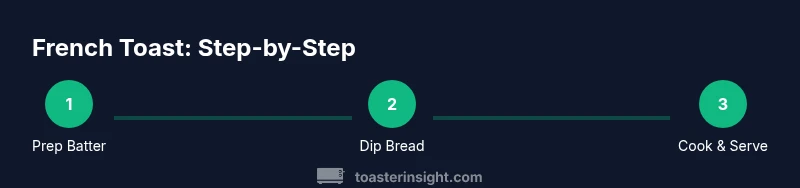
Prepare the batter
Whisk eggs, milk, sugar, cinnamon, and vanilla in a bowl until smooth and fully combined. Ensure there are no lumps so the texture remains even when dipping bread.
Tip: Whisk in a circular motion and let any bubbles rise for a few seconds before dipping. - 2
Dip the bread slices
Dip each bread slice into the batter for 10–15 seconds per side, allowing it to soak without becoming soggy. Let excess batter drip back into the dish.
Tip: Use sturdy bread and avoid oversoaking to keep the interior intact. - 3
Preheat the pan
Preheat a non-stick skillet over medium heat and add a small pat of butter. Allow butter to melt and foam before adding bread.
Tip: The butter should bubble lightly; if it smokes, reduce heat slightly. - 4
Cook the first side
Place battered bread in the pan and cook until the bottom is golden and edges set, about 2–3 minutes.
Tip: Avoid overcrowding—cook in batches for even browning. - 5
Flip and finish cooking
Flip carefully with a spatula and cook the other side for 1–2 minutes, until evenly browned and cooked through.
Tip: If the outside browns too quickly, lower the heat and add a touch more butter. - 6
Serve and enjoy
Transfer to a warm plate, top with your favorite toppings, and serve immediately for best texture and flavor.
Tip: Keep leftovers warm in a low oven (about 200°F / 90°C) if needed.
Your Questions Answered
Can I make French toast without dairy?
Yes. Use dairy-free milk like almond or oat milk, and substitute butter with a neutral oil or dairy-free butter. The outcome remains tender with a flavorful crust.
Yes, dairy-free options work well; use almond or oat milk and dairy-free butter.
What bread works best for French toast?
Thick-cut, sturdy bread like brioche, challah, or day-old French bread yields the best absorption without falling apart. Softer breads may become soggy.
Thick, sturdy bread like brioche or challah works best; avoid very soft fresh bread.
Can I make French toast in the oven?
Yes, you can bake soaked bread on a sheet pan at 375°F (190°C) for 10–15 minutes per side or until golden. This method is convenient for feeding a crowd.
You can bake it in the oven for larger servings; flip halfway through.
How long does French toast last in the fridge?
Cooked French toast can be stored in the refrigerator for up to 2 days. Reheat in a skillet or toaster oven to recapture crispiness.
Cooked toast lasts a couple of days in the fridge and re-heats well.
Why does my French toast taste bland?
Ensure batter includes a splash of vanilla, a pinch of salt, and a dusting of cinnamon. Also, use good bread and don’t over-soak.
Add vanilla and a pinch of salt, and don’t soak too long.
How can I make it gluten-free?
Use gluten-free bread that’s sturdy enough to soak. The batter remains the same; just ensure your toppings are gluten-free if needed.
Gluten-free bread works well; the batter stays the same.
What toppings pair well with French toast?
Maple syrup, fresh berries, powdered sugar, and a dollop of whipped cream are classic. You can also add fruit compote or yogurt for extra richness.
Maple syrup and berries are a great start; you can vary with yogurt or whipped cream.
Watch Video
Key Takeaways
- Choose sturdy bread for best soaking.
- Keep batter balanced and bath time brief.
- Preheat and cook on medium for even browning.
- Top with creative toppings for variety.
- Adapt with dietary substitutions as needed.