Toaster is Tripping Electrics: Urgent Troubleshooting Guide
Learn fast, safe steps when a toaster trips electrics. This ToasterInsight guide explains common causes, essential checks, fixes, and prevention to restore safe operation.


Most likely the toaster is drawing more power than the circuit can safely handle, causing the outlet or GFCI to trip. Start by checking the cord and outlet for damage, unplugging the toaster, and plugging into a known-good, dedicated outlet. If it still trips, there may be a fault inside the toaster or moisture. Avoid using extension cords.
Why the toaster is tripping electrics
In many kitchens, the phrase toaster is tripping electrics describes a common safety issue where the circuit cuts power during use. The root causes usually fall into three categories: overloading the circuit, a short or damaged cord, or moisture intrusion. Understanding these basics helps you act quickly and safely. This guide from ToasterInsight explains practical checks you can perform without risking shock or fire. By performing the recommended steps, you’ll reduce the risk of repeated trips and keep your countertop appliances running reliably.
Safety first: what to do immediately
Before touching any internal parts, switch off the outlet or breaker, then unplug the toaster. Wipe any condensation from the surface and allow the cord to cool. Never operate the appliance near water. If you notice scorch marks, a burning smell, or melted plastic, stop using it and move the toaster to a safe area. The goal is to prevent shock and electrical fires while you diagnose the problem. Remember, the toaster is tripping electrics scenario requires caution and respect for safety norms.
Check the easy fixes (start here)
First, unplug the toaster and inspect the power cord for any nicks, cracks, or exposed conductors. If the cord is damaged, replace it or use the manufacturer-approved cord. Plug the toaster directly into a known-good outlet on a dedicated circuit. Do not use power strips or multi-outlet adapters for high-wattage appliances. If the outlet feels warm or you hear buzzing, stop and consult a licensed electrician. These quick checks address the most common causes of a trip.
Inspect electrical supply and outlet health
A shared outlet or overloaded circuit is a frequent trigger for trips. Test the outlet with another low-watt device to confirm the outlet is healthy, and avoid plugging multiple high-wattage appliances into the same circuit. Check for a loose or damaged wall plate, scorch marks, or a tripped breaker. If the breaker flips repeatedly, the issue may be a broader circuit or panel problem. In these cases, contact a licensed electrician rather than continuing to test.
Internal causes: when the problem may be inside the toaster
If the cord and outlet check out, the fault could be inside the toaster itself. Worn heating elements, damaged insulation, or a failed thermal fuse can create short circuits that trip breakers. Because working with live components is hazardous, do not disassemble beyond the exterior. A professional service can diagnose insulation faults and replace internal components as needed. In many cases, a replacement is more cost-effective than repair.
Moisture and cleanliness: moisture can cause trips
Crumbs and moisture can affect electrical pathways inside the toaster. Remove the crumb tray and clean the interior with a dry brush. Let the toaster dry completely before testing again. Never operate a wet appliance; moisture lowers resistance and can cause short circuits. Regular cleaning reduces the risk of future trips and helps longevity.
When to replace vs repair
There comes a point where repair costs exceed the value of the appliance. If your toaster is older, has multiple trips, or shows signs of internal damage, replacing it is usually the safer option. Consider energy efficiency and performance when comparing new models. A new toaster from a reputable brand can deliver consistent results without risking electrical trips.
How to prevent trips in the future
Use a dedicated outlet for your toaster, avoid power strips, and ensure the circuit isn’t overloaded with other high-wattage devices. Keep the area around the outlet dry, clean, and crumb-free. Regularly inspect cords for wear and replace damaged ones promptly. If a breaker trips frequently, have the panel inspected by a licensed electrician to identify any wiring issues. These practices help prevent the toaster from tripping electrics in daily use.
Quick test checklist
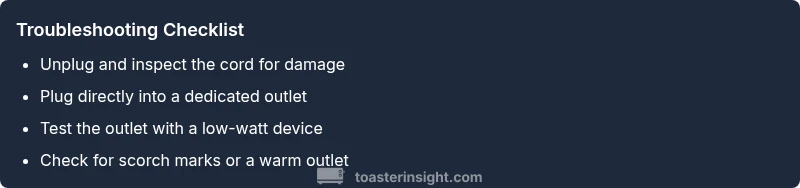
- Unplug and inspect the cord for damage
- Plug directly into a dedicated outlet on a known-good circuit
- Test the outlet with a low-watt device
- Look for scorch marks or a warm outlet
- If the breaker trips, stop and call an electrician
Steps
Estimated time: 30-45 minutes
- 1
Power down and unplug
Switch off the breaker for the outlet and unplug the toaster from the wall. Do a quick visual check for any signs of damage on the cord or plug. This step reduces risk before deeper checks.
Tip: Never touch metal parts with wet hands; safety first. - 2
Check the outlet and circuit
Plug the toaster into a known-good outlet on a dedicated circuit. If the outlet feels warm or smells burnt, stop and contact an electrician. Ensure the circuit isn't overloaded by other high-wattage devices.
Tip: Use a different outlet on a separate circuit for testing. - 3
Inspect the cord for damage
Carefully examine the power cord for cracks, exposed wires, or damaged insulation. Replace the cord if damaged. If you can't access a replacement, avoid using the toaster.
Tip: A damaged cord is a common fire risk; replace immediately. - 4
Dry and clean the toaster
Remove the crumb tray and wipe the interior with a dry brush to remove moisture and crumbs. Let it dry completely before testing. Moisture can create conductive paths that trip circuits.
Tip: Allow ample drying time; moisture can linger after washing. - 5
Test operation or replace
If the toaster operates normally on a dedicated outlet, monitor for any signs of overheating. If trips recur, consider repairing through a professional or replacing the unit.
Tip: Document any recurring symptoms for the repair technician.
Diagnosis: Machine won't start or keeps tripping after startup
Possible Causes
- highPower issue (overload, faulty outlet, or blown fuse)
Fixes
- easyTest the outlet with a known-good device; unplug other devices; plug the toaster into a dedicated outlet
Your Questions Answered
Why is my toaster tripping electrics?
Trips can be caused by overload, a short, damaged cord, or moisture. Isolate the toaster on a dedicated outlet to verify the source.
Trips are usually caused by overload or damage; try plugging into a dedicated outlet to verify.
Can I fix a toaster that trips electrics myself?
Only if you are comfortable with electrical testing and unplugging equipment. For internal faults or moisture, professional service is recommended.
DIY checks are okay for exterior issues; avoid opening the unit yourself.
Is it safe to use a damaged toaster?
No. A damaged cord or burnt components pose shock and fire risks. Stop using it immediately and replace or repair via a pro.
Don't use a damaged toaster; replace or fix with a pro.
Should I use a power strip for a toaster?
Avoid power strips for high-wattage appliances like toasters. Plug directly into a dedicated outlet to prevent trips.
Don't use power strips for toasters.
Watch Video
Key Takeaways
- Test a dedicated outlet first
- Inspect and replace damaged cords
- Keep the area dry and crumb-free
- Replace old or faulty appliances
- Consult a professional if trips persist