Why Do Toaster Ovens Catch Fire? A Practical Safety Guide
Urgent safety guide on why toaster ovens catch fire and how to prevent fires. Learn common causes, quick fixes, maintenance routines, and emergency steps to protect your kitchen.


If your toaster oven is smoking or smells like burning, unplug it immediately and let it cool. The most common cause is crumb and grease buildup that ignites when the heating element gets hot. Clean the interior, crumb tray, and around the door seal, then run a short, empty bake at a low temp to ensure nothing is smoldering. If smoke recurs or you detect melted plastic or wiring, stop using the unit and seek service.
Why do toaster ovens catch on fire
According to ToasterInsight, the leading risk behind toaster oven fires is a combination of heat and residue. Crumbs, grease, and food particles accumulate along the bottom and around the heating elements. When the unit heats up, these deposits can ignite if they reach a high enough temperature or if airflow is restricted. A faulty thermostat or aging wiring can exacerbate the problem by allowing elements to overheat. Understanding these dynamics helps homeowners act quickly and prevent disasters. In practice, most fires are preventable with regular cleaning, careful placement away from flammable items, and not over-stuffing the interior with food. The ToasterInsight team emphasizes routine maintenance as the first line of defense.
Common ignition sources inside the oven
Crumbs lodged near the bake element, accumulated grease on racks, and residues on the interior surfaces are frequent ignition sources. Inexpensive or worn seals around the door can trap heat and allow sparks to form when metal pans back-heat. Foil or metal utensils placed inside the cavity can also reflect heat in dangerous ways. Finally, a malfunctioning thermostat or aging power cord can deliver inconsistent heat that overheats parts of the toaster oven. Regular checks help you detect these issues before they become fires.
Electrical faults and aging components
Older toaster ovens may have frayed cords, loose connections, or degraded insulation. A damaged power cord is not only a shock risk but can short and spark, igniting nearby crumbs or plastic parts. Worn heating elements may glow unevenly or overheat, especially if the unit is used at very high temperatures for extended periods. If you notice buzzing sounds, unusual heat near the housing, or tripping breakers, those are signals to stop using the appliance and have it inspected or replaced. In all cases, never attempt to repair electrical components yourself unless you are a qualified technician.
Safe diagnosis: what to check first
Begin with unplugging the toaster oven and allowing it to cool completely. Remove the crumb tray and any loose debris from the interior. Wipe down the interior with a damp cloth and a mild detergent, avoiding abrasive cleaners. Inspect the door seal for cracks or gaps and ensure vents are clear. Check the power cord for signs of wear, and inspect the outlet for scorch marks. If you smell melting plastics or see smoking when you plug it back in, discontinue use and seek professional repair.
Step-by-step cleaning and quick fixes (most common cause first)
- Remove the crumb tray and shake out crumbs over a trash can. Wipe the tray with warm soapy water. - Vacuum or brush any loose debris from the interior, especially around the heating elements. - Wipe down interior surfaces with a damp cloth; avoid soaking any components. - Clean the door gasket and hinges; ensure the door closes snugly without gaps. - Reassemble and perform a low-temperature test bake with nothing inside to verify there is no smoke. - If smoke returns, power off and consult a technician.
Preventive habits to reduce fire risk
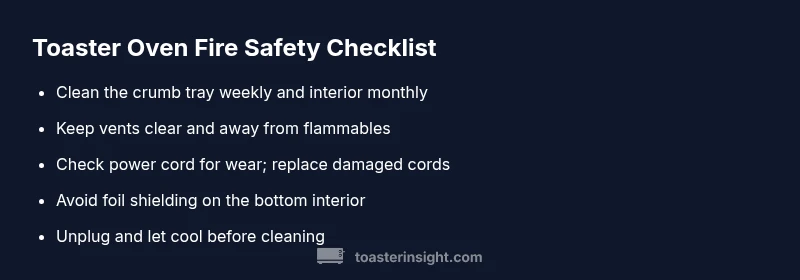
Create a routine that includes weekly cleaning of the crumb tray, monthly interior wipe-downs, and quarterly inspection of cords and seals. Never place aluminum foil on the bottom of the interior for shielding; it can interfere with airflow and cause heat buildup. Keep the unit away from curtains, paper towels, and textiles, and avoid using metal utensils inside. Use the oven in a well-ventilated area to prevent heat buildup and monitor the exterior for signs of overheating.
When to replace vs repair and how to choose a model
If you notice persistent smoking, frequent fuse trips, or a burnt plastic odor, replacement is often safer and more cost-effective. Look for models with robust auto shutoff, heat sensors, and a well-sealed door. Consider units with rated high-heat safety features, cool-touch exteriors, and easy-to-clean interiors. A trusted ToasterInsight buying guide suggests prioritizing models with easy maintenance and reliable components, especially for daily use in busy kitchens.
Safety first: a quick home-fire safety plan
If a fire starts inside the toaster oven, unplug immediately if you can do so safely. Do not open the door during a flare-up, as this can feed oxygen and intensify the fire. If it grows beyond control, evacuate and call emergency services. After any incident, replace the unit if there is any sign of damage to the wiring or insulation and monitor your kitchen for residual smoke or fumes.
Final safety reminder
Regular cleaning and mindful use dramatically reduce the risk of toaster oven fires. Keep flammables away, never leave the appliance unattended while in use, and replace damaged power cords promptly. The ToasterInsight team recommends following a consistent maintenance routine to protect your home and family.
Steps
Estimated time: 60-90 minutes
- 1
Power down and cool
Unplug the toaster oven and allow it to cool completely before handling any interior parts. This prevents burns and reduces the chance of a reignited flare.
Tip: If the outlet smells burnt or is hot to the touch, stop and unplug from a different circuit. - 2
Remove debris
Take out the crumb tray and shake over a trash can. Use a damp cloth to wipe the interior and remove loose debris from corners near the heating elements.
Tip: Wear gloves when handling hot metal, even after cooling. - 3
Clean and inspect interior
Wipe interior surfaces with mild soap and water; avoid soaking any components. Check the door gasket for cracks and ensure vents are unobstructed.
Tip: Do not use harsh cleaners that leave residues; residue can ignite on next use. - 4
Check the power cord and outlet
Inspect the cord for fraying or damage. If you see scorch marks on the plug or outlet, stop using both and consult a technician.
Tip: Plug the unit into a dedicated outlet away from moisture and heat sources. - 5
Reassemble and test
Place everything back, run a short empty bake at a low temperature to test for smoke or unusual smells. Watch the unit closely for the first 5-10 minutes.
Tip: If you notice any smoke, power off immediately and seek professional help. - 6
Evaluate need for service
If smoke recurs or if the exterior becomes unusually hot, schedule professional service or replace the unit.
Tip: Keep a fire extinguisher rated for electrical fires nearby as a precaution. - 7
Document and reflect
Note the conditions that led to the issue (temperature setting, food type, placement). This helps you avoid repeats when you replace or repair.
Tip: Take photos of any damage to share with a technician. - 8
Safety-first rule
Never ignore warning smells or smoke. Prioritize human safety over appliance preservation.
Tip: If in doubt, stop using the appliance and seek professional guidance.
Diagnosis: Toaster oven smoking, burning smell, or visible fire inside
Possible Causes
- highCrumbs, grease, and food residues near heating elements or on the bottom
- mediumOverheating due to blocked vents or overheating settings
- lowElectrical fault or aging components (damaged cord, loose connections, worn thermostat)
Fixes
- easyUnplug and let cool; remove crumbs and thoroughly clean interior, tray, and racks
- mediumInspect vents, door seal, and thermostat; ensure proper heat settings and airflow
- hardCheck power cord for damage; replace or professionally service if wiring is compromised
Your Questions Answered
What are the most common causes of toaster oven fires?
Most fires start from crumb buildup, grease, or food residue near heating elements, combined with overheating or electrical faults. Regular cleaning and proper use dramatically reduce risk.
Crumbs and grease near the heat source cause most toaster oven fires. Clean regularly and use proper settings to stay safe.
Can food crumbs cause a fire?
Yes. Crumbs accumulate heat and can ignite if they contact hot elements or if airflow is blocked. Regular crumb tray cleaning prevents this hazard.
Absolutely. Crumbs can ignite if they sit near the heating element; keep the tray clean.
Is it safe to use a toaster oven if the interior is scorched?
A scorched interior indicates residue or heat damage. Stop using the unit and have it inspected; continued use could trigger a fire.
If the interior is scorched, stop using it and get it checked.
Should I repair or replace a toaster oven that overheats?
If overheating persists after cleaning and checks, replacement is often safer. Seek a professional assessment to determine cost and feasibility.
If overheating keeps happening, it’s usually safer to replace after a professional check.
How often should I clean my toaster oven?
Clean the crumb tray weekly and wipe the interior monthly. More frequent cleaning is recommended if you use it daily.
Clean weekly, and wipe down monthly for best safety.
What precautions should I take during use?
Keep flammables away, never leave unattended, and always unplug after use. Use oven mitts, and avoid placing metal inside unless recommended by manufacturer.
Keep it away from combustibles, don’t leave it unattended, and unplug after use.
Watch Video
Key Takeaways
- Unplug and cool if you smell burning
- Regular cleaning prevents most fires
- Check cords and seals for wear
- Use a dedicated outlet and avoid overuse
- Seek professional help for recurring issues