Why Your Toaster Trips the Fuse: Immediate Troubleshooting
Urgent guide to diagnose why your toaster keeps tripping the fuse, with safe checks, common causes, and clear steps to fix or know when to call a pro.


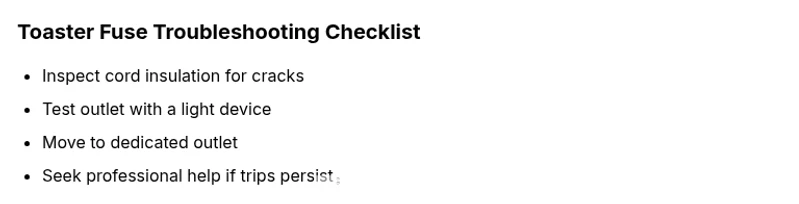
The fuse trips because of an overload or a fault in the toaster or outlet. The quickest fix is to unplug, inspect the cord, and test the outlet with another device. If the fuse repeats, move the toaster to a dedicated outlet and consult a professional if needed right away.
Understanding the fuse, outlet, and heating circuit
What happens when a toaster trips the fuse is that the circuit breaker or the home's fuse disconnects power to prevent overheating or fire. According to ToasterInsight, fuse trips are usually protective responses to overloads, insulation faults, or damaged components. If you're asking why is toaster tripping fuse, the most common culprits are a damaged power cord, a faulty plug, or an overloaded outlet. Start with the simplest possibilities before worrying about internal repairs. A quick check of the power cord’s insulation and plug prongs can reveal obvious faults. Additionally, testing the outlet with another device helps determine if the problem is the appliance or the wall circuit. Remember that even a small crack in the cord insulation can allow a short under load, triggering the fuse rapidly. By staying systematic, you limit risk and avoid unnecessary disassembly.
Common Causes of Fuse Tripping in Toasters
- Damaged or frayed power cord can create a short under load.
- A damaged plug or loose connection can cause arcing and a trip.
- Overloaded circuit or shared outlet draws excess current.
- Internal shorts in the heating element or insulation breakdown.
- Worn or burnt internal components from age or overheating.
- Moisture exposure or liquid ingress can create a conduction path to ground.
Understanding these causes helps you prioritize checks from simplest to most involved.
Quick Safety Checks You Can Do Safely
- Unplug the toaster before any inspection and never touch metal prongs with bare hands.
- Inspect the power cord for kinks, nicks, or cracking insulation; replace if damaged.
- Check the plug and outlet by testing a different device in the same outlet.
- Look for scorch marks around the toaster’s base or cord connector, which indicate overheating or a short.
- Ensure the toaster is used on a dry surface away from water and don't use it on a shared power strip for high-draw appliances.
These quick checks catch obvious faults without opening the appliance.
How to Diagnose Without Opening the Appliance
The safest path to identify the fault is to separate the toaster from the circuit and test in controlled conditions. Start by plugging the toaster into a known-good outlet on a dedicated circuit and observe whether the fuse trips. If it does, the problem is likely with the toaster's external connections (cord, plug, or the outlet environment). If the fuse does not trip, the issue may be an overloaded circuit, shared outlet, or a faulty wall outlet. Do not use a multimeter on live components inside a toaster; this requires professional equipment and training. Keep a log of patterns: does it trip only when the toast is heavy, or with certain settings? This helps you describe the issue to a service technician.
Step-by-Step Fixes for the Most Likely Causes
This section outlines practical, high-level fixes for common issues that cause fuse trips without delving into dangerous internal repairs.
- Inspect cord and plug for damage; replace if frayed, cracked, or melted. 2) Use the toaster on a dedicated outlet, away from other high-draw devices. 3) Test in a different outlet on a separate circuit to rule out circuit overload. 4) If the problem persists, do not continue using the appliance; contact a licensed technician for internal inspection. 5) Consider replacing the toaster if it is old or shows repeated overheating signs. 6) Keep the area dry and free of liquids to avoid future shorts.
Prevention: Safe Usage and Maintenance
To prevent fuse trips, always allow the toaster to cool between batches, avoid stacked or long-duration toasting on high settings, and keep the power cord away from heat sources. Regularly inspect the cord, plug, and the area around the outlet for signs of wear. Store and use the toaster away from water and spills. A well-ventilated, dry space lowers overheating risk and reduces the chance of insulation breakdown, which can lead to trips.
When to Replace Your Toaster
If you notice recurring fuse trips after performing all basic checks, or if the toaster smells burnt, has melted plastic, or shows visible damage, replacement is the safest option. Replacing an aging unit with a newer, energy-efficient model lowers risk and improves reliability. In some cases, a technician may identify a repairable fault, but persistent trips often indicate end-of-life for the device.
Choosing Safer Kitchen Appliances for Your Home
When selecting a new toaster, prioritize safety certifications, robust cord insulation, and a design that minimizes exposed wiring. Look for models with cool-touch exteriors, clear indicator lights, and a simple, reliable on/off mechanism. For households with multiple electrical devices, consider upgrading to dedicated circuits or outlets to reduce overload risk. Regular maintenance and mindful usage will extend appliance life and keep the kitchen safer.
Steps
Estimated time: 25-40 minutes
- 1
Power down and unplug
Disconnect the toaster from the outlet and wait at least 60 seconds before handling. This resets any transient currents and reduces shock risk. Inspect the exterior for obvious damage while unplugged.
Tip: Always unplug before inspection; never poke into slots or pull on the cord. - 2
Inspect the cord and plug
Check insulation, plug prongs, and the connection to the toaster. Look for nicks, scorch marks, or melted plastic. Replace the cord if you see any damage or cracking.
Tip: If you have a spare cord of the same rating, swap to test without guessing. - 3
Test the outlet with a known-good device
Plug a different low-load device (like a lamp) into the same outlet to confirm the wall outlet is functioning correctly. If the outlet trips the device or breaker, the issue is likely in the wall circuit.
Tip: Use a dedicated outlet for the toaster to avoid overload from other appliances. - 4
Try another outlet on a separate circuit
Move the toaster to a different outlet on a likely separate circuit to see if the fuse still trips. This tests whether the original circuit was overloaded or faulty.
Tip: Document which outlets you test for final reference. - 5
Observe for overheating indicators
Turn on the toaster briefly and watch for unusual heat buildup around the housing, cord, or plug. Any burning smell or excessive heat means immediate stop-use.
Tip: Do not leave the toaster unattended during testing. - 6
Consult a professional if the issue persists
If fuse trips continue after basic checks, avoid attempting internal repairs. A licensed technician can safely diagnose wiring faults or heating element issues.
Tip: Prevent future issues by replacing old units and using certified parts.
Diagnosis: Toaster fuse trips repeatedly when plugged in or during operation.
Possible Causes
- highInternal short in heating element or wiring
- highDamaged power cord or plug
- mediumOverloaded circuit or shared outlet
- lowFaulty outlet or breaker
Fixes
- easyInspect cord and plug for damage; replace if frayed
- easyTry a known-good outlet on its own circuit
- mediumIf the issue persists, avoid disassembly and consult a professional
Your Questions Answered
Why does my toaster keep tripping the fuse?
Fuse trips usually indicate an overload, damaged cord, faulty plug, or an internal short. Start with simple checks of the cord and outlet before considering more involved repairs.
Toaster fuse trips are typically due to overloads or damaged parts. Start with cord and outlet checks before seeking professional help.
Should I open the toaster to check the fuse inside?
No. Opening the toaster can expose live components and cause shock. Internal repairs should be performed only by a qualified technician or the manufacturer.
No—do not open the toaster yourself. Internal repairs require a professional.
Can I fix a damaged cord myself?
Only if you have electrical repair experience. For most homeowners, replacing the cord or the toaster is safer than attempting to repair internal wiring.
Only replace the cord if you know how to work safely with electrical parts; otherwise replace the unit.
Is it safe to use a different outlet in the house?
Yes, but ensure the new outlet is on a circuit that isn’t overloaded by other devices. If trips persist, discontinue use and seek professional care.
Yes, try a different outlet on a separate circuit, but stop if the fuse trips again.
When should I replace my toaster instead of repairing it?
If fuse trips are frequent, the unit is old, or there are signs of damage, replacement is the safest option to avoid risk.
If trips keep happening or the toaster looks damaged, replacement is safer.
Watch Video
Key Takeaways
- Unplug and inspect before anything else
- Differentiate outlet issues from appliance faults
- Avoid internal repairs without training
- Replace old toasters if trips persist