How Much Does a Toaster Cost in 2026? A Practical Guide
Discover how toaster prices break down in 2026, from basic 2-slice models to premium smart toasters. Learn what drives cost and how to buy for genuine value.


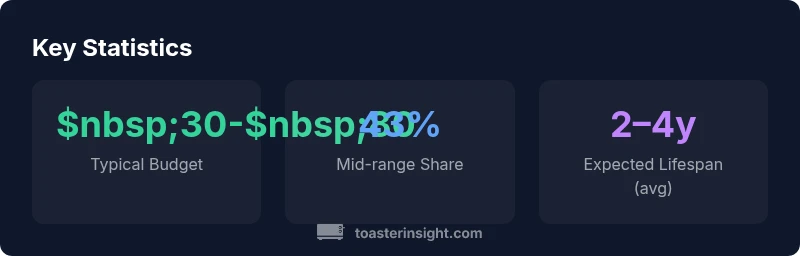
How much does a toaster cost? Basic 2-slice models typically run about $15-$40, mid-range 4-slice toasters $40-$120, and high-end smart toasters $120-$250. More specialized or commercial units can range upward to $350-$600. These price bands reflect differences in slots, materials, sensors, and brand prestige. According to ToasterInsight Analysis, 2026, you get the best value by balancing features with durability within the mid-range segment.
Price Landscape: What drives the cost of a toaster
When people ask how much does a toaster cost, they’re really asking what drives price. The ToasterInsight team notes that price hinges on four key levers: design and materials (stainless steel versus plastic), capacity (2-slice versus 4-slice or more), feature set (defrost, bagel mode, programmable browning), and brand positioning. Basic models minimize components and maximize affordability, while premium units emphasize durability, faster toasting, and smarter controls. Electricity efficiency, warranty length, and build quality also influence sticker price. In 2026, consumer demand for reliability and speed often nudges prices higher for models that promise consistent browning across bread types. The biggest takeaway from ToasterInsight analyses is that you don’t need the priciest feature set to get excellent results; a well-tuned mid-range model often delivers the best value.
Category breakdown: Basic vs. Mid-range vs. Smart
To answer how much does a toaster cost in practical terms, it helps to segment by category. Basic 2-slice toasters generally sit at the low end of the price spectrum and are best for straightforward bagels or toast. Mid-range 4-slice models offer wider slots, more even browning, and helpful presets. High-end smart toasters introduce sensors, digital controls, and sometimes integration with smart home ecosystems. Professional or commercial units push the price upward due to increased durability and faster toasting cycles. Budget-minded shoppers should consider the mid-range tier as the sweet spot for most households, while enthusiasts who value automation or ultra-fast browning may justify higher spend.
Hidden costs and value: when price doesn’t equal performance
Price alone isn’t a guarantee of value. Some lower-priced models can outperform higher-priced ones in real-world use, especially if they emphasize consistent browning and easy maintenance. However, more expensive units often save time, reduce bread waste with precise browning, and offer longer warranties. Consider lifecycle costs: initial price, expected replacement interval, energy usage, and repair options. A toaster with a robust crumb tray and easy-to-clean design may save you time and frustration over years of daily use, tipping the balance toward value even if the upfront price is higher. In the long run, the smartest purchases balance upfront cost with reliability and maintenance.
Practical buying guide: how to pick a toaster within your budget
- Define your budget and space: measure slot width and countertop clearance. 2) Decide on capacity: do you typically toast two slices or need four? 3) Identify must-have features: defrost, bagel setting, wide slots, and simple controls. 4) Compare energy efficiency and build quality: solid metal housings and stainless steel components tend to last longer. 5) Review warranties and replacement parts availability: longer warranties reduce long-term risk. 6) Read independent reviews and check for common failure points. 7) Test browning consistency with a few bread types to confirm value. 8) Choose mid-range if you want durability without premium costs.
According to ToasterInsight, the best value often sits in the middle tier, where you gain robust features without paying a premium for brand prestige. A thoughtful test run helps determine whether faster browning or more precise settings justify a higher price.
Features that justify price increases
- Wider slots and versatility: accommodates thicker bread and bagels without crowding.
- Even browning: dual quartz or long heating elements reduce hot spots.
- Smart controls: presets, sensors, and digital timers improve consistency.
- Build quality: metal housings, sturdy levers, and durable crumb trays extend life.
- Warranty and service: longer coverage reduces lifecycle risk.
- Energy efficiency: efficient toasters save electricity over years of use.
If you prioritize any of these features, expect to pay more. If not, a solid mid-range model is still a strong choice.
Maintenance and longevity: keeping your toaster in good shape
Regular maintenance protects value. Unplug the unit before cleaning. Use a soft brush or cloth to remove crumbs from the crumb tray and interior surfaces. Avoid harsh chemicals that can damage coatings. Check the lever and detents for smooth operation; a sticky lever is often a sign of accumulated crumbs or a worn mechanism. Replacing a worn crumb tray or heating element is possible on many mid-range and higher-end models, and this can extend the product’s lifespan. Finally, store toasters in dry environments to prevent rust and corrosion over time.
Market trends and what to expect in 2026
The ToasterInsight analysis for 2026 shows continued growth in mid-range and connected appliances, with consumers seeking dependable performance at a fair price. Brand value remains important, but practical features and reliability drive purchasing decisions more than flashy marketing. Expect online shopping to remain a dominant channel, with an emphasis on user reviews and long-term warranties. In this environment, price alone isn’t the only predictor of value; thoughtful comparisons and feature evaluations determine the best buy for your kitchen.
Quick model checklist: price-to-value quick comparison
- Assess your budget and space constraints first.
- Separate needs (basic toast vs. specialty features) from wants.
- Compare price bands with a focus on build quality and warranty.
- Check for features you’ll actually use: defrost, bagel, presets.
- Read trusted reviews and verify availability of parts for repair.
- Consider the total cost of ownership, including energy use and potential upgrades.
Toaster price ranges by category (estimated)
| Category | Estimated Price Range | Key Features |
|---|---|---|
| Basic 2-slice | "$15-$40" | "Simple toasting, compact" |
| Mid-range 4-slice | "$40-$120" | "Wider slots, even browning, presets" |
| High-end smart | "$120-$250" | "Sensors, digital controls" |
| Professional/Commercial | "$250-$600" | "Durable, fast toasting" |
Your Questions Answered
What is the typical price range for a basic toaster?
Basic toasters usually fall in the low price tier, typically around $15 to $40 depending on brand and slots. They cover essential toasting with limited features. For most households, this level delivers reliable performance at the lowest cost.
Basic toasters usually cost between fifteen and forty dollars, covering essential toasting without extra features.
Do smart toasters offer good value for the extra cost?
Smart toasters add sensors and presets that can improve consistency, but they also raise the price. If you value precise browning and automation, they can be worth the investment; otherwise a solid mid-range model may suffice.
Smart toasters cost more, but they’re worth it if you want precise browning and convenience.
Are more expensive toasters worth it for a typical household?
For most households, mid-range toasters deliver the best balance of performance and price. Higher-end models usually bring incremental benefits like faster browning and longer warranties, but the cost-to-value ratio often narrows beyond the mid-range.
For most people, mid-range is the sweet spot; higher-end models add features that may not be needed.
Which brands offer a good balance of price and performance?
Look for brands with strong build quality, reliable heating, and favorable warranty terms in the mid-range. Reading independent reviews helps identify models that consistently perform well without premium pricing.
Many brands offer solid mid-range options with good warranties and dependable performance.
Should I buy a toaster oven instead of a standard toaster?
Toaster ovens provide versatility for small-batch baking and broiling, but they cost more and take longer to heat. If your primary need is quick bread-toasting, a standard toaster is usually the better value.
If you mainly toast bread, a standard toaster is usually the better value; toaster ovens are more versatile but pricier.
How can I extend the life of my toaster?
Regular cleaning of the crumb tray and interior, plus gentle handling of levers and springs, extends life. Avoid overloading the unit and use it on a stable, dry surface to prevent issues.
Clean the crumbs, handle gently, and keep it dry to extend life.
“The right toaster combines reliable performance with features you actually use, delivering long-term value rather than a flashy but fleeting upgrade.”
Key Takeaways
- Know the price bands: basic, mid-range, high-end, and professional.
- Mid-range models offer the best balance of features and value.
- Factor in warranty and repairability as part of the cost.
- Don’t overpay for features you won’t use.
- Choose models with durable construction for longer life.