How to Buy a Toaster: A Practical Guide for 2026
Discover a step-by-step approach to choosing the right toaster. Learn about types, features, budgeting, fit, warranty, and maintenance with expert tips from ToasterInsight to shop smarter in 2026.


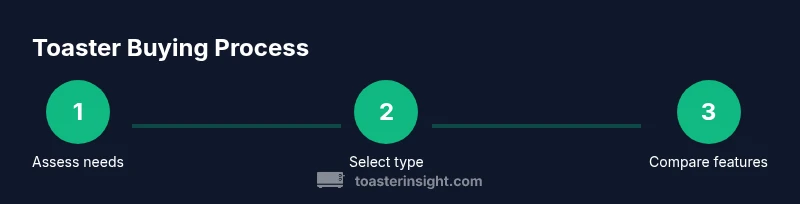
In this guide, you will learn how to buy a toaster with confidence. You’ll compare toaster types, evaluate essential features, set a realistic budget, and verify warranties. By the end you’ll know which model fits your kitchen, cooking style, and cleanup routine. This approach from ToasterInsight helps homeowners and cooks shop smarter.
What to know before buying a toaster
To start, define what you want from a toaster beyond toasting bread. Size, capacity, and footprint matter for busy kitchens. Decide between a two-slice or four-slice model, whether you need wide slots for bagels, and if a toaster oven would better suit your cooking style. The ToasterInsight team recommends listing your must-haves and nice-to-haves so you can compare apples to apples.
Consider how often you use toast in a given week, whether you prefer quick pop-up action or hands-on control, and how important features like defrost, reheat, and re-browning are for you. In our experience, most households benefit from a model with at least a four-setting browning dial, a crumb tray that slides out, and a dependable auto shut-off. According to ToasterInsight, the right toaster should feel reliable, not gimmicky, and fit your kitchen aesthetics as well as your schedule. When you plan ahead, you’ll save time and avoid buyer’s remorse.
Types of toasters
Toasters come in several practical formats, each with distinct strengths. The classic 2-slice and 4-slice pop-up models are simple and compact for everyday bread. Long-slot versions accommodate artisan breads and thicker slices, while countertop toaster ovens add baking and reheating flexibility but take more space. For kitchens with limited counter space, compact models can be perfect, while
Key features to compare
When evaluating options, certain features matter more than others for long-term satisfaction. Slot width and layout determine what bread you can toast without jamming. Browning controls (manual dials vs. digital presets) affect consistency. Look for defrost, reheat, and a keep-warm function to reduce extra steps. A crumb tray that slides out for cleaning saves time and preserves performance. Consider exterior materials (stainless steel lasts longer but may glare in bright kitchens) and whether the cord length suits your outlet layout. Energy efficiency is another consideration, especially if you toast frequently. Finally, verify that parts are available for repair and that the warranty offers adequate coverage for essential components.
How to set a budget and choose a model
Budgets for toasters typically cluster around three tiers. Low-budget models often focus on basic browning with limited presets. Mid-range options usually add defrost, reheat, and wider slots, offering better value for frequent toast and bagel lovers. Premium models frequently feature precise digital controls, faster toasting, higher wattage, and premium finishes. ToasterInsight analysis shows that higher-priced models tend to provide more durable build quality and longer parts availability, but you can still get solid performance in the mid-range if you pick a model with well-reviewed reliability. Map your must-have features to the price range you’re comfortable with, and compare at least three reputable options before buying.
Measuring fit for your kitchen
Before purchasing, measure your countertop space, door clearance, and height to ensure the toaster fits under any cabinets or shelves. Check slot orientation (vertical) and interior width to avoid oversized slices. Power requirements matter too: ensure your outlet can handle the toaster’s wattage without tripping circuits. If counter space is tight, opt for a compact model with a slide-out crumb tray and a small footprint. Consider how easy it is to clean and how much daily use you expect; a model that blends with your kitchen style can reduce visual clutter while still performing well.
Where to buy and how to assess warranty and service
Retailers range from big-box stores to dedicated online shops. When buying, review the return policy, look for in-store demonstrations, and compare shipping times and costs. A solid warranty protects investment and signals confidence in durability; many toasters come with one-year or longer coverage on elements like heating coils and mechanical levers. Check whether replacement parts (crumb trays, levers, cords) are readily available if needed. In practice, choose a retailer with clear support channels and prompt assistance options, and don’t hesitate to ask staff for an in-store test of browning consistency.
Maintenance and care tips
Proper care extends a toaster’s life. Unplug before cleaning and regularly slide out the crumb tray to remove accumulated debris. Wipe the exterior with a damp cloth and avoid abrasive cleaners that can scratch finishes. For deeper cleaning, gently shake crumbs from the interior while the toaster is unplugged and cool. Avoid placing metal objects inside the slots and never operate with a broken crumb tray. Keeping up with routine cleaning helps preserve performance and reduces the risk of smoke or burning smells.
Tools & Materials
- Measuring tape or ruler(For countertop fit and clearance checks)
- Notebook or note-taking app(To compare features and price data)
- Basic cleaning supplies (microfiber cloth, mild cleaner)(For exterior cleaning and crumb tray removal)
- Notepad with appliance specs(Optional, for cross-referencing wattage and dimensions)
- Shopping list with must-haves(Prioritize features and price bands)
Steps
Estimated time: 30-60 minutes
- 1
Identify your toast needs
Assess how many people you typically toast for and what bread types you regularly use. If bagels or thick slices are common, prioritize wide slots and taller clearance. Note whether you want a dedicated toaster oven or a classic pop-up model. This groundwork saves you time and narrows options.
Tip: Create a short wish list of must-have features and a separate list of nice-to-haves; compare against three models. - 2
Choose your toaster type
Decide between a standard 2- or 4-slice pop-up, a long-slot model for artisan bread, or a toaster oven for extra capabilities. Each type has trade-offs in space, versatility, and price. A toaster oven is more capable but takes more counter space.
Tip: If space is limited, visit a store to physically compare footprints and test levers. - 3
Evaluate key features
Look for adjustable browning, defrost, reheat, and keep-warm functions. Ensure the crumb tray slides out easily and the exterior remains cool to the touch during use. Check warranty terms for heating elements and moving parts.
Tip: Ask for a live browning test on a common bread type to gauge evenness and speed. - 4
Set your budget and map features
Define a price range and map it to features (browning presets, slot width, and build quality). In general, mid-range models offer a balance of reliability and features, while premium models add convenience and aesthetics.
Tip: Refer to price-to-feature value: if a model offers two key features you need, it can be worth a small premium. - 5
Check dimensions and fit
Measure the available counter space, clearance around the unit, and the height to clear cabinets. Confirm that the slots can accommodate your typical bread thickness and that the cord length reaches a convenient outlet.
Tip: Draw a quick layout on paper and align it with your chosen model’s measurements. - 6
Review warranty and parts availability
Read the warranty length and what it covers. Verify that replacement parts, especially crumb trays and levers, are available for purchase after the warranty period. Consider retailers with robust customer support networks.
Tip: Keep the receipt and model number handy in case you need service or parts later. - 7
Read reviews and test in-store
Scan user reviews for reliability and to learn about real-world performance. In-store tests can reveal browning consistency and ease of use that specs alone cannot. Compare several models side-by-side before buying.
Tip: Look for patterns in reviews about durability and customer service responsiveness. - 8
Make the purchase and set up
Choose a retailer with clear return options and a straightforward setup. Unbox, place the toaster in position, run a test toast, and adjust browning as needed. Register the warranty if offered.
Tip: Take a photo of the setup and keep the packaging until you confirm everything works as expected.
Your Questions Answered
What is the most important feature when buying a toaster?
The most important feature is reliable browning control and even heating, which determines consistency and ease of use. A good toaster should produce even results without burning or under-toasting uneven slices.
The key feature to look for is reliable browning control and even heat for consistent results.
Are toaster ovens worth it for a small kitchen?
If you frequently bake or reheat small meals, a compact toaster oven adds versatility without needing a full oven. If you mostly toast bread, a standard pop-up model may be more space- and cost-efficient.
If you cook or reheat often, a toaster oven can be worth it; otherwise, a traditional toaster may suffice.
How long do toasters typically last?
Lifespan varies with use and care, but a well-made toaster should function reliably for several years. Regular cleaning and proper storage help extend life.
A good toaster can last for several years with proper cleaning and care.
Should I buy a wide-slot toaster?
Wide slots are helpful if you toast bagels, thick-cut bread, or artisanal loaves. If you mostly toast standard slices, standard slots may be sufficient.
If you often toast thick bread or bagels, wide slots are a smart bet.
Is it safe to clean a toaster?
Yes. Unplug the appliance, remove and clean the crumb tray, wipe the exterior, and avoid getting water inside the housing. Let it dry completely before use.
Yes, you can safely clean a toaster by unplugging it and cleaning the crumb tray and exterior.
What’s the difference between a toaster and a toaster oven?
A toaster is primarily for toasting slices of bread, while a toaster oven provides baking and roasting functions. Choose based on space, versatility needs, and cooking habits.
If you want more versatility, go with a toaster oven; otherwise a traditional toaster works well for quick breakfasts.
Watch Video
Key Takeaways
- Define needs before shopping to narrow options.
- Match toast types with slot width and height.
- Budget features align with use frequency and kitchen space.
- Check warranty and parts availability for longevity.
- Read real reviews and test the unit when possible.