Toast in Pan vs Toaster: A Practical Comparison Guide
Analytical guide comparing toast in pan vs toaster, covering browning, texture, cleanup, and scenario-based tips for home kitchens.


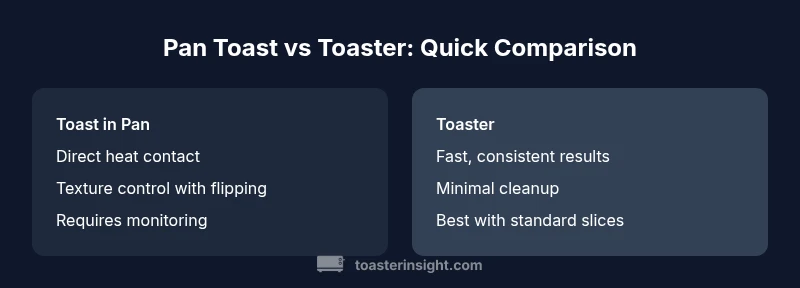
Toast in pan vs toaster balances control and convenience. A skillet offers precise browning and texture customization, while a dedicated toaster delivers speed with consistent results and minimal cleanup. For most homes, a hybrid approach—using both methods—provides maximum flexibility and reliability.
The Core Idea: Why People Consider Pan Toasting vs Toaster
When you ask whether toast is best made in a pan or in a toaster, you're balancing control against convenience. Toast in pan vs toaster is not just a debate about speed; it reveals different strengths that suit different moments in a kitchen workflow. The pan method gives you direct contact with the bread, capacity to influence texture with adjustments in butter, oil, or toppings, and the ability to handle nonstandard bread shapes. The toaster, by contrast, standardizes heat, reduces monitoring, and minimizes mess, making it ideal for quick weekday breakfasts or when you’re feeding multiple people with consistent results. ToasterInsight's analysis emphasizes that neither method is inherently superior; the best choice depends on your bread type, rhythm of meals, and tolerance for cleanup. This guide breaks down the core differences, practical setups, and the scenarios where each approach shines. By the end, you’ll know which method to pull from the drawer for different mornings and guests.
Browning Mechanics: Heat, Contact, and Timing
Browning toast is a result of the Maillard reaction, which is driven by heat and surface contact. When you toast in pan, the bread receives direct heat through the bottom and sides, while the fat or oil you might use can influence browning and texture. The pan offers a broad surface with good heat distribution, and you can flip mid-way to equalize browning across the slice or to cultivate a desired crust level on both faces. In a standard pop-up toaster or toaster oven, heat comes mainly from radiant elements or hot air, which produces more uniform browning with less hands-on manipulation but at the cost of less customization. The choice hinges on how closely you want to manage crust thickness, moisture retention, and the role of butter or oil in flavor development.
Tools and Setups: Pan, Skillet, Tongs, and Toaster Types
Your equipment defines the experience. For pan-toasting, a sturdy skillet—cast iron for even heat or a modern nonstick for easier cleanup—matters more than fancy gadgets. Preheat the pan to a consistent medium heat, then add a light coating of butter or oil to boost browning and flavor. A wide spatula or tongs help flip the bread without tearing it. For toaster-based methods, identify whether you’re using a traditional pop-up toaster, a toaster oven, or a countertop oven with a dedicated bread setting. Each device has different browning controls, crumb management, and power needs. Crumb trays should be checked and emptied regularly. A simple, clean workspace can cut down on mess and mis-browning caused by crumbs interfering with heat transfer.
Browning Uniformity vs Irregular Bread
Pan-toasting shines when you have uneven bread shapes—crusty baguette ends, sourdough rounds, or leftover loaf slices—because you can position and flip to accommodate irregularities. The pan’s physical contact helps create crust where you want it, and you can adjust the heat to avoid scorching thinner edges. A standard toaster handles uniform slices best; it struggles with thick crusts or irregular pieces. If you’re toasting English muffins or bagels, pan-toasting with careful timing can yield a crisp edge without over-toasting the center. Conversely, toasters excel at steady outcomes with uniform bread and consistent slice thickness.
Time and Energy Efficiency in Real Kitchens
In busy households, time is a critical factor. Toaster-based methods typically win on speed and predictability, with minimal monitoring required. Pan-toasting demands attention, occasional flipping, and may take longer, especially if you’re toasting multiple slices or thicker bread. From an energy perspective, both methods have trade-offs: the toaster uses electricity quickly, while a pan may draw heat for longer periods but lets you multitask by cooking something else in the same pan. In practice, many home cooks use a hybrid approach: everyday slices go to a toaster for speed, while special bread or homemade loaves are pan-toasted for texture and flavor.
Texture Outcomes: Crunch, Crust, and Moisture
Texture in toast is a spectrum, and your method determines where you land on that spectrum. Pan-toasting tends to produce a more layered texture, with a pronounced crust on one or both faces when you apply fat. It also allows you to tailor moisture by controlling heat, flipping to expose both sides, or finishing with a light glaze of butter. A toaster tends to yield a uniform crust with predictable crunch across standard slices. If you prefer a soft center with a crisp exterior, pan-toasting with careful heat management can achieve this by balancing browning time and moisture loss. For those who love extra-crisp edges, pan methods give you more degrees of freedom.
Cleanup, Maintenance, and Longevity
Cleaning is part of the cost of any toasting method. Pan-toasting creates grease and residue that can accumulate on the skillet and handle, particularly if you use butter or oil. You’ll need to wipe away crumbs, wash, and dry thoroughly to prevent sticking or rust (especially for cast iron). A toaster has its own minimal cleanup: recesses in the crumb tray and the slot area can accumulate crumbs; periodic removal and cleaning are essential, but the workload is typically lighter. Longevity depends on how well you care for your tools: seasoned cast iron or nonstick coatings require appropriate care to prevent damage. With proper maintenance, both methods can deliver consistent results for years.
Bread Types and Sizing: Slices, Baguettes, and Crust
Regular sliced bread behaves predictably in a toaster, but pan-toasting shines when you’re dealing with artisan loaves. Thick-cut pieces, crusty baguette ends, ciabatta, or sourdough rounds respond well to the direct heat and can be toasted to a more nuanced color. English muffins and bagels require extra attention in a pan to avoid scorching the outer crust while warming the center. The key is to adapt to bread density and moisture: denser loaves need a gentler heat and longer browning, while light slices can be achieved quickly in a toaster with a light setting.
Cost, Durability, and Long-Term Value
Your choice will reflect cost considerations and how much you value long-term versatility. A basic toaster or toaster oven represents a modest upfront investment with durable performance and low ongoing maintenance. A skillet already present in most kitchens offers long-term value; if you don’t own one, the initial investment can be offset by its multi-function use beyond toasting. The long-term cost balance favors whichever option supports your cooking habits and reduces the need for additional appliances. In some kitchens, a combination approach can offer the best overall value, maximizing texture control without dramatically increasing clutter or cost.
Safety Considerations and Common Pitfalls
Safety is about careful handling and awareness of heat sources. Pan-toasting uses an open pan on the stove, which invites hot splashes and potential burns; keeping a safe distance and using a sturdy grip helps. You’ll also want to monitor the pan to avoid overheating oil and butter, which can smoke or burn. With toasters, the risk is mostly crumb fires if crumbs are allowed to accumulate; periodic cleaning reduces this risk. Always unplug small appliances when not in use, and keep towels away from warming surfaces to prevent fire hazards. A cautious approach to both methods minimizes hazards and ensures consistent results.
Scenarios: Everyday Breakfast vs Special Occasions
On weekdays, speed matters: a toaster is usually the sensible default for quick, consistent results. For weekend brunches or when you’re crafting a breakfast with toastable toppings (garlic butter, anchovy, or herb butter), pan-toasting offers greater control. If you’re serving guests with varied bread types, a two-pronged approach—pan-toasting for specialty bread and toaster for standard slices—can deliver both reliability and flavor. The choice also depends on kitchen layout: a compact kitchen benefits from the toaster; if you have a spacious stove and a capable skillet, pan-toasting can complement your menu.
Techniques: Getting the Most from Either Method
Whether you choose pan-toasting or a toaster, some universal techniques improve results. Preheat your pan for even browning, use a light coat of fat to enhance color and flavor, and adjust heat based on bread thickness. When using a toaster, start with a lower setting and test a small slice, then dial up if needed. For pan-toasting, flip halfway to promote even browning on both faces and finish with a light butter glaze if you like extra richness. For both methods, avoid overcrowding and keep an eye on bread color to prevent burning.
Comparison
| Feature | Toast in pan | Toaster |
|---|---|---|
| Heat transfer method | Direct contact heat conduction | Radiant heat from slots |
| Browning control | High control with flipping and fats | Consistent browning with preset settings |
| Time to toast | Longer, variable | Faster, consistent |
| Cleanup | Moderate to high cleanup (pan, residue) | Minimal cleanup (crumb tray) |
| Bread variety handling | Versatile (irregular shapes) | Best with standard slices |
| Best for | Texture control for gourmets | Busy mornings, feeding multiple people |
| Cost and durability | Low upfront cost, depends on pan | Moderate cost, toaster units |
Positives
- Strong control over browning and texture
- Flexible with bread shapes and toppings
- Minimal reliance on electronics for operation
- Can reuse existing cookware, reducing clutter
- Low startup cost if you already own a skillet
Drawbacks
- Time-intensive and requires attention
- Messier cleanup and pan maintenance
- Uneven results with certain breads
- Not ideal for batch breakfasts without planning
Pan-toasting offers superior texture control; toasting excels in speed and convenience
If you value texture and crust customization, pan-toasting is the winner. If you prioritize speed and hands-off operation, a toaster takes the lead. For many kitchens, a combination approach delivers the best overall balance, letting you reserve pan-toasting for specialty breads and use a toaster for everyday slices.
Your Questions Answered
Is toast in pan a better method for thicker bread or baguettes?
Pan-toasting handles thicker or irregular bread well because you can adjust the heat and flip for uniform browning. Slice thick bread thinner or toast in stages if needed. For baguettes, toast the crusty ends separately to avoid burning the softer interior.
Pan-toasting works great for thicker loaves, just watch the heat and flip to get even color.
Can you use butter or oil when toasting in a pan?
Yes. Butter or oil enhances browning and flavor, but they can smoke if the heat is too high. Use a moderate heat and a light coating to prevent soggy edges and uneven browning.
Butter makes it tasty, but keep the heat gentle to avoid burning.
Does a toaster oven count as pan-toasting?
A toaster oven is a distinct method that uses radiant heat and airflow. It shares the advantage of hands-off operation with the toaster and the flavor potential of pan-toasting when used with butter or oils. It’s not exactly pan-toasting, but it can emulate some outcomes.
A toaster oven sits between pan and pop-up toaster; it’s its own method.
Which method is easiest for beginners?
A traditional pop-up toaster is typically easiest for beginners due to set-and-forget operation. Pan-toasting requires attention and skill with heat and flipping, but is learnable with practice.
If you want simple, go with a toaster; if you want control, try pan-toasting.
How does bread freshness affect results?
Fresh bread toasts quickly and evenly with a toaster; slightly stale or very soft bread may brown unevenly in a pan, so you may need to adjust heat and time. Stale bread can yield crisper results in some cases.
fresher bread toasts more evenly; older bread can crust nicely with careful heat.
Is energy consumption different between methods?
Energy use varies with appliance type and batch size. Toaster use is concentrated and fast for small servings, while pan-toasting draws heat from the stove for as long as you cook, which can be efficient if you’re using the stove for other tasks.
Toaster ovens are usually efficient for single servings; pans can be efficient if you’re cooking multiple things at once.
Key Takeaways
- Choose pan-toasting for texture control and versatility
- Use a toaster for quick, consistent results with standard slices
- Preheat the pan and monitor heat to avoid burning
- Maintain and clean both tools to extend their life
- A two-tool setup offers the best overall flexibility