Is a Toaster Oven Safer Than a Microwave? A Detailed Comparison
An analytical comparison of safety, heating methods, and practical use between toaster ovens and microwaves to help homeowners cook more safely.


When choosing between a toaster oven and a microwave, the microwave is generally safer for quick reheating and small portions, thanks to enclosed heating and lower burn risk. A toaster oven excels at browning and baking but carries higher burn and fire risks if not used with safeguards. Overall, for everyday safety, the microwave tends to be the safer default; is toaster oven safer than microwave depends on the task and how strictly you follow safety practices.
Is toaster oven safer than microwave? Defining safety boundaries
The question of safety when comparing a toaster oven to a microwave hinges on how each appliance generates heat, how predictable the cooking result is, and how well the user adheres to safety practices. For many homeowners, the short answer to whether is toaster oven safer than microwave is task-dependent. The microwave offers rapid, contained heating with relatively low surface risk when used according to the manufacturer’s directions. The toaster oven provides more versatile cooking with direct heat, which can be safer for certain foods when used with proper airflow and nonflammable surroundings, but it carries a higher burn risk if the door, rack, or exposed elements are mishandled. According to ToasterInsight, understanding your typical tasks—reheating versus baking versus crisping—helps determine which appliance aligns with your safety goals. The ToasterInsight team found that users often overestimate the inherent safety of any appliance and underestimate routine maintenance and setup as safety levers. Keep in mind that both devices are designed with safety features, but real-world safety depends on how you operate them and how you clean and store them.
How Heat Is Generated: Radiation vs Indirect Heat
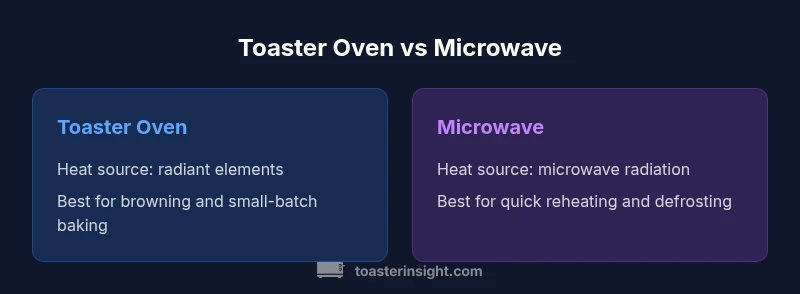
Heat generation is the core difference that informs safety considerations. A microwave uses dielectric heating: microwave radiation agitates water molecules directly inside food, causing rapid temperature rise with minimal surface exposure to hot surfaces. This means there is less chance of an open heating element causing accidental contact, but there can be uneven heating if the food is not arranged properly. A toaster oven uses radiant heating elements (and often a convection fan) to transfer heat to the food from outside, which means surfaces can reach very high temperatures. This direct exposure to hot elements increases the risk of burns and fire if flammable objects are nearby, but it also enables browning, crust formation, and more versatile cooking. Practically, is toaster oven safer than microwave depends on how you manage the heat source: cover elements with racks or guards, avoid placing metal near microwave energy, and never block vents on either device.
Safety Risks and How to Minimize Them
Both appliances carry distinct safety considerations. For microwaves, key risks include improper use of metal, superheated liquids, and standing water near the appliance, which can lead to arcing or steam burns. Infrequent checks of door seals and latches can also reduce safety. For toaster ovens, common hazards include burns from hot racks or doors, grease buildup that can ignite, and tips from improper preheating or leaving the oven unattended. The safest approach to either device is a documented routine: keep the area around the appliance clear, use the appropriate rack height, never run either appliance while unattended for long periods, and follow the manufacturer’s cleaning instructions. ToasterInsight’s analysis emphasizes that adopting a kitchen safety plan—like a dedicated cord management zone and accessible fire extinguisher—helps ensure either device remains a safe choice for everyday cooking.
Use Cases: When Each Appliance Excels
Not all safety questions are answered by the device alone. The microwave shines for quick reheating, defrosting, and simple cooking tasks that require rapid heat without drying out the food, which reduces burn risk during short sessions. The toaster oven is superior for tasks that benefit from surface browning, crisp textures, and small-batch baking, such as pizzas, croissants, or roasted vegetables. If your kitchen workflow involves feeding a family with varied tastes, you may find both devices valuable, using the microwave for speed and the toaster oven for texture. The decision of is toaster oven safer than microwave then becomes a matter of task-specific risks and benefits.
Energy Use and Efficiency Considerations
Energy efficiency is a practical safety-related concern because energy waste translates to heat buildup, which can indirectly impact kitchen safety. Microwaves typically consume less energy for short reheating tasks because they heat the food directly inside rather than heating the entire cavity. Toaster ovens, particularly during preheating and longer bake cycles, expend more energy and generate more ambient heat. If your goal is to reduce overall kitchen heat and energy use while maintaining food safety, you might default to the microwave for quick reheating and reserve the toaster oven for tasks that truly require browning and crust. Remember that energy efficiency is not only about consumption numbers; it also involves task suitability and duration, both of which affect safety by reducing heat exposure time in the cooking space.
Cleaning and Maintenance for Safer Cooking
Safety comes from a clean, well-maintained appliance. Microwaves benefit from periodic interior wipes to remove splatters that could cause uneven heating, and door seals should be checked for gaps that could compromise containment. Toaster ovens require more routine surface and crumb management because grease and crumbs can accumulate on racks, beneath the tray, and around the heating elements. A clean oven reduces smoke and unintended flare-ups, both safety-critical issues in typical kitchen environments. A simple regimen—wipe after use, check seals quarterly, and ensure the crumb tray is emptied—can dramatically reduce safety risks without compromising performance. The takeaway is that consistent maintenance is a crucial safety lever for both devices.
Practical Safety Checklist for Your Kitchen
- Place both appliances on stable, nonflammable surfaces with ample clearance around them.
- Keep flammable items like towels and paper well away from heating elements.
- Use appropriate cookware: microwave-safe dishes for microwaves; oven-safe pans for toaster ovens.
- Do not obstruct vents or doors; ensure the appliance is cool before plugging or storing.
- Regularly inspect cords and plugs for wear and replace damaged equipment promptly.
- Have a kitchen fire extinguisher accessible and know how to use it in case of grease or electrical fires.
- Follow the manufacturer’s instructions for preheating, timers, and auto shutoffs. These habits reinforce safety regardless of whether you are asking is toaster oven safer than microwave in your home.
Implementing this checklist consistently will reduce risk and improve overall kitchen safety when using either appliance.
Real-World Scenarios: Quick Reheats, Baking, and Leftovers
Consider common kitchen tasks: reheating leftovers, baking small batches of cookies, and crisping open-faced sandwiches. For quick reheating, the microwave remains the safer choice due to lower surface heat and lack of hot racks. For baking and crisping, the toaster oven provides better texture and browning, which can be achieved safely with sufficient space, proper cookware, and vigilant supervision. One practical tip is to avoid overloading the microwave with dense, large chunks of food that heat unevenly; arrange pieces uniformly to minimize hotspots. For toaster ovens, prefer metal racks with nonstick coatings and place a tray beneath to catch drips. By matching the task to the appliance and maintaining good cleaning habits, you can achieve safer cooking outcomes without sacrificing convenience.
Alternatives and Related Technologies
If you want to minimize safety trade-offs, you may consider alternative or complementary devices like convection ovens or air fryers, which also offer browning without direct flame contact and with enclosed heating elements. When selecting among toaster ovens and microwaves, safety considerations extend to cord management, moisture exposure, and ventilation in the kitchen. A modern kitchen design often integrates both devices for maximum safety and efficiency. The central question is not simply which is safer by default, but which tool best aligns with your cooking habits and your family’s safety preferences. With careful use and routine maintenance, both appliances can be safe and effective in everyday cooking.
Comparison
| Feature | Toaster Oven | Microwave |
|---|---|---|
| Heat source | Radiant heating elements (and convection in many models) | Dielectric heating via microwave radiation |
| Preheating time | Often requires preheating; start-up can be longer | Usually ready quickly; immediate or minutes to heat |
| Ease of cleaning | Crumbs and grease; more trays to clean | Interior usually smooth; quick wipe-downs common |
| Best for browning/crisping | Excellent browning and crust formation | Limited browning; best for reheating |
| Safety considerations | Exposed elements; higher burn risk if mishandled | Contained heat; lower surface burn risk but misuse can cause overheating |
| Energy use | Higher energy use per cooking session due to longer operation | Typically lower energy for short reheats |
| Cost range (upfront) | Usually higher upfront cost for compact/better models | Lower upfront cost; cheaper replacement if used sparingly |
| Best for | Baking, roasting, toasting, and crisping small batches | Fast reheating and defrosting; compact convenience |
Positives
- Greater versatility for baking and browning tasks
- Preheating and cooking times can be predictable with recipes
- Compact footprint in small kitchens still provides full cooking options
- Can reduce kitchen heat when properly used for targeted tasks
Drawbacks
- Higher burn risk from open elements if not used carefully
- Grease and crumb buildup can pose fire hazards if neglected
- Energy use can be higher for longer cooking sessions
- Microwave reheating can lead to uneven heating if items are not arranged
Microwave generally safer for quick reheating; toaster ovens offer more capabilities but require careful use
Choose the microwave for quick, contained heating and lower burn risk. Use a toaster oven when browning or baking is needed, but follow safety best practices and maintain the unit to reduce risks.
Your Questions Answered
Is a toaster oven safer than a microwave for everyday use?
For everyday use, the microwave generally presents fewer burn hazards during quick reheating because of its enclosed heating. The toaster oven offers baking and browning capabilities but requires vigilant supervision and regular cleaning to prevent fires. Safety ultimately depends on task, setup, and adherence to guidelines.
In everyday use, microwaves are usually safer for quick reheating. Toaster ovens are safer for browning when you follow safety tips and keep the oven clean.
Can microwaves cause nutrient loss in food?
All cooking methods can affect nutrients; microwaving tends to preserve nutrients well when compared to longer heat exposure. The key is short cooking times and minimal water when possible. Balance safety and nutrition by using appropriate power levels and timing.
Microwaving can preserve some nutrients better than longer cooking methods when you time it right.
Is it safe to put metal in a microwave?
No, metal should generally not be used in a microwave because it can cause arcing and damage the appliance. Follow the manufacturer’s guidelines and use microwave-safe containers only. If metal is required, such as certain crimped lids, check the product’s instructions.
Avoid metal in microwaves; use microwave-safe containers only.
Does preheating a toaster oven increase safety risks?
Preheating is common for achieving even browning, but it temporarily increases surface heat exposure. Keep flammable items away and monitor the toaster oven during preheat. Turn off the unit after use and allow it to cool before cleaning.
Preheating can raise surface heat briefly—watchful use is advised.
Which appliance is better for kids’ meals?
The microwave is typically safer for quick, child-friendly meals due to quick cooking and lower surface heat exposure. The toaster oven can be safe for kids with adult supervision and strict adherence to safety guidelines and kill-switch features.
Microwaves are usually better for quick, kid-friendly meals with less surface heat.
What’s the best safety practice to minimize risks with both devices?
Use a dedicated, clear workspace, keep flammables away, and maintain clean interiors. Read the manual, monitor cycles, and unplug when not in use. Regular inspections of cords and seals help prevent accidents.
Keep space clear, clean, and unplug when not used—check seals and cords regularly.
Key Takeaways
- Assess your task first: reheating vs baking
- Follow safety guidelines and maintain appliances regularly
- Preheat when required, but avoid unnecessary run time
- Keep the area clear around both devices to prevent fires
- Choose the appliance based on what you cook most often