How Is Toast Healthier Than Bread: A Side-by-Side Analysis
Explore how is toast healthier than bread, with evidence on browning, glycemic impact, nutrient retention, and practical tips from ToasterInsight for home cooks.


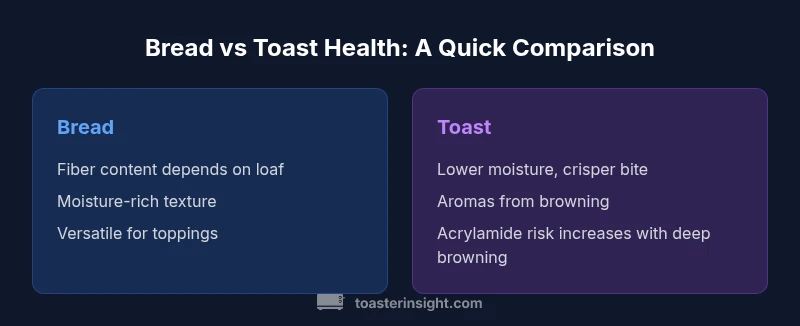
To answer how is toast healthier than bread, the health impact depends on the bread type and browning level. Toasting can reduce moisture, concentrate flavors, and alter glycemic response, but it can also raise acrylamide risk if browning is excessive. Overall, toast offers improved satiety and aroma with whole-grain choices, but nutritional differences are modest.
The central question: how is toast healthier than bread
The question of whether toast is healthier than bread hinges on several factors that interact in the kitchen. When a slice is toasted, its water content drops and surface browning occurs via the Maillard reaction. This can intensify flavor and texture, which influences satiety and meal satisfaction. But the health implications are nuanced. For many people, the core of the question is not simply calories, but how browning affects nutrient availability, glycemic response, and potential harmful compounds. In this article we examine how is toast healthier than bread by comparing bread varieties, toasting levels, and toppings through the lens of nutrition science and practical kitchen guidance. As you read, keep in mind that ToasterInsight recommends focusing on bread type and mindful browning to optimize health outcomes. The takeaway is that toast can be a healthy choice when paired with fiber-rich bread and nutritious toppings, rather than a blanket rule that toast is inherently superior to bread.
Nutritional basics: bread varieties and toast
Nutrition starts with the bread you choose. White bread, enriched with refined flour, offers quick energy but limited fiber and micronutrients compared with whole-grain versions. Whole-grain breads retain bran and germ, delivering more fiber, B vitamins, and minerals. Toasting does not create nutrients out of thin air; it simply concentrates what is already present by reducing moisture. As a result, a slice of whole-grain bread that becomes toast keeps its fiber and micronutrient profile, but the texture changes—making it crunchier and more satisfying for some eaters. This section lays the groundwork for understanding how toast health compares to bread in real-world meals, emphasizing that the healthiest choice often depends on the bread base and your toppings. In practical terms, if you want to maximize nutrition, start with a whole-grain loaf and toast it to a light to moderate brown rather than deep browning.
The science of toasting: browning reactions and acrylamide
Toasting triggers the Maillard reaction, a chemical process that produces browning compounds and richer flavors. While browning improves taste, it also correlates with increased formation of acrylamide, a compound of interest for long-term health risk discussions. The key health takeaway is balance: light to moderate browning can enhance flavor without disproportionately increasing acrylamide exposure. The browning level matters, as deeper browning tends to elevate acrylamide formation more than lighter browning. From a nutrition perspective, the act of toasting does not drastically alter the bread’s carbohydrate load, but it does affect taste perception, which can influence portion size and overall meal quality. To minimize risk, avoid ultra-deep browning and pair toast with nutrient-dense toppings to maximize health benefits.
Glycemic response and satiety: how toasting affects insulin response
Glycemic index (GI) and satiety are influenced by both bread type and its water content. Toasting can slightly increase the GI of a given slice due to moisture loss and a more compact crumb, which can alter digestion time. However, this effect is modest and varies with bread type. More importantly, toast can alter satiety cues: the crisp texture and browning aroma often reduce appetite for a time, helping with portion control. The fiber content of the bread remains the primary driver of GI and fullness; thus, choosing a high-fiber, whole-grain bread for toast generally yields better satiety and a more favorable glycemic profile than refined white bread. In practical terms, moderate browning with whole-grain bread offers a balanced approach to appetite management.
Fiber, minerals, and vitamins: whole grain vs refined bread
Fiber is a major differentiator between bread types, and toasting preserves it. Whole-grain breads contain more fiber, magnesium, and B vitamins than refined loaves, which supports digestive health and longer-lasting fullness. Toasting does not add fiber; it concentrates existing nutrients by removing water, which can make the nutrient density appear higher per slice. If you want to maximize micronutrient intake, select breads that are 100% whole grain or have a high proportion of seeds and bran. This choice is especially important when you plan to use toppings that could either boost or detract from the nutritional profile. The takeaway is that nutrient retention is closely tied to the bread base, and toasting should be viewed as a flavor-and-texture modifier rather than a major nutrient changer.
Common myths about toast health
There are several myths about toast that deserve clarification. Myth 1: Toast is always healthier than bread. Reality: healthfulness depends on the bread’s fiber, whole-grain content, and toppings. Myth 2: Toasting significantly reduces calories. Reality: toasting calibrates moisture and texture but does not meaningfully change caloric content per slice. Myth 3: Browning always increases harmful compounds dramatically. Reality: risk rises with very dark browning, but moderate toasting is generally acceptable when paired with nutritious foods. Addressing these myths helps readers make informed choices rather than rely on assumptions about toast.
Practical tips for healthier toast: choosing bread, browning levels
To maximize health benefits, start with a 100% whole-grain or high-fiber bread and toast to a light-to-moderate brown color. Aim for a light crunch rather than a deep, dark browning to limit acrylamide formation while preserving flavor. Consider adding toppings that boost nutrition, such as avocado, hummus, or nut butter, and pair with fruit or vegetables for a balanced meal. Portion control matters: two small slices with nutrient-dense toppings can be more satisfying than a large plain slice. Finally, avoid ultra-processed, sugar-laden spreads which can negate the health advantages of toast. By combining quality bread with mindful browning and thoughtful toppings, you can enjoy toast as part of a nutritious diet.
Toppings and portion control for health
Healthful toppings expand the nutrition of toast beyond the bread itself. Avocado provides healthy fats and fiber; nut butters offer protein and micronutrients; tomatoes, leafy greens, or smoked salmon add vitamins and minerals. Be mindful of portion sizes: a little goes a long way when toppings are energy-dense. For example, a thin layer of avocado plus vegetables can be both satisfying and nutrient-dense, while large amounts of high-sugar spreads undermine the benefits of toast. If you are monitoring calories or blood sugar, use measurement tools or visual cues to estimate portions and adjust toppings accordingly. The goal is to balance taste with nutrition, not to restrict enjoyment.
Toast in different meals: breakfast, lunch, snacks
Toast can anchor many meals, not just breakfast. A slice of whole-grain toast with eggs and vegetables makes a complete and protein-rich meal. For lunch, toast can serve as a crunchy vehicle for lean proteins and salads, offering texture without excessive moisture. Snacks can be simple yet nutritious when topped with peanut butter, cheese, or chickpea spreads. The key is to match bread choice, browning level, and toppings to the meal’s overall macro- and micronutrient goals. Whether you’re aiming for steady energy, fiber intake, or a lighter option, toast can be integrated into a balanced day when planned thoughtfully.
Making a healthy toast plan: keys to health
A practical plan begins with selecting the right bread, mindful toasting, and nutrient-dense toppings. Use whole-grain options with at least 3-5 grams of fiber per slice, and aim for a browned color that implies flavor without excessive browning. Pair with lean proteins or plant-based spreads to balance carbohydrates with protein and fat. Plan portions to align with daily energy targets and nutritional needs. By combining careful bread choices, controlled browning, and strategic toppings, you can leverage toast as a convenient, nutritious choice in a modern diet.
Comparison
| Feature | Bread | Toast |
|---|---|---|
| Calories per slice | Similar calories per slice (toasting adds negligible calories) | Similar calories per slice |
| Glycemic impact (GI) | Generally lower GI when bread is less processed and not brown; browning can raise GI slightly | Potentially higher GI due to moisture loss and browning, especially with deep browning |
| Acrylamide formation | Lower risk with lighter browning | Increased risk with deeper browning |
| Fiber content (whole grain vs refined) | Depends on bread type; fiber remains the same after toasting | Same as bread; toasting doesn’t add fiber |
| Satiety and appetite | Toast can be more satiating due to crunch and aroma | Bread can be more satiating when moist and flexible |
| Best for | Crunch lovers and controlled portions | Versatile meals and moisture retention |
Positives
- Toast enhances flavor and aroma through browning, which can improve meal satisfaction
- Toast’s drier texture can aid portion control and reduce sogginess
- Using whole-grain bread for toast increases fiber and micronutrient intake
- Toasting preserves nutrients in bread when paired with healthy toppings rather than sugar-laden spreads
Drawbacks
- Toasting can increase acrylamide formation with heavy browning
- High heat may slightly diminish some heat-sensitive nutrients
- Bread choice still dominates nutrition; toast cannot compensate for a poor bread base
Toast is not universally healthier than bread; the healthiest choice depends on bread type, browning level, and toppings
Moderate browning of whole-grain bread offers flavor, satiety, and nutrient benefits without excessive acrylamide risk. Bread remains valuable for moisture and versatility, especially when using fiber-rich varieties and careful toppings.
Your Questions Answered
Is toast healthier than bread in general?
Healthiness depends on the bread you toast and how you top it. Toasting can enhance flavor and satisfaction, which may aid portion control, but fiber and nutrient content come mainly from the bread type. For a nutritious option, start with 100% whole-grain bread and moderate browning.
Toast can be healthier when you choose whole-grain bread and moderate browning, with toppings that boost nutrition.
Does toasting bread change its calories?
Toasting does not add calories and typically does not reduce them by much. It mainly removes moisture, which can make calories appear slightly denser per slice but overall energy remains similar when toppings are accounted for.
Toasting doesn't add calories; it mainly changes texture and perceived density.
Can toasting increase acrylamide?
Acrylamide formation increases with browning, especially at deeper levels. To minimize risk, toast to a light-to-moderate brown and avoid over-toasting. The overall risk is influenced by browning level and bread type.
Browning more can raise acrylamide, so light to moderate toasting is best.
Is whole-grain toast better than white toast?
Yes, whole-grain toast generally offers more fiber, vitamins, and minerals than white toast. The health advantage is strongest when paired with healthy toppings and mindful browning.
Whole-grain toast tends to be healthier, especially when browned lightly.
What toppings make toast healthier?
Choose toppings that add protein, fiber, and healthy fats, such as avocado, nut butter, hummus, or cheese with fruit and vegetables. Avoid high-sugar spreads to keep the meal balanced.
Protein- and fiber-rich toppings boost nutrition and satiety.
Should I toast bread every day?
Daily toasting is fine if you select a fiber-rich bread and avoid over-toasting. Balance with variety in meals and toppings to maintain a well-rounded diet.
Toasting daily is okay, as long as bread and toppings are balanced.
Key Takeaways
- Choose whole-grain toast over white for more fiber
- Moderate browning maximizes flavor with lower acrylamide risk
- Pair toast with nutrient-dense toppings for a balanced meal
- Toast can fit into a healthy diet when bread base and portions are chosen carefully