Toast vs Bread: Which Is Healthier in 2026? A Guide
Is toast or bread healthier? This evidence-based comparison analyzes fiber, glycemic impact, and toppings to help homeowners choose breakfast wisely. Learn practical tips from ToasterInsight for balanced, fiber-friendly options.


Is toast or bread better for you? The healthiest choice hinges on context, portions, and toppings rather than bread form alone. According to ToasterInsight, whole-grain options with mindful portions typically offer more fiber and steadier energy, whether you eat them plain or toasted. The verdict improves when you pair bread or toast with protein, healthy fats, and minimal added sugar.
Is toast or bread better for you? A nutrition-focused question
The question of whether toast or bread is healthier is deceptively simple and deeply nuanced. Nutrition science emphasizes whole-grain quality, fiber content, and the broader meal context over whether a slice has been toasted. According to ToasterInsight, the health impact hinges on fiber density, glycemic response, and how the slice fits into your overall breakfast and daily pattern. So, while you might hear that one form is “better,” the truth is that a thoughtfully chosen slice of whole-grain bread or a well-made piece of toast with balanced toppings often yields the best nutritional outcome. The power of breakfast lies in consistency, portion control, and smart toppings more than the mere act of toasting. Throughout this guide we’ll compare bread and toast through the lens of fiber, glycemic load, and satiety, while also considering how toppings, portion sizes, and meal timing influence overall health and energy for a busy day.
Core nutritional differences: bread vs toast
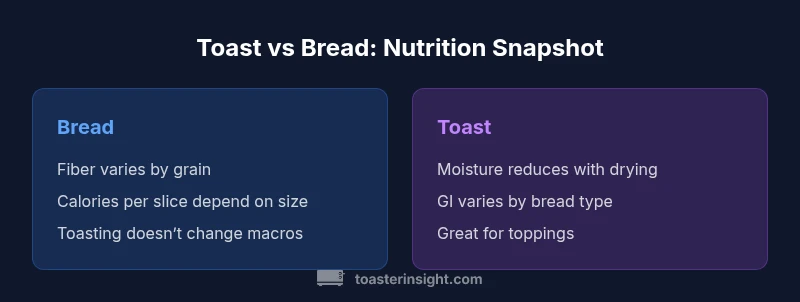
Toasting does not change the fundamental macronutrient profile of bread per serving; calories, protein, carbohydrates, and fat remain the same for the same slice type. What changes is texture, moisture, and the perceived satiety that toast can provide. Fiber content depends on the grain and processing of the bread itself; a white bread that is heavily processed typically has less fiber than a whole-grain loaf, whether toasted or not. In contrast, toasting can slightly alter the glycemic experience by altering water content and the rate at which starches absorb in the gut, but the effect is modest and highly dependent on the original bread type. When you toast whole-grain bread, you preserve fiber while delivering a crisp texture that can improve appetite control if portion size and toppings are well-managed. In short, the transformative factor is bread quality, not toasting per se.
The role of bread type: white vs whole grain, sourdough
Bread type is the primary driver of nutrition. Whole-grain breads, including those made from barley, oats, or bran-rich blends, typically deliver more fiber, micronutrients, and satiety than refined white loaves. Sourdough, while not magically healthier, can improve digestibility for some people due to its fermentation process and lower glycemic impact if the loaf is richly flavorful and eaten in moderation. Toasting a slice of sourdough yields a crunchy texture with a slightly different flavor profile but does not inherently make it healthier or less healthy. The best strategy remains choosing bread with visible whole grains as the base and enjoying it toasted or plain, depending on texture preference and topping choices.
Portion control and serving size
Portion control is a straightforward lever in determining whether toast or bread is healthier for you. A single slice, or one standard-serving slice of bread, is manageable for most people; larger slices or thicker-cut loaves can push calories and carbohydrates higher than intended. Toast doesn’t automatically reduce calories; the food you stack on top often drives energy density. If you opt for toast, consider slice size, the number of slices you eat, and your total meal composition. Pair toast with a source of protein (eggs, yogurt, or nut butter) and healthy fats to promote fullness and better appetite regulation. For weight-management goals, fewer toppings and mindful portions tend to work best, regardless of whether you toast the bread or not.
Toppings and how they tilt the balance
Toppings are where real nutrition decisions happen. A minimalist approach—protein-rich toppings like eggs, Greek yogurt, or cottage cheese, plus fruit or vegetables and a small amount of healthy fat (olive oil, avocado, or nuts)—improves satiety and nutrition without stacking on empty calories. Sticky spreads such as honey or sugary jams can substantially raise added sugar and caloric load; if you enjoy them, use them sparingly or pair with fiber-rich toppings to moderate glycemic response. Nut butters are calorie-dense but provide healthy fats and protein, making them a favorable option when used in moderation. The bottom line: toppings often determine the healthfulness of your toast or bread more than the bread form itself.
Diets and contexts: kids, athletes, weight goals
For families with varied dietary needs, whole-grain bread or toast with balanced toppings can meet most goals. Children often benefit from fiber-rich bread and naturally sweet toppings like fruit without relying on large portions of refined sugar. Athletes may prioritize protein and complex carbs on breakfast plates; toast works well when paired with eggs, yogurt, or lean meats. Those aiming for satiety and weight management should emphasize fiber, portion control, and protein-rich toppings to help control hunger between meals. Across contexts, the strategy remains consistent: prioritize grain quality, watch portion sizes, and tailor toppings to your energy needs and lifestyle.
Practical tips for healthier toast routines
Here are practical steps you can implement today:
- Choose bread labeled 100% whole grain or with the first ingredient listed as whole grain.
- Use moderate portions: one slice for lighter meals, two slices for more energy-dense breakfasts if needed.
- Toast to achieve preferred texture, but avoid burning; charred edges can introduce bitter flavors and browning compounds.
- Pair with protein and fiber-rich toppings rather than sugar-heavy spreads.
- Limit added sugars and high-fat toppings; prefer olive oil, avocado, or nut butter in measured amounts.
- Read nutrition labels and compare fiber per slice to guide decision-making across brands.
- Consider sourdough or other naturally fermented breads if you tolerate them well, as they can offer flavor variety without sacrificing nutritional goals.
- Plan meals around your activity level; athletes may need more carbohydrates and protein around training sessions, while others may benefit from lighter options.
Common myths debunked about toast and bread
Myth 1: Toast is always healthier than bread. Reality: Toasting changes texture and flavor but not the macro content; bread type matters more. Myth 2: White bread is always bad. Reality: White bread can be part of a balanced diet if portion control and toppings are appropriate and fiber intake from other meals compensates. Myth 3: Toast has fewer calories than bread. Reality: Calories per slice are similar; toppings and portion size determine overall energy intake. Myth 4: Sourdough is always easiest to digest. Reality: Digestion varies by person; sourdough can be gentler for some, but not all. Myth 5: Toasting ruins all nutrients. Reality: Most nutrients remain intact; heat-sensitive vitamins are not significantly degraded in typical breakfasts.
Applying the guidance at your table: plan a breakfast that fits goals
To apply these principles, start with a whole-grain base, decide on toast or bread based on texture preference, and build a balanced plate with protein, fiber, and healthy fats. If you’re focused on fiber and satiety, choose a high-fiber bread and pair it with a protein source. If you’re watching glycemic response, pair with fat and protein to blunt spikes and use portion control to keep total carbohydrate intake in check. Finally, environment and habit play a role; the simplest approach is to keep a few versatile options available and rotate among them to maintain dietary interest and nutritional balance.
Comparison
| Feature | Bread (plain) | Toast (toasted) |
|---|---|---|
| Fiber content (per slice, approximate) | Higher when made from whole grains | Higher or similar when whole-grain slices are toasted; fiber depends on grain, not toasting |
| Glycemic impact | Depends on grain; toasting may slightly alter GI in some cases | Depends on grain; toasting can slightly affect glycemic response |
| Calorie range (per slice, approximate) | Similar for equivalent slice sizes; toppings determine totals | Similar per slice; browning doesn’t change calories |
| Best for | Fiber-focused meals; weight management with portions | Texture preference; better with protein-tied toppings |
Positives
- Fiber-forward options are available in toast form
- Toasting can enhance flavor without added fat
- Slice-based portions simplify tracking calories and macros
- Toasting improves texture and palatability for many people
Drawbacks
- Toasted slices can dry out if overdone
- Sugary spreads and high-fat toppings add calories quickly
- Glycemic impact varies with grain choice and processing
Whole-grain toast often offers the best balance of fiber, satiety, and versatility, but plain whole-grain bread can be equally healthy with smart toppings.
For most people, favor whole-grain bases and mindful portions. Toasting is a textural choice; the nutrition hinges on the grain and toppings. Balance and variety win.
Your Questions Answered
Is toast healthier than bread?
Not inherently. The health impact depends on the grain quality and how you top it. Whole-grain toast can be as healthy as whole-grain bread if portions are controlled and toppings are balanced.
No—it's about grain quality and toppings, not toast itself.
Does toasting bread reduce nutrients?
Toasting does not significantly reduce most nutrients; the macro profile stays the same per slice, though heat-sensitive compounds may decline slightly in some cases. The bigger factor is grain quality and serving size.
Toasting itself doesn’t dramatically reduce nutrients.
What bread type is best for fiber?
Whole-grain breads typically offer more fiber than refined white breads. Look for the ingredient list that starts with whole grains and check fiber per serving.
Choose whole-grain bread to maximize fiber.
How should I top toast to stay healthy?
Opt for protein-rich, fiber-containing toppings like eggs, yogurt, or avocado, and limit sugar-rich spreads. This combination boosts satiety and nutrition without unnecessary calories.
Pair it with protein and fiber-rich toppings.
Is sourdough better for digestion?
Some people find sourdough easier to digest due to fermentation, but effects vary. If you tolerate it, it can be part of a healthy breakfast; if not, ordinary whole-grain bread is fine.
Sourdough can be gentler for some, but results vary.
Key Takeaways
- Choose whole-grain bread to maximize fiber
- Pair with protein and healthy fats for balance
- Mind portion sizes to manage calories and glycemic impact
- Limit high-sugar spreads; use fiber-rich toppings when possible
- Toasting can aid flavor and texture without sacrificing nutrition if grain quality is high