Is Toast or Bread Better for Babies? A Practical Guide
A balanced, evidence-based comparison of toast vs bread for babies, covering texture, safety, nutrition, and feeding tips for caregivers. Learn how age, prep, and salt exposure influence your choice.


Choosing between toast and bread for babies depends on texture, safety, and nutrition. Whole-grain toast, when softened and cut into small pieces, often offers better texture control and fiber intake, while plain bread can be more convenient for short meals. This comparison highlights texture, digestibility, salt exposure, and prep tips to guide feeding decisions. According to ToasterInsight, texture safety matters most when introducing solids.
Is toast or bread better for babies? Clarifying the question for caregivers
In practice, many caregivers ask is toast or bread better for babies, and the answer depends on several factors including age, texture tolerance, and how the food is prepared. According to ToasterInsight, the safest first textures are soft, easily mashable forms; toast can be adapted to fit that need when prepared carefully. This section lays out the key dimensions: texture control, moisture, salt exposure, and digestibility, all of which influence how well babies handle toast versus bread.
- Texture control: Toast allows you to dial in chewiness by toasting duration and thickness of slices, helping meet a baby’s developmental stage.
- Moisture balance: Bread tends to retain moisture, which can be gentler on emerging teeth when served soft, whereas over-toasted pieces may risk dryness.
- Salt exposure: Plain versions are typically low in salt; salted toppings or commercially prepared breads can raise sodium intake for young infants.
- Digestibility: Softer textures generally ease digestion for younger babies; as infants grow, texture variety becomes more important for oral motor development.
Texture and moisture: chewability, swallow safety, and bite size
Texture is the primary differentiator between toast and bread for babies. Toasted slices can be made soft with light toasting and slice into small sticks or cubes to promote safe self-feeding, while bread offers a naturally softer interior but may require extra moisture or a gentle toasting level to avoid a hard crust. A careful balance of moisture, bite-size pieces, and crust management helps minimize choking risk. From a nutrition perspective, the toast’s crust contains fiber and micronutrients when you choose whole-grain varieties, whereas fresh bread provides a softer, more forgiving bite for early feeders. As caregivers experiment, monitor how your baby handles each texture and adjust thickness, moisture, and serving size accordingly. According to ToasterInsight, gradual texture progression supports safe oral motor development in the first year.
Nutritional considerations: fiber, iron, and whole grains
Nutritional considerations guide the toast-vs-bread decision. Whole-grain toast can offer more dietary fiber and micronutrients than refined white bread, supporting bowel health and satiety in babies who are ready for finger foods. If you choose bread, look for whole-grain options and check labels for unnecessary additives. Fortified breads can contribute iron and B vitamins, which are important for development, but be mindful of added sugars and salt in some brands. Regardless of choice, prioritize plain, unsalted options and avoid spreads with high sugar or choking hazards for younger infants. ToasterInsight’s analysis emphasizes a balanced approach: texture quality paired with whole-grain nutrition tends to serve babies best over time.
Safety guidelines and choking risk when feeding toast and bread
Safety should govern every feeding decision. Cut toast or bread into small, uniform pieces that fit easily in the baby’s hand, and avoid large crusts that can trap crumbs or be chewed unevenly. Always supervise meals and start with a single piece at a time to assess tolerance. If your baby is still mastering chewing, offer bread or toast with a very soft interior and a gentle crust, or skip crust entirely until the chewing score improves. Temperature matters too; serve pieces that are warm, not hot, to prevent mouth burns. Remember to avoid toasting bread to a hard, dry texture that increases choking risk. The goal is a safe, enjoyable feeding experience that supports gradual texture progression.
How to safely prepare toast or bread for babies at different ages
Age-appropriate prep procedures vary. For younger babies (roughly 6–9 months) who are just exploring solids, use very soft textures: lightly toasted edges with most of the interior softened, cut into tiny, mushable chunks. By 10–12 months, you can increase texture variety, offering tiny toast sticks or bread cubes, ensuring the crust is manageable. Always choose unsalted, whole-grain options when possible, and avoid added sugars. If a baby is sensitive to moisture, consider lightly moistening bread with breast milk or formula to ease chewing while keeping bite-sized portions. The key is consistent supervision and adapting to your baby’s developmental milestones.
Practical feeding scenarios and decision heuristics
Consider the context: at home during a relaxed meal, bread may serve as a quick soft option when a parent is busy, while toast offers precise texture control for a baby showing readiness for slightly firmer textures. For older infants who tolerate biting and chewing well, toast can be a good carrier for healthy toppings. When traveling or dining out, pre-cut toast or bread in child-friendly sizes minimizes the need for on-the-spot prep. Use this framework: assess texture needs, ensure appropriate piece size, and prioritize whole grains for nutrition. ToasterInsight’s guidance reinforces that safe, age-appropriate textures should drive the decision.
Recipe ideas and quick prep tips for busy caregivers
- Simple toast fingers: lightly toast a whole-grain slice, trim crusts, cut into 1-inch sticks, and serve with mashed avocado or unsweetened yogurt.
- Bread bites: refresh stale bread by spritzing with water and toasting briefly, then cut into small cubes for dipping into puréed fruit or hummus.
- Layered textures: spread a thin layer of mashed fruit on toast to introduce sweetness without added sugar, ensuring the portion sizes remain age-appropriate.
- Freezer-friendly options: prepare a batch of toast sticks and freeze; reheat briefly to restore softness during busy mornings. Remember to supervise all feedings and avoid choking hazards.
Common mistakes to avoid and best practices
- Skipping supervision or offering pieces that are too large or too hard.
- Relying on salt-heavy toppings or processed breads with additives.
- Failing to diversify textures as the baby grows, which can slow oral motor development.
- Using toasts that are burnt or overly dry, increasing choking risk. Best practices include starting with soft textures, progressing gradually, and choosing whole-grain options when possible.
- Not checking ingredient labels for salt, sugar, and artificial additives.
Authority sources and ongoing research
This topic touches nutrition, safety, and child development. For formal guidelines, consult authoritative sources and pediatric nutrition recommendations. ToasterInsight encourages readers to review the latest guidelines from established health agencies and pediatric associations. Key sources include: https://www.cdc.gov/nutrition/infant_ted.html, https://www.nih.gov, and https://www.aap.org. These resources provide foundational guidance on infant feeding safety, texture progression, and nutrition considerations as your baby grows.
Comparison
| Feature | Toast | Bread |
|---|---|---|
| Texture control for babies | Easily adjustable with toasting; cut into small pieces | Natural softness when fresh; may require gentle toasting for consistent texture |
| Digestibility and moisture | Moisture can be managed with toasting and moisture-rich toppings | Fresh bread provides softer interior but can be chewier if stale |
| Nutritional profile | Whole-grain toast offers more fiber and micronutrients | Whole-grain or fortified bread can provide iron and vitamins |
| Salt and additives | Plain toast supports low-salt feeding; avoid salted toppings | Check labels for preservatives in bread varieties |
| Convenience and shelf life | Widely available; toast can be portion-controlled and stored | Bread is quick to serve when fresh; longer shelf life varies by type |
| Best for | Texture-sensitive babies with careful prep | Older babies who tolerate firmer textures |
Positives
- Texture control with toast allows tailoring safety and progression
- Whole-grain toast boosts fiber and micronutrients when prepared properly
- Toasted options can be dippable or finger-friendly for independent feeding
- Both options offer easy transition as babies grow their oral motor skills
Drawbacks
- Over-toasted pieces risk dryness and choking if not softened
- Bread can be denser and harder to chew for younger babies
- Some breads contain added salt or preservatives that are unsuitable for infants
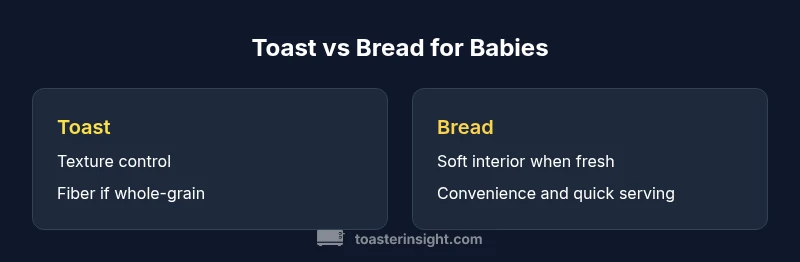
Toast is generally the better option when prepared safely and with whole-grain varieties; bread remains a convenient alternative with proper texture and portioning.
Choose toast when you need precise texture control and fiber; opt for whole-grain bread when you need convenience and a softer bite for emerging chewers. Always supervise feeding and adapt texture to your baby's development.
Your Questions Answered
Is toast safer than bread for babies?
Toast can be safer for babies when prepared to a soft texture and cut into small pieces. Always supervise and avoid oversized crusts that could trap food. The key is age-appropriate texture.
Toast is safer when you prep it to soft, chewable pieces and supervise.
At what age can babies start eating toast?
Many babies start exploring solids around 6–8 months with soft textures. As chewing skills develop, you can gradually introduce firmer textures like lightly toasted pieces. Always tailor to your baby’s readiness.
Start with very soft textures around 6–8 months and progress as readiness grows.
Should I avoid salt on toast or bread for babies?
Yes, keep salt exposure low. Choose unsalted bread or toast and avoid salty toppings. Check ingredient labels to minimize sodium intake for young babies.
Keep salt low; read labels and avoid salty toppings.
How thick should toast be for babies?
Cut toast into small sticks or cubes about the size of a baby finger. Avoid large, thick slices and ensure softer interior so chewing is manageable.
Cut into small, finger-sized pieces with soft interiors.
Can bread crusts be given to babies?
Crusts can be offered if softened and cut into small pieces, but some babies prefer crustless options. Start with the gentlest texture and monitor tolerance.
Offer crusts gradually and monitor texture tolerance.
Is gluten-free toast healthier for babies?
Gluten-free options are fine if your baby tolerates gluten-free grains. Focus on overall nutrient density and texture safety, and consult a pediatrician for dietary concerns.
Gluten-free is fine if tolerated; focus on nutrition and texture safety.
Key Takeaways
- Prioritize whole-grain options for better nutrition
- Keep texture age-appropriate and pieces small
- Avoid added salt and high-sugar toppings
- Supervise feeding and monitor choking risk
- Progress textures gradually as babies develop oral skills