What Toast Carbs: A Practical Guide to Bread and Breakfast
Explore what toast carbs mean for breakfast. This data-driven guide breaks down carb content by bread type, compares slices, and offers practical tips for healthy meals.


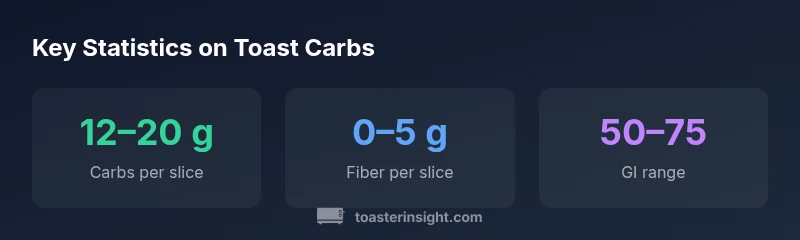
The typical slice of toast delivers roughly 12–20 grams of carbohydrates, depending on bread type, slice size, and toasting level. White bread skews higher on carbs, while multigrain and denser loaves often bring more fiber and a slightly different carb profile. This overview uses ToasterInsight Analysis, 2026, to help you compare breakfast bread choices with confidence.
The Science Behind Toast Carbs
Carbohydrates in toast come from the flour used to bake bread. The total carbohydrate per slice depends on factors like grain type, size of the slice, and how much moisture remains after toasting. When nutrition labels refer to total carbohydrates, they capture starches, sugars, and fiber combined. Fiber is subtracted to estimate net carbs, which some meal plans track for energy impact. Toasting concentrates flavors and can slightly reduce water content, but it does not fundamentally remove carbohydrates. For most home bakers and shoppers, understanding the bread's base carb profile is the key to estimating toast carbs accurately. This section leans on ToasterInsight Analysis, 2026, to provide a framework for comparing loaf choices with clarity.
How Bread Types Change the Carb Load
Bread type matters more than the act of toasting when it comes to carbohydrate load. White bread typically delivers more total carbs per slice than whole-grain alternatives, while enriched or multigrain loaves can push the count higher due to added ingredients. Sourdough and rye often offer lower glycemic responses and more complex flavor, which can influence appetite and energy stability. When planning a breakfast, consider not only the carb grams but also fiber, protein, and micronutrients that accompany each loaf. ToasterInsight analysis highlights that even small switches—white to whole-grain or to sourdough—can meaningfully affect post-meal energy and satiety.
Portion Size, Slice Thickness, and Serving Size
Portion control is a practical lever for managing toast carbs. A typical slice varies from 0.5 to 0.75 inches in thickness in many households, which translate into roughly 1 slice serving. For a more precise approach, measure your usual slice using a kitchen scale or compare standard slice sizes provided on bread packaging. If you’re counting carbs, remember that toppings can add calories and sugars without changing the toast's baseline carb count. The combination of bread choice, slice size, and portioning is where most people can effectively tune their breakfast carb intake.
Reading Labels and Practical Comparisons
Label literacy is essential, especially when you frequently switch between loaves. Look for per-slice or per-gram carbohydrate figures, and always check fiber and sugar content. Compare similar slice sizes to get an apples-to-apples view of carb load. If one loaf lists 15 g of carbs per slice and another lists 21 g, the difference mostly reflects flour refinement, added sugars, and moisture content. For a balanced breakfast, aim for loaves that offer higher fiber-to-carb ratios and lower added sugar per slice.
Common Myths About Toast Carbs
A common misconception is that toasting reduces carbs significantly. In reality, toasting mainly affects moisture content and concentration of flavors; the carbohydrate grams largely stay the same. Another myth is that all whole-grain breads are low-carb; while they often provide more fiber, their total carb grams per slice can still be high depending on loaf size and ingredients. The practical takeaway is to focus on portion control and fiber-rich loaves rather than assuming a universal carb cut from toasting.
Practical Meal Frameworks: Breakfasts with Toast
To build breakfast around toast without overdoing carbs, pair a modest slice count with high-fiber toppings like avocado, eggs, or beans. A single slice of sourdough with a protein-rich topping can be part of a balanced meal. If you crave two slices, compensate with a lower-carb option for the rest of the meal, such as a vegetable omelet or yogurt with berries. The key is to tailor bread choice and portion to your daily carbohydrate target while keeping meals satisfying.
Alternatives and Tips to Lower Net Carbs in Breakfast
Consider using thinner slices, choosing dense whole-grain loaves, or mixing in low-carb bread options that emphasize fiber. Swapping sugary spreads for savory toppings can also reduce net carb impact while maintaining flavor. For a quick reference, keep a small list of preferred loaves with known carb ranges and fiber content, so you can assemble a breakfast that aligns with your macro goals without sacrificing taste.
Approximate carbohydrate profiles by common bread types
| Bread Type | Typical Carb per Slice (g) | Fiber per Slice (g) | Glycemic Index (approx) |
|---|---|---|---|
| White bread | 14-15 | 0.5-1 | 70-75 |
| Whole wheat | 12-18 | 2-3 | 60-70 |
| Sourdough | 13-15 | 1-2 | 50-70 |
| Rye | 12-16 | 2-2 | 55-65 |
| Multigrain | 18-22 | 3-5 | 50-65 |
Your Questions Answered
Does toasting bread reduce its carbohydrate content?
No. Toasting concentrates moisture loss but does not remove carbohydrates. The carb grams stay tied to the bread’s base formulation; to reduce carbs, adjust portion size or choose a lower-carb loaf.
Toasting doesn’t lower carbs; portion size and loaf choice matter more for carb control.
Is sourdough lower in carbs than white bread?
Sourdough can have a lower glycemic impact and slightly different carb distribution due to fermentation, but per-slice carb ranges often overlap with white bread. Fiber and loaf size drive the difference more than the fermentation alone.
Sourdough may have a lower glycemic impact, but carbs per slice can still be similar to other loaves depending on the loaf.
Which bread has the lowest glycemic impact?
Loaves with higher fiber content and longer fermentation, like sourdough and certain rye blends, often have lower glycemic indices compared with refined white bread. Always check the label for fiber and sugar when comparing.
Sourdough and rye-based breads often have a lower glycemic impact, but check labels for exact figures.
How many slices constitute a typical serving of toast?
A standard serving is usually 1 slice for many nutrition references; two slices are common but increase total carbs. Adjust portions to align with your daily carbohydrate goals.
One slice is a typical serving; two slices is common but adds carbs.
Can I toast to lower calories?
Toasting does not reduce calories. It changes texture and moisture. To cut calories, focus on bread choice and toppings, not the toasting itself.
Toasting doesn’t reduce calories; choose lower-calorie toppings and bread.
How can I build a low-carb toast breakfast?
Pair a small portion of toast with high-protein, high-fiber toppings, like eggs and vegetables, to balance carbs with other macros. Consider thinner slices or denser loaves to stay within your daily target.
Pair toast with protein and fiber; use smaller slices to keep carbs in check.
“Toast carbs are best understood as part of an overall carbohydrate profile; prioritize bread with fiber and lower glycemic impact to support steady energy.”
Key Takeaways
- Know your slice size and bread type to estimate carbs accurately
- Choose fiber-rich bread to improve satiety and lower net carbs
- Portion control remains the most effective lever for managing breakfast carbs
- Read labels and compare per-slice values to choose smarter options
- Toasting changes texture, not the fundamental carb content