Does Toast Have Carbs? A Practical Guide for 2026
Explore whether toast contains carbs, how bread type affects carb content, and practical tips for meal planning. A data-driven, 2026 guide from ToasterInsight to help homeowners and cooking enthusiasts.


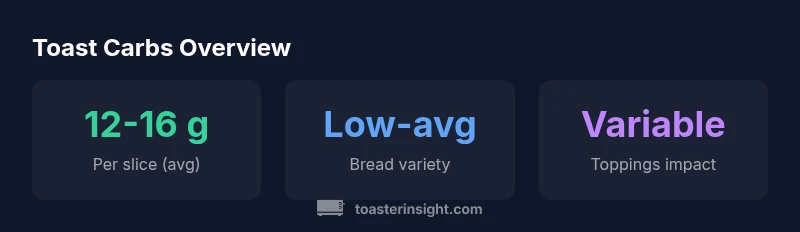
Yes. Toast contains carbs because bread is primarily carbohydrate, and toasting changes moisture not macro content. A typical slice of white bread carries about 12-15 g of carbohydrates, while whole-wheat and sourdough slices usually fall in the 12-16 g range. Toasting does not remove carbs, though toppings like jam or honey can add sugars.
Does toast contain carbs?
Carbohydrates are a primary component of most bread varieties, derived from the starches in flour. Toasting bread mainly reduces moisture, not the carbohydrate fraction, so the carb content per slice remains largely the same after browning. For practical purposes, you can expect roughly 12-15 g of carbohydrates in a slice of white bread and about 12-16 g in a typical whole-wheat slice. Sour-dough slices often land in a similar range, with minor differences depending on hydration and fermentation. From a nutrition perspective, the act of toasting does not introduce or remove a meaningful amount of carbs; the total comes from the grain used to make the bread itself. If you’re counting carbs for a meal, the starting point is the bread, not the toaster.
How carb content varies by bread type
Carbs per slice depend heavily on the flour blend and loaf size. White bread tends to have a straightforward, predictable carb profile, while whole-wheat or dark breads can vary more with recipe and brand. Sourdough, with its fermentation process, often has slightly different digestion dynamics, but the carb amount per slice typically remains within a similar range. When you compare brands, always check the nutrition label for the most accurate number, as slice thickness and loaf density can swing carb totals by a gram or two. If you’re pursuing lower-carb options, look for breads labeled as “low carb” or those made with alternative flours (almond, coconut, or seed-based blends), while noting that these products may change texture and flavor.
The effect of toasting on carbs
Toast reduces moisture content, which can slightly concentrate flavors and alter texture. However, carbohydrate quantity stays constant for the same slice size and bread type. The key takeaway is the serving size—if you switch to a thicker slice or a larger loaf, the carb count rises accordingly. Some people notice a subtle change in how quickly the starch is absorbed during digestion after toasting, but this is more about the crumb structure and food matrix than a dramatic change in total carbohydrate grams.
Carbs in toppings and spreads
Toppings are where carbs commonly flex. A tablespoon of jam or honey can add a significant sugar load, while peanut butter’s carbs come mainly from sugar added in some brands and the natural sugars in peanuts. Butter adds negligible carbs. If you’re counting carbs, tally the spread as part of the meal: a sugared spread might add more carbohydrates than the bread itself, while a simple butter or cheese topping will have fewer carbs per serving. For precise tracking, read nutrition labels and measure portions.
Practical guidance for different diet goals
If you’re following a traditional carb-conscious plan, choose breads with clear nutrition labeling and moderate slice thickness. For very low-carb plans, explore breads built on alternative flours, but adjust expectations about texture and flavor. When pairing toast with toppings, select options that align with your goals: unsweetened spreads and high-fiber toppings can help moderate net carbs. Remember that beverages, coffee additives, and spreads all contribute to the total carb load of a meal, so consider the whole plate rather than a single slice.
How to calculate total carbs for a toast meal
First, identify the carb content per slice for your bread. Multiply by the number of slices you plan to eat. Add the carbs from any toppings, then consider beverages. If you switch brands or bread types, recheck the labels and recalculate. For quick planning, keep a simple tally: bread carbs plus spread carbs equals total carbs for the toast portion of the meal.
Common myths about toast and carbs
Myth: Toasting bread makes it low-carb. Reality: the carbohydrate count remains tied to the bread’s ingredients; toasting only changes texture. Myth: All bread is equally high in carbs. Reality: carb content varies by flour type, loaf size, and brand. Myth: Low-carb toppings don’t affect total carbs. Reality: jams, honey, and sweet condiments can dramatically change totals depending on quantity.
Quick tips for lower-carb toast options
- Choose labels with explicit low-carb bread options and compare per-slice carbs.
- Use thinner slices or smaller servings to reduce carbs per meal.
- Favor unsweetened toppings and limit sugary spreads.
- Consider non-traditional options like seed-rich or alternative-flour breads if you need lower net carbs.
- Balance with protein and fiber to stabilize digestion and satiety.
Approximate carbohydrate content by common bread types
| Bread Type | Approx Carbs per Slice (g) | Notes |
|---|---|---|
| White bread | 12-15 | Common grocery white loaf; moderate fiber |
| Whole wheat | 12-16 | Higher fiber; brand varies |
| Sourdough | 13-15 | Fermented crumb; varies by loaf |
Your Questions Answered
Does toasting bread reduce carbohydrates?
No. Toasting simply dries the crumb; the carbohydrate grams come from the flour and are largely unchanged by browning. Serving size and bread type determine total carbs.
Nope—toast browns but doesn’t cut carbs; your total count comes from the bread and toppings you use.
Which bread has the lowest carbs per slice?
Carb content varies by brand and loaf size, but generally white and low-carbon footprint breads may have lower label numbers per slice. Always check the nutrition facts for your specific loaf.
Look at the label: lower grams per slice vary by brand and loaf size.
Do toppings like jam dramatically increase carbs?
Yes. Sugary spreads can add a meaningful amount of carbs per serving; the impact depends on the portion and product. Opt for unsweetened spreads when possible.
Sugary toppings can add a lot of carbs; measure portions for accuracy.
Is toast allowed on low-carb diets?
Yes, with careful choices. Select low-carb bread options and monitor portion sizes to fit daily carb targets.
You can have toast on a low-carb plan if you pick the right bread and portions.
How many slices count as a serving?
A common serving is one slice, but serving definitions vary by diet. Check your plan’s guidelines and adjust portions accordingly.
Typically one slice, but follow your diet plan’s serving rules.
Does toasting make bread higher in GI?
Toasting can slightly alter the texture that affects digestion, but the total carbohydrates remain the same. GI differences are usually small and depend on bread type.
Toasting may tweak digestion a bit, but carbs stay the same.
“Carbohydrates in toast come from the bread’s starches, and toasting doesn’t erase them; portion control and toppings are where most carb differences arise.”
Key Takeaways
- Carbs come from bread, not toasting.
- Toasting reduces moisture but not carb count.
- Toppings largely drive total carbs.
- Choose bread types to manage carbs.
- Read labels for accurate carb totals.