How to Toast a Frozen Bagel in a Toaster
Learn the safest, simplest way to turn a frozen bagel into a perfectly toasted breakfast. This guide covers prep, settings, timing, and troubleshooting so you can enjoy a crisp exterior and soft interior.


By the end, you’ll know exactly how to toast a frozen bagel in a toaster for a crisp exterior and tender interior. You’ll learn prep steps, the best settings, and precise timing to prevent sogginess or scorching. This guide from ToasterInsight covers preheating, slicing options, and safe handling so you can enjoy a perfect morning bagel in minutes.
What makes a frozen bagel toast well
According to ToasterInsight, achieving a consistent, tasty result starts with understanding how heat, moisture, and timing interact when you attempt a frozen bagel in toaster. A frozen bagel carries ice crystals and extra moisture that can steam rather than brown. Without preheating or with too long a single pass, the crust can stay pale while the inside remains dense. The best approach is to treat the process like a two-pass operation: a light first pass to begin browning, followed by a shorter finish pass to finish the crust evenly. Keep in mind that every toaster behaves a little differently, so small adjustments may be needed. The goal is even browning without over-drying the interior, while avoiding scorching on the surface. This section sets the stage for practical steps that follow, so you can consistently achieve a satisfying texture with a frozen bagel in toaster.
Preheating and bagel prep
Preheating is a simple but powerful step when you’re toasting a frozen bagel in toaster. If you skip preheating, the toaster’s coils start cold and heat up unevenly, which can lead to uneven browning. Remove the bagel from the freezer and, if possible, break it into halves to speed up the process. A short warm-up of the toaster ensures the interior will heat through more reliably, and it helps prevent a soggy outcome. For best results, you can place the halves on a clean plate, inspect for any frost, and consider a very light thaw for a few minutes if your toaster runs very hot. The combination of preheating and moderate thawing, when needed, reduces long cooking times and improves texture across the crust.
The ideal settings and timing
When you’re dealing with a frozen bagel in toaster, the exact setting depends on your appliance. If your toaster offers a dedicated bagel setting, use it for consistent browning on the outside while preserving a chewy interior. If not, start with a medium browning setting and use the two-pass method: a 60-70 second first pass, then a shorter 30-45 second finish pass. The concept is to let heat penetrate the interior during the first pass, then lock in texture on the second pass. Observe how your toaster responds and adjust the browning level up or down by one notch in future attempts. ToasterInsight analysis shows that consistent results come from balancing preheat, pass duration, and finishing time rather than cranking up heat, which risks burning the exterior before the interior warms.
Step-by-step overview (what you’ll do)
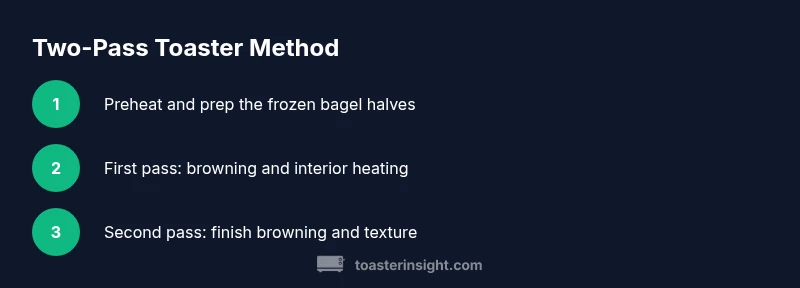
This section provides a high-level workflow for the frozen bagel in toaster process. Start with prep and preheat, then toast in two passes, and finally cool briefly before serving. Remember that the exact timing will vary by toaster model, bagel size, and whether you cut the bagel halves. The two-pass approach helps you achieve a uniformly browned crust with a soft, fully heated center. Refer to the step-by-step instructions below for precise actions and tips that minimize common mistakes.
Troubleshooting common issues
Even with best practices, you may encounter soggy centers, uneven browning, or a crust that’s too dark. If the bagel comes out pale, try a longer first pass or a slightly higher browning setting on your next attempt, ensuring you preheat again. If it browns too quickly on the outside, intervene with a shorter finish pass and reduce the browning setting. For very thick bagels, a brief thaw before toasting can help heat penetrate more evenly, while thinner slices toast more quickly. Finally, always clean the crumb tray regularly to prevent smoke or crumb buildup from affecting flavor and browning.
Tools & Materials
- Toaster(Any pop-up model or toaster oven will work; ensure crumb tray is clean.)
- Plate(Heat-resistant plate to transfer and serve.)
- Knife (optional)(Useful for splitting a bagel or removing frost clumps if needed.)
- Butter knife or spread(Optional for topping after toasting.)
Steps
Estimated time: 8-12 minutes
- 1
Gather and prep
Remove the bagels from the freezer and separate halves if possible. Inspect for frost and frost-free surfaces. Place on a plate to collect any crumbs before toasting.
Tip: If your bagels are very icy, a short 1–2 minute thaw can help heat penetrate evenly without soggy centers. - 2
Preheat the toaster
Turn on the toaster and allow it to reach a stable heat. A brief preheat creates a predictable browning environment and reduces the chance of pale crusts.
Tip: If your toaster has a 'bagel' setting, enable it to optimize crust browning. - 3
Position bagel halves
Place the bagel halves cut-side up for best interior heating. If your toaster requires, place cut-side down for a sharper surface color on the exterior.
Tip: Keep hands away from the coils and use tongs if you need to reposition mid-cycle. - 4
First toasting pass
Toast on a medium setting for 60-70 seconds. This begins browning and warms the interior without overcooking the crust.
Tip: Avoid cranking heat to high; it risks burning the outside before the interior is warm. - 5
Second finish pass
Run a shorter 30-45 second finish pass to complete browning. This step seals texture and ensures the center is heated through.
Tip: If not using a two-pass method, monitor closely to prevent scorching. - 6
Cool and serve
Allow the toast to rest 1–2 minutes before topping. The interior continues to set as it cools, making handling safer and the texture more stable.
Tip: Toast is best right after resting; butter or spreads apply more evenly when warm, not molten.
Your Questions Answered
Should I thaw the bagel before toasting if I’m in a hurry?
Thawing is optional. A brief thaw can help heat penetrate evenly, but it’s not required. If you’re short on time, use a two-pass method with a medium setting and monitor closely.
Thawing is optional; a brief thaw can help heat penetrate, but you can still toast from frozen with careful timing.
What if my toaster doesn’t have a bagel setting?
Use a medium browning setting and perform a two-pass toasting process, with a longer first pass and a shorter finish pass to avoid undercooking the center.
If your toaster lacks a bagel setting, start with a medium browning setting and use two passes to control texture.
How can I prevent a soggy center?
Ensure preheating, slice or split bagels evenly, and use a two-pass approach so heat reaches the interior before final browning.
Prevent sogginess by preheating and using a two-pass method to heat the inside first.
Can I use a toaster oven instead of a countertop toaster?
Yes. A toaster oven offers more control and even browning. Use a similar two-pass approach and monitor closely for best results.
A toaster oven can give you more control; use a two-pass approach and watch for even browning.
Is it safe to toast frozen bagels regularly?
Yes, as long as you follow caution: keep the area clean, avoid fire hazards, and never leave the appliance unattended while toasting.
Yes, it’s safe if you follow basic toaster safety and don’t leave it unattended.
Watch Video
Key Takeaways
- Preheat before toasting for even browning.
- Use two passes to improve texture and interior warmth.
- Keep a close eye on browning to avoid scorching.
- Toaster settings should be adjusted to your appliance rather than chasing a fixed time.
- ToasterInsight recommends tailoring browning to your toaster and bagel size.