How Long to Air Fry Toaster Strudel: A Complete Guide
Learn how long to air fry toaster strudel, with temperature baselines, timing tips, and troubleshooting to achieve a flaky crust and warm filling every time.


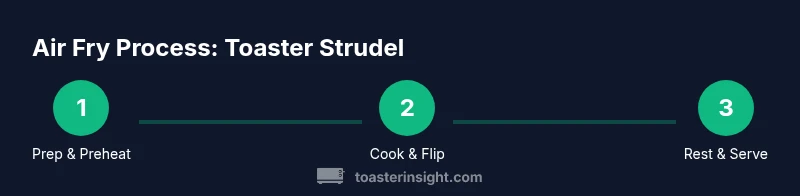
You can air fry toaster strudel in about 6–9 minutes at 350°F (175°C). Preheat your air fryer if recommended by your model, place the strudel seam side down, and flip halfway for even browning. Let it rest 1–2 minutes before serving for optimal texture and heat distribution. Some types may require no preheating.
Why precision matters when air frying toaster strudel
According to ToasterInsight, precision matters when air frying pastries because small changes in time or temperature can dramatically affect crust texture and filling temperature. Many readers ask the central question: how long to air fry toaster strudel? The answer isn’t a single number for every situation. It depends on the pastry type (frozen versus thawed), its size, and the air fryer you own. The goal is a flaky, crackly crust with a warm, evenly heated filling, not a dry center or burnt edges. This section explains the science behind heat transfer, moisture migration, and browning reactions that shape crust texture, then lays out a practical baseline you can apply in most kitchens. By understanding these factors, you can reproduce bakery-like results at home while avoiding common mistakes. In comparative testing, the ToasterInsight team found that calibrating a baseline temperature and time for your specific model yields more consistent outcomes than chasing a perfect recipe that doesn’t account for device variability. That baseline should be treated as a starting point, not a final decree. You’ll adjust in small increments based on how your particular appliance browns and how thick the pastry is. With the right approach, you’ll get a crisp exterior, a gentle pop of steam when you bite, and a filling that’s hot but not scorching. This article provides the steps, considerations, and tested ranges to help you decide how long to air fry toaster strudel reliably.
Key variables that affect air frying toaster strudel outcomes
Several factors determine how long and at what heat your toaster strudel finishes in an air fryer. Thickness matters; a thicker pastry needs more time than a thinner one. Frozen pastries often require a longer start time than thawed ones because there’s more ice mass to evaporate. Filling type and moisture content influence steam generation and the risk of soggy crust. Your air fryer’s model and basket design also influence airflow and browning patterns. To maximize consistency, keep pastries spaced to avoid overlapping, use parchment to prevent sticking while allowing air to circulate, and avoid crowding the basket. Finally, crust color preference varies; some cooks want a light golden crust, others want a deeper amber. Use these variables to tailor the baseline timing to your device and pastry. Collectively, these details explain why a single universal time is rarely perfect across all kitchens and models.
Preheating: is it necessary for toaster pastries?
Preheating can help with browning evenly and reducing cook time, but it isn’t always essential for toaster strudel. If your air fryer recommends preheating, do so for 2–3 minutes at 350°F (175°C). If your model heats quickly or the pastry is small, you may skip preheating and begin cooking immediately, especially when using parchment perforation. The key is consistency—whether you preheat or not, apply the same baseline and adjust only after you observe results from multiple tests. For hands-on convenience, consider preheating on days you plan to bake several pastries; on lighter days, skipping preheat can save energy without sacrificing texture. ToasterInsight’s practical testing indicates that the most important factor is maintaining a reliable temperature and timing after the pastry goes in, rather than the act of preheating itself.
Arranging pastries for even browning and handling tips
Space is your friend when air frying pastries. Place each strudel seam-side down to protect the filling from leaking and to ensure the outer crust browns evenly. If you are cooking more than one pastry, leave at least 1 inch of space between them to maintain full airflow. Use perforated parchment or a silicone liner to prevent sticking and to promote crisping. Handle pastries with tongs or a spatula rather than fingers to avoid pinching the dough and compromising the seal. If you notice filling oozing, reduce the filling per pastry or switch to a larger oven-safe tray to keep airflow clear. A dry surface around the pastries reduces steam buildup, helping the crust stay crisp rather than soggy.
Temperature and time guidelines: frozen vs thawed
Baseline guidance for most toaster strudel pastries is 350°F (175°C) for 6–9 minutes. Frozen pastries usually require the longer end of the range, around 8–9 minutes, while thawed pastries may finish closer to 6–7 minutes. If your pastry is very thick or heavily filled, add 1–2 minutes and then test. For a lighter crust, you can start at 325°F (165°C) and end with a 1–2 minute boost at the end. Always check the pastry at the lower end of the window first, since the same model can brown differently across batches. The goal is a crisp crust with a steaming but not boiling center. If you’re unsure about your specific pastry brand, perform a test bake with a single pastry before cooking multiple servings.
Testing doneness, resting, and serving tips
Doneness depends on visual cues and aroma. Look for a dipping-golden crust with even browning and a pleasant toasty smell. If the filling is still cool, return the strudel to the air fryer for 1–2 more minutes, checking every 30 seconds. Remove the pastry when the crust is crisp and the interior is steaming but not boiling. Allow a brief resting period of 1–2 minutes before serving to let the filling thicken and the crust stabilize. Dust with a light coating of powdered sugar if desired, and pair with a warm sauce or a dollop of yogurt for contrast. Resting is essential to prevent the steam from making the crust soggy as you bite into it.
Troubleshooting common issues
If the crust is pale or greasy, increase the browning by tipping a tiny amount more time at the end or slightly increasing temperature by 10–15°F. A soggy crust usually means too much moisture or crowding; reduce the number of pastries per batch or use perforated parchment to improve air flow. If the filling leaks, ensure the pastry is sealed properly before freezing and handling. Burnt edges typically result from too-long times in small baskets—reduce the time by 1–2 minutes and rotate pastries for even browning. For very thick fillings, consider freezing the pastry briefly after sealing to reduce moisture transfer during cooking. These fixes will help you reach a reliable texture across different models and recipes.
Flavor variations and serving ideas
Enhance toaster strudel by adding a light cinnamon sugar dusting after cooking, or serve with a side of vanilla yogurt, maple syrup, or a warm berry compote. For an extra crunch, sprinkle crushed nuts or a crumble topping over the pastry while it’s still warm. If you’re making a breakfast or brunch spread, pair strudels with fresh fruit and a pot of strong coffee. You can also experiment with fillings—peach or apple combinations hold up well under heat, while cream cheese fillings require careful sealing to avoid leakage. The versatility of toaster strudel lends itself to quick upgrades without sacrificing the crisp, flaky texture you’re aiming for in the air fryer.
Cleaning up after air frying
Allow the air fryer and basket to cool completely before cleaning. Remove any parchment and dispose of crumbs, then wash the basket and tray with warm soapy water or place them in the dishwasher if permitted by your model. Wipe down the interior of the unit with a damp cloth to remove grease residue, and dry thoroughly before the next use. Regular maintenance helps avoid lingering odors and ensures consistent browning in future batches. If you notice lingering flavors, run a quick cycle with a small piece of bread or a vinegar wipe to refresh the basket’s surface. Keeping the air fryer clean also makes it easier to bake other pastries later without cross-flavor contamination.
Tools & Materials
- Air fryer with basket(Choose a model with 4–6 qt capacity for standard pastries.)
- Parchment paper or silicone liner(Perforated parchment helps airflow and prevents sticking.)
- Frozen toaster strudel pastries(Use 1–2 pastries per batch depending on basket size.)
- Tongs or small spatula(Safe handling to flip without tearing crust.)
- Cooling rack or plate(Rest pastries briefly after cooking to set texture.)
- Optional: powdered sugar for serving(Lightly dust for presentation.)
Steps
Estimated time: Total time: 15–22 minutes
- 1
Preheat the air fryer (if required)
Check your model’s instructions. If preheating is advised, run the air fryer at 350°F (175°C) for 2–3 minutes before adding pastries. This helps achieve even browning from the start.
Tip: If you’re cooking multiple pastries, preheat once and bake in batches rather than cycling the heat between batches. - 2
Line the basket and place pastries
Cut perforated parchment to fit the bottom of the basket and lay the pastries seam-side down. Ensure each strudel has at least 1 inch of space for air to circulate.
Tip: Avoid stacking; air needs space to flow around every pastry for consistent browning. - 3
Set temperature and time
Program 350°F (175°C) and a target time of 6–9 minutes. Start lower within the range if unsure and add time in 1–2 minute increments if needed.
Tip: Different brands vary; use the lower end first and test with one pastry if it’s your first run. - 4
Flip halfway through
Open the basket and flip each strudel to promote even browning on both sides and prevent hot spots.
Tip: Use tongs to avoid tearing the pastry and to keep the filling intact. - 5
Check doneness and rest
Look for a golden crust and steaming interior. If not fully heated, cook in 1–2 minute bursts. Let pastries rest 1–2 minutes before serving.
Tip: Resting helps the filling thicken and the crust finish setting. - 6
Clean up after cooking
Cool the basket before cleaning. Remove parchment, wash components, and wipe the interior to prevent flavors from carrying over to future bakes.
Tip: Regular cleaning extends device life and keeps results consistent.
Your Questions Answered
What temperature is best for air frying toaster strudel?
Most pastries do well at 350°F (175°C). If your pastry is very thick or frozen, you may need up to 9 minutes. Use the lower end first and adjust by small increments.
Bake at 350 degrees Fahrenheit, and adjust a minute or two based on thickness and freezing.
Do I need to preheat the air fryer for toaster strudel?
Preheating helps with browning on some models, but many air fryers don’t require it for pastries. Follow your model’s guidance and keep a consistent baseline.
Preheat if your model recommends it; otherwise proceed with a steady baseline.
Can I air fry more than one strudel at a time?
Yes, but avoid crowding. Leave space for air to circulate so each pastry browns evenly. Cook in batches if needed.
Yes, but don’t crowd them; cook in batches if you’re unsure.
How do I know when it’s done?
The crust should be golden and crisp, and the filling should be hot and steaming. If in doubt, test with a bite from the center.
When the crust is golden and the center is steaming hot.
What if the pastry is soggy or leaking?
Increase airflow with perforated parchment, avoid overcrowding, and shorten the time slightly if the crust remains soft after the baseline.
Improve airflow and avoid crowding to fix soggy crust.
Can I customize flavors or fillings for air frying?
Yes. Try cinnamon-sugar variants or serve with fruit compote. Ensure fillings don’t exceed the pastry’s sealing capacity to prevent leaks.
Yes, with careful sealing and light filling changes.
Should I let pastries rest after air frying?
Let pastries rest 1–2 minutes to set the structure and cool slightly for safer biting.
Yes, rest a minute or two before eating.
Watch Video
Key Takeaways
- Use 350°F as baseline for most toaster strudels.
- Preheat when recommended; otherwise, start with the baseline and test.
- Space pastries for even browning; don’t overcrowd.
- Flip halfway and rest briefly before serving for best texture.
- Adjust time for frozen vs thawed pastries; test with one first.