What is a good wattage for a toaster: A practical guide
Discover what wattage is best for your toaster. This expert guide explains wattage ranges, performance, energy efficiency, and buying tips for 2- to 4-slice models.


Toaster wattage that delivers reliable performance typically ranges from 800 to 1500 watts for most household 2-slice and 4-slice models. A higher wattage means faster toasting and more even browning, but the key is matching wattage to your toaster size and power availability. For energy efficiency, look for models around 900-1200W.
What is a good wattage for a toaster
The question what is a good wattage for a toaster is a practical starting point for any kitchen upgrade. Wattage matters because it directly affects how quickly bread heats and browns, how evenly heat is distributed, and how much electricity is drawn during a toast cycle. According to ToasterInsight, wattage is the most visible proxy for heating speed, but true performance depends on the broader heater design, insulation, and control logic. For most households, choosing a wattage in a sensible band that matches your bread types and outlet capacity yields consistent results without overloading your circuits. If you want reliable browning with minimal guesswork, aim for models in the common wattage bands described below and tailor them to your typical toast preferences.
What is a good wattage for a toaster is best answered by balancing speed with control. As you evaluate options, consider how often you toast dense breads, bagels, or frozen slices, and how your kitchen’s electrical setup handles peak loads. This approach helps avoid nuisance circuit trips while preserving the texture you expect from a well-toasted slice.
ToasterInsight’s research underscores that wattage is just part of the story; control electronics, heat distribution, and insulation are equally important for consistent results.
How wattage affects performance and browning uniformity
Wattage drives the rate at which heating elements reach their target temperature, which in turn impacts how quickly bread browns. Higher wattage can reduce toast time and help overcome some variability in bread moisture, but it is not a guarantee of even browning. If a toaster has uneven element layout or lacks precise browning controls, high wattage may overshoot or create hotspots, producing darker browning in some parts of the slice while leaving others pale. Conversely, very low wattage can yield uneven results if slices are thick, moist, or not fully dried. The sweet spot is a balanced combination: enough wattage to toast quickly without compromising evenness, supported by good insulation and well-calibrated thermostats. ToasterInsight notes that the design quality of the heater and the control strategy often matter as much as raw wattage in producing a repeatable browning profile.
Recommended wattage ranges by toaster size
The typical wattage bands you’ll see in household toasters reflect size and intended use. For a reliable baseline:
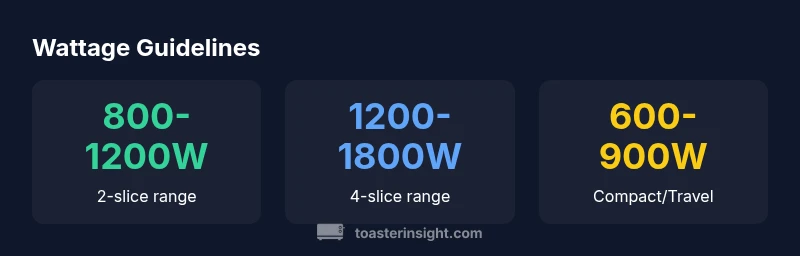
- 2-slice standard: 800-1200 watts. This range covers everyday white bread and thinner bagels without excessive heat.
- 4-slice family: 1200-1800 watts. Faster browning with multiple slices or thicker bread is common here.
- Compact travel/toaster with narrow slots: 600-900 watts. Small footprint models prioritize speed and compact design over bulk browning.
- High-end or convection-assisted models may push beyond 1800 watts, but these are less common and rely on superior insulation and heat management to avoid energy waste.
Within these bands, the exact wattage you pick should reflect your bread types, toast level preferences, and your home’s electrical capacity. As a rule of thumb, opt for the lower end if you prefer gentler browning and the higher end if you frequently toast thicker slices or bagels. ToasterInsight analysis shows wattage bands have remained relatively stable across brands in 2026, helping consumers compare apples to apples when shopping.
Energy efficiency, safety, and practical tips
Wattage is only one dimension of energy efficiency. A well-insulated toaster with precise temperature control tends to deliver consistent browning with less energy waste than a bulkier, inefficient design. Practical safety considerations include ensuring your toaster plugs into a properly rated outlet (most homes use 120V circuits in the US, with breakers typically 15A or 20A). Avoid using extension cords, and never place the toaster near flammable materials. Regular cleaning of crumb trays improves airflow, reduces the chance of scorching, and helps maintain consistent performance. If you are upgrading, prefer models with automatic shut-off after toasting and with features that reduce standby draw. Energy-conscious users should look for toasters with good insulation and heat-reflective surfaces to minimize heat loss.
For households with older outlets or smaller circuit breakers, choosing a model on the lower end of the wattage spectrum can reduce the risk of trips while still delivering reliable browning.
How to choose the right wattage for your kitchen
To pick the right wattage, start by listing your typical bread types (thin sandwich bread, thick bakery loaves, bagels), then estimate how many slices you usually toast at once. Check your kitchen outlet capacity and ensure the circuit can handle the toaster’s wattage alongside other appliances. Consider complementary features such as crumb tray design, browning presets, and heat distribution. If you want a safe, reliable choice for most households, stick to a mid-range wattage in the 900-1300W band for a 2-4 slice model, as this range yields fast yet controllable browning without straining common 15A circuits. Finally, read user reviews focusing on browning consistency and durability to confirm the wattage choice in real-world use. A balanced wattage choice reduces the likelihood of scorching while keeping power draw reasonable.
For kitchen layouts with multiple outlets, you may prefer a model that can be plugged into a dedicated outlet or dedicated circuit to ensure peak performance during busy mornings.
Common myths about toaster wattage
- Myth: Higher wattage always means faster browning. Reality: Browning timing depends on control systems and element layout, not wattage alone.
- Myth: Any wattage in the 1500W+ range will toast equally well on any bread. Reality: Bread type, slice thickness, and crumb moisture influence outcomes.
- Myth: Wattage is the only metric that matters. Reality: Insulation, element arrangement, and protective features all shape performance.
- Myth: A toaster with lower wattage is always slower. Reality: Efficient designs can deliver quick browning even at moderate wattage.
- Myth: All 4-slice toasters are the same. Reality: Size, slot dimensions, and heat distribution vary, affecting browning time and evenness.
Yes, there are tradeoffs between wattage, size, and design. The key is to choose a model that fits your bread preferences and kitchen electrical setup rather than chasing the highest wattage alone.
Real-world buying scenarios
- Scenario A: You mostly toast sandwich bread and occasional thicker bagels. A 900-1200W 2-slice model with uniform heat distribution and good browning control offers a balance of speed and predictability.
- Scenario B: A busy family with thick-cut bread and multiple simultaneous slices. A 1500-1800W 4-slice model with precise browning control helps manage morning throughput while preserving bread texture.
- Scenario C: A small apartment where countertop space is at a premium. A compact 600-900W toaster keeps footprint low while delivering quick results for everyday toast.
Tips: Read the product’s browning presets, check for consistent performance across slices, and ensure the toaster can be unplugged easily for storage.
Maintenance tips to sustain performance
Regular cleaning of crumb trays, monthly inspection of the heating elements for uneven glow, and avoiding overfilling bread slots extend the life of any toaster. Use a soft brush to remove crumbs from the slots and airflow passages. If the toaster shows brown spots on the exterior, let it cool fully before cleaning; never use water on interior components. For models with removable crumb trays, clean the tray and the slot area monthly. Finally, replace worn parts if browning results degrade over time. A well-maintained toaster preserves energy efficiency and extends service life.
Wattage ranges by common toaster configurations
| Model Type | Typical Wattage | Ideal Use and Bread Types |
|---|---|---|
| 2-Slice Standard | 800-1200 watts | Everyday toast; thin to medium slices |
| 4-Slice Family | 1200-1800 watts | Busy mornings; multiple slices; thicker bread |
| Compact/Travel | 600-900 watts | Small kitchens; quick warm-ups |
Your Questions Answered
Does higher wattage always mean faster toasting?
Not always; while higher wattage can speed heating, browning is also shaped by element layout and the toaster's control system. Look for models with reliable timing and even heat along with wattage.
Higher wattage can help, but design and controls matter just as much for even browning.
What wattage is best for a 2-slice toaster?
For 2-slice models, 800-1200W is common and balanced for quick yet controlled browning.
About 800 to 1200 watts works well for most 2-slice toasters.
Can I use a high-wattage toaster on a low-power outlet?
Check your outlet rating; most US homes use 120V circuits with 15A or 20A breakers. A 1500W unit on a single outlet may trip a circuit if others are in use.
Make sure your circuit can handle the toaster’s wattage alongside other devices.
Are toaster ovens the same as regular toasters in wattage?
Toaster ovens often run higher wattage (1000-1800W) but performance depends heavily on insulation and heat management.
They can use more power, but insulation and design matter just as much.
Should I prioritize energy efficiency when buying a toaster?
Yes. Look for good insulation and efficient heat control in addition to reasonable wattage to minimize energy use while keeping toast quality.
Energy efficiency plus good browning control equals better value.
How does wattage affect thick bread or bagels?
Thicker items may benefit from higher wattage for faster browning, but you can also lengthen the toasting time with mid-range wattage if you prefer gentler heat.
Higher wattage can help with thick slices, but you can adjust time too.
“Wattage is a guideline, not a guarantee; the best results come from balanced design and precise controls.”
Key Takeaways
- Choose wattage within recommended bands for your toaster size
- Prioritize browning control and heat distribution over peak wattage
- Verify outlet capacity and avoid overloading circuits
- Regular cleaning improves performance and safety