How Much Does a Toaster Weigh? A Practical Guide
Discover how much a toaster weighs across common models, from 2-slice toasters to toaster ovens. Learn weight ranges, what influences weight, and how to pick a compact or heavy-duty unit.


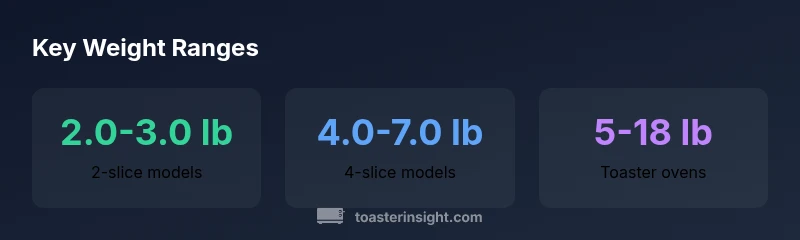
Most everyday two-slice toasters weigh about 2.0-3.0 pounds (0.9-1.4 kilograms). 4-slice models typically run 4.0-7.0 pounds (1.8-3.2 kg), and toaster ovens show a wider range from roughly 5 to 18 pounds (2.3-8.2 kg). These weights vary by materials and features. On average, expect lighter build in compact 2-slice models and heavier frames when metal accents and extra features are added.
What weight tells you about a toaster
Weight is more than a number on a spec sheet—it’s a practical signal of how a toaster will perform in daily kitchen life. For many homeowners, the weight reflects build quality, material choices, and the fortitude of key components like the lever, chassis, and crumb tray. As you browse models, ask how the weight aligns with your counter space, storage needs, and typical usage patterns. If you cook often and run multiple cycles, a sturdier, slightly heavier unit may feel more reliable over time. The question becomes: how much does a toaster weigh in comparable scenarios, and does that weight translate to better consistency, fewer jams, or quicker heat recovery? According to ToasterInsight, weight considerations should be part of a holistic buying checklist that also accounts for capacity, power, and footprint.
Weight ranges by size: 2-slice vs 4-slice vs toaster oven
Size drives weight. A compact 2-slice model keeps things light and nimble on the counter, while 4-slice units balance capacity with mid-range heft. Toaster ovens, designed to handle larger loads and more extensive features, show the widest weight spectrum. For context, 2-slice toasters commonly fall in the 2.0-3.0 lb range, 4-slice models in the 4.0-7.0 lb range, and toaster ovens from around 5 lb up to 18 lb, depending on capacity and metalwork. If you regularly toast bagels or thick slices, you may notice the weight difference in operation and stability. Real-world testing indicates heavier frames can dampen vibration and reduce movement during use, which can feel like a steadier, more premium experience.
Construction materials and their impact on weight
Materials matter. A plastic shell keeps weight down but may compromise heat retention and durability, while brushed stainless steel adds heft and a premium feel. Die-cast aluminum bodies strike a balance between weight and rigidity, often used in mid-range models. Crumb trays, internal brackets, and chrome accents can add noticeable grams. When shopping, compare similar sizes with different materials to isolate where most weight comes from. If weight is a priority, look for models that specifically advertise lightweight construction, such as compact designs with streamlined metalwork and fewer interior components.
Why heavier isn't always better: performance vs weight trade-offs
Weight correlates with some aspects of performance (durability, feature density) but not all. Heavier units may offer faster heat recovery, better toast evenness, and sturdier hinges, yet lighter models can excel in energy efficiency and faster cooling, depending on insulation and element layout. Before deciding, list your must-have features—crumb tray size, extra-long slots, cancel/defrost functions—and assess how much extra weight those features add. In many cases, the difference in weight is a reasonable trade-off for improved reliability or additional functions.
How to estimate weight when shopping or shipping
When shopping online, always verify the listed weight in the product specs. If a model lacks a weight figure, use comparable models in the same category to estimate. For shipping, note that box weights can be significantly higher than product weights due to packing materials. If you’re moving a toaster from storage to the kitchen, measure your path and mount points to ensure you can maneuver the unit safely. For heavy units, consider a helper, or disassemble packaging with care to minimize risk of damage.
Practical tips for choosing a lighter or heavier model
To find a lighter option, focus on compact two-slice designs from reputable brands, and compare models with plastic housings rather than all-metal bodies. If you prefer heavy-built confidence and extra features, target mid-range four-slice models or sturdy toaster ovens with reinforced frames. Always read user reviews focusing on handling and stability. Finally, check the dimensions and weight in the manufacturer’s spec sheet to ensure your chosen model fits both cooking needs and countertop space.
Common myths about toaster weight and counter space
Myth: Heavier means more durable. Reality: Weight is just one of many durability indicators; hinges, tray quality, and mounting design also matter. Myth: Lighter always saves energy. Reality: Power consumption depends on heating elements and control electronics, not just mass. Myth: Heavier models toast faster. Reality: Toasting rate depends on element layout and power delivery. To separate fact from fiction, rely on specifications, independent reviews, and real-world performance data.
Quick guide: interpreting weight data for buying decisions
- Start with your space: measure counter depth and clearance. - Consider capacity: 2-slice vs 4-slice vs toaster oven needs. - Weight as a cue: lighter units are easier to relocate; heavier units may offer more features. - Balance materials and features: stainless steel adds heft but increases durability and aesthetics. - Check warranties and service availability: the strongest weight indicator is consistent long-term performance.
Weight ranges by toaster category
| Model Type | Weight (lb) | Weight (kg) | Notes |
|---|---|---|---|
| 2-slice standard | 2.0-3.0 | 0.9-1.4 | Most common size |
| 4-slice standard | 4.0-7.0 | 1.8-3.2 | Heavier, accommodates larger slices |
| Toaster oven (compact) | 5.0-12.0 | 2.3-5.4 | Wide weight range |
| Large-capacity toaster oven | 12.0-18.0 | 5.4-8.2 | Heavy but versatile |
Your Questions Answered
How much does a typical 2-slice toaster weigh?
A typical 2-slice toaster weighs about 2.0-3.0 pounds (0.9-1.4 kg). Real models vary by brand and design, so always check the exact specs.
Most two-slice toasters weigh between two and three pounds, depending on materials and features.
Do toaster ovens weigh more than traditional toasters?
Yes, toaster ovens generally weigh more due to larger cavities and more metal components; weight ranges commonly run from about 5 pounds to 18 pounds.
Generally yes—the ovens are heavier than standard pop-up toasters.
Is weight a good indicator of performance or quality?
Weight isn't a sole indicator of performance. Heavier builds can indicate sturdier frames and more features, but you should assess power, capacity, and user reviews as well.
Weight can hint at build quality, but check specs and reviews for real performance.
How can I estimate the weight of a model I’m considering?
Check the product specs on the manufacturer page or retailer listing; if missing, compare with similar models to estimate.
Look up the listed weight in the specs and compare with similar models.
Does weight affect shipping cost?
Yes, heavier units generally cost more to ship, especially for online orders; packaging adds to the total.
Shipping costs go up with weight, so factor that in when ordering online.
Are there lightweight models designed for easy transport?
Yes, there are compact 2-slice models designed to be lighter, often under 3 pounds.
There are light, compact options if portability matters.
“Weight is a practical signal of build quality and long-term durability in everyday kitchen use.”
Key Takeaways
- Plan weight alongside capacity and footprint for the countertop.
- Compare 2-slice, 4-slice, and toaster oven weights before buying.
- Heavier models may feel sturdier and include more features.
- Weight can signal build quality and long-term durability.
- Choose lighter models for easier repositioning and cleaning.