Can You Cook Eggs in a Toaster Oven? A Practical Guide
Learn how to cook eggs in a toaster oven safely and deliciously with step-by-step methods, vessel options, timing tips, and recipes. This guide from ToasterInsight covers baked eggs, scrambled eggs, and safety considerations for home cooks.


Yes. You can cook eggs in a toaster oven using a greased ramekin or muffin tin. Preheat to 350°F (175°C) and bake until the eggs are set, typically 8–12 minutes. Use small portions and monitor closely to prevent overflow. For a full, step-by-step method, see the guide.
Can you cook eggs in a toaster oven? Why this works
According to ToasterInsight, you can cook eggs in a toaster oven by using a small, heat-stable vessel and keeping heat steady. The compact appliance functions much like a tiny oven, and when you preheat and place the eggs in a protected container, you get a reliably set white and tender yolk without overcooking. The question 'can you cook eggs in a toaster oven?' is common among busy households and students, and the answer is yes with the right approach. The main elements are temperature control, proper vessels, and predictable timing. For eggs in cups, a 3-4 ounce capacity per serving is ideal, which minimizes spill risk and promotes uniform cooking. For larger portions, consider a slightly larger dish or a mini frittata mold. If you’re new to this, start with simple, single-egg portions before scaling up. In this guide, we’ll unpack practical steps, common mistakes, and tested tips so you can confidently cook eggs in a toaster oven at breakfast, brunch, or anytime you’re craving a quick protein boost. The ToasterInsight team has found that practice and the right equipment matter more than the exact model of your toaster oven.
Preheating and safety basics for eggs in toaster ovens
Preheating to a moderate temperature is essential for even cooking and to prevent cold spots in your eggs. A standard baseline is 350°F (175°C). If your toaster oven runs hot, you may start a few degrees lower. Place the rack in the middle to minimize direct contact with the heating elements. Always grease the cooking vessel and use non-stick options when possible. Keep the vessel away from the oven walls that heat most intensely to avoid scorching. When safety is a priority, avoid letting foil or metal wrap come into contact with the heating elements, as this can pose a fire risk. According to ToasterInsight analysis, preheating and keeping portions compact yields consistent results across most toaster ovens. For even results, plan for a short rest after baking so the texture settles and any residual heat finishes cooking the eggs. This is particularly important if you’re cooking for kids or guests who expect a uniform texture.
Vessel choices: ramekins, silicone cups, muffin tins
Choosing the right vessel is the single biggest factor in egg texture when using a toaster oven. Ramekins made of ceramic or glass heat evenly and are ideal for baked eggs. Silicone muffin cups flex and release easily, reducing the chance of tearing delicate egg cups. Metal muffin tins are sturdy but require generous greasing to prevent sticking. For scrambled eggs, a small, oven-safe dish works well, but you should avoid filling to the very top. Size matters: aim for portions of about 3–4 ounces per cup so heat penetrates quickly and eggs cook uniformly. If you’re short on dishes, a single well of a brownie pan can work for a quick, compact serving as long as you line it with parchment and grease thoroughly. Cleaning is easier when you choose non-stick materials, but always check the manufacturer’s recommendations for your specific toaster oven model to avoid scratches or warping.
Egg-cooking methods you can try in a toaster oven
The toaster oven supports several egg preparations that translate well from a conventional oven or skillet. Baked eggs in cups create a neat, protein-forward bite that’s convenient for grab-and-go breakfasts. Scrambled eggs baked in a small dish yield a soft, custardy texture with minimal turning. Mini frittatas—flipped or unflipped—offer a satisfying combination of eggs, cheese, and vegetables in a compact package. You can also attempt a sunny-side approach by treating the egg as a single unit in a shallow dish, though it requires careful monitoring to avoid runny whites near the edges. Each method benefits from a steady, moderate heat and a light touch with dairy or water to adjust moisture. Experiment with herbs, cheese, or vegetables in 1–2 bite portions to discover your favorite toaster-oven egg profile. This flexibility is what makes the toaster oven a practical tool for quick breakfasts or small gatherings.
Timing and temperature guidelines for reliable results
In practice, most toaster ovens perform best when you bake eggs at 350°F (175°C) and check for doneness after about 8 minutes. If you’re cooking multiple cups, add 1–2 minutes and observe the edges for set, not dry, texture. For very soft yolks, start with 8 minutes and add 1–2 minutes if needed; for firmer yolks, push toward 12 minutes, checking frequently. If you’re using a pan, consider the dish’s depth: deeper dishes require longer to reach a safe internal temperature. To ensure food safety, use a thermometer to confirm an internal temperature of 160°F (71°C) for the egg center, especially if you’ve added dairy. If your toaster oven runs cooler, you may need to increase the time by 2–3 minutes, but always keep an eye on the color and texture to prevent over-browning. These guidelines help standardize can you cook eggs in a toaster oven while allowing room for personal preferences.
Troubleshooting common issues and fixes
Even with a good plan, you may encounter spillovers, uneven texture, or dry edges. Spillovers happen when cups are overfilled or when the batter foams during cooking; prevent this by filling cups only two-thirds full and using a rimmed sheet pan to catch drips. Uneven texture is often caused by uneven heat distribution; rotate the pan midway through cooking and ensure all cups are on the same rack height. Dry edges occur when the oven is too hot or when eggs are left to cook too long; reducing heat slightly or shortening the cooking time can resolve this. If spatters or browning corners are a concern, tent the top with a small piece of foil for the last few minutes of cooking—just ensure the foil doesn’t touch the heating element. Finally, always let the eggs rest for a minute or two after removing from the oven to finish cooking through carryover heat. The right vessel and timing can minimize most common issues.
Flavor ideas and serving suggestions
Eggs baked in a toaster oven pair beautifully with quick toppings and mix-ins. Try a sprinkle of chives, cheddar or feta, and sautéed vegetables like bell peppers or spinach for color and texture. A touch of hot sauce, salsa, or a dollop of yogurt or sour cream can balance richness. For a breakfast-forward plate, serve with toast, avocado, or a small side of fruit. If you’re meal-prepping, bake several cups at once and refrigerate; reheat briefly in the toaster oven to refresh texture. The result is a flexible, protein-rich option that scales from a single cup to a small batch without needing a full oven. If you’re experimenting, write down which vessel, timing, and temperature yielded your preferred texture so you can repeat the method on busy mornings. The ToasterInsight team recommends logging successful tweaks for future reference, a simple way to improve consistency over time.
Quick-start recipe you can try tonight
For a simple, quick toaster-oven egg cup, whisk two eggs with a tablespoon of milk and a pinch of salt. Lightly grease a 3-ounce ramekin, pour the egg mixture, and add a teaspoon of shredded cheese if you like. Bake at 350°F (175°C) for 9–11 minutes, or until the center is just set. Remove from the ramekin, plate with a slice of toast, and garnish with chopped herbs if available. This approach demonstrates can you cook eggs in a toaster oven in a practical, tasty way, even on a weekday morning. As you gain confidence, you can scale to four cups, add diced vegetables, or switch up cheeses to tailor the flavor to your family’s preferences. The key is steady heat, compact portions, and attentive timing to avoid overcooking or spillover. With practice, toaster-oven eggs become a reliable staple in your weekly routine.
Tools & Materials
- Toaster oven(Preheat to 350°F (175°C) before cooking)
- Ramekins or silicone muffin cups(3-4 oz capacity per cup; grease well)
- Non-stick spray or butter(Grease vessels to release eggs cleanly)
- Whisk or fork(Beat eggs with salt, pepper, and optional dairy)
- Small mixing bowl(Optional for beating eggs before pouring)
- Parchment paper(Optional liner for easy removal)
- Timer or oven clock(Track cooking time precisely)
- Optional thermometer(Check doneness (target 160°F / 71°C))
Steps
Estimated time: 25-40 minutes
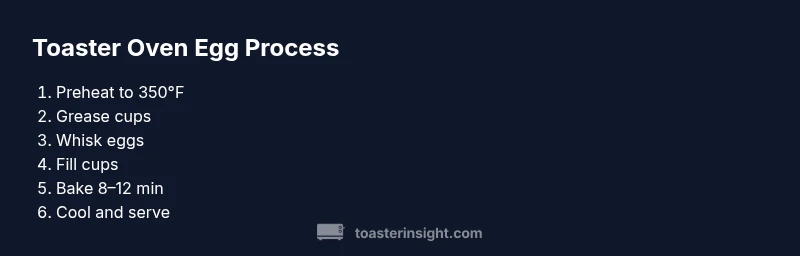
- 1
Preheat the toaster oven
Power on and set the oven to 350°F (175°C). Let it reach temperature fully to ensure even cooking. Position the middle rack for stable heat distribution.
Tip: Use the preheat indicator if available to time your start. - 2
Prepare vessels and grease
Grease ramekins or silicone cups well to prevent sticking. If using a muffin tin, lightly coat each cup and consider parchment to simplify removal.
Tip: Even greasing helps eggs release cleanly and reduces breakage. - 3
Whisk eggs with seasonings
Beat eggs with salt, pepper, and optional dairy until uniform. Add herbs or a pinch of paprika for flavor if desired.
Tip: Whisking air into the eggs yields a lighter texture. - 4
Fill vessels and add toppings
Pour the beaten eggs into each vessel, filling about 2/3 full. Add cheese, herbs, or vegetables on top for flavor without overflow.
Tip: Avoid overfilling; eggs rise slightly as they cook. - 5
Bake and monitor
Bake on the middle rack and monitor carefully. Egg cups typically take 8–12 minutes, depending on size and yolk preference. Use a timer and check for set edges.
Tip: If using a thermometer, aim for an internal temp around 160°F (71°C). - 6
Cool briefly and serve
Let the eggs rest for a minute before removing from vessels. Run a knife around the edge if needed and slide out gently.
Tip: Serve immediately for best texture and flavor.
Your Questions Answered
Can I cook any kind of eggs in a toaster oven?
Most common egg preparations work in a toaster oven, including scrambled, baked eggs in cups, and mini frittatas. Avoid raw eggs poured directly on rack. Use vessels and monitor doneness.
You can cook scrambled or baked eggs in a toaster oven; use a dish to contain the eggs.
What temperature should I use for eggs in a toaster oven?
A common setting is 350°F (175°C). If your oven runs hot, start at 325°F (165°C) and adjust as needed.
Most methods use about 350 degrees, but adjust if your oven is hot.
How long do eggs take to cook in a toaster oven?
Egg cups usually finish in about 8–12 minutes, depending on portion size and desired doneness. Check early to prevent overcooking.
Typically 8 to 12 minutes; start checking at 8 minutes.
Can I cook more than one egg cup at once?
Yes, you can cook multiple cups but give them space and monitor gently; times may be 1–2 minutes longer.
Yes, you can cook several cups; you may need a couple more minutes.
Can I scramble eggs in a toaster oven?
Yes. Whisk eggs with seasonings and pour into a small dish or cups. Bake until just set for a custardy texture.
Absolutely—scramble them in a small dish and bake.
What should I watch out for when using foil?
Avoid letting foil touch the heating elements and avoid tight wrappings that trap steam and cause overflow.
Be careful with foil near heat; keep it clear of the elements.
Watch Video
Key Takeaways
- Yes, eggs can be cooked in a toaster oven with proper vessels.
- Preheat and use small portions to ensure even cooking.
- Scrambled, baked eggs, and mini frittatas are viable toaster-oven options.
- Monitor carefully to avoid overflow and dry edges.
- The ToasterInsight team recommends experimenting to find your preferred texture.