Can You Bake with a Toaster Oven? A Practical Guide
Discover how to safely bake with a toaster oven, including when to use it, setup tips, best foods, and common mistakes. A complete, practical guide from ToasterInsight to help homeowners and cooks get reliable results.


Yes — you can bake with a toaster oven, though it differs from a full-size oven. Start with lower temps, smaller pans, and shorter bake times, and monitor doneness closely. This guide breaks down when to bake, what to bake, and how to optimize results in a toaster oven.
Can you bake with a toaster oven? An introduction to the concept
The short answer is yes: can you use toaster oven to bake? A toaster oven is a compact, countertop appliance designed for quick, small-batch cooking. It combines a heating element, a fan (in most models), and a rack to circulate heat around food. For many bakers, a toaster oven is a convenient alternative for cookies, small sheet-pan bakes, or reheating leftovers without heating the whole kitchen. In this guide, we’ll cover when it makes sense to bake in a toaster oven, how to set it up, and practical tips from the ToasterInsight team to help you achieve reliable results.
How a toaster oven differs from a conventional oven
Toaster ovens are typically smaller with closer heat sources, more intense radiant heat, and often a shorter preheat time. The convection option (if available) can circulate air, which helps browning but can also dry foods if not watched closely. Because rack height and pan size are limited, outcomes vary by model. The key is to understand your oven’s quirks: hot spots, preferred rack positions, and how your model responds to bake mode versus convection.
When toaster oven baking makes sense for home cooks
For many homeowners and kitchen enthusiasts, a toaster oven offers energy savings for small batches and convenient weeknight baking. It shines for cookies, muffins, small casseroles, sheet-pan vegetables, and reheated crusts that benefit from a crisp edge. If you routinely bake large pan sizes, or if you need precise, large-volume results, a full-size oven remains the better tool. The ToasterInsight team finds that for individuals cooking for 1–4, toaster oven baking can be a primo choice when used thoughtfully.
Safety first: essential precautions for toaster oven baking
Safety should guide every toaster oven bake. Never leave the appliance unattended while active, and always use oven-safe bakeware. Place the toaster oven on a heat-resistant surface with adequate clearance, and avoid stacked or crumpled parchment that could contact the heating element. Keep cords away from hot surfaces, and shield electronic controls from splatters. If your model has a crumb tray, empty it regularly to prevent smoke or flare-ups.
Planning your bake: temperature, timing, and pan choices
A toaster oven typically bakes differently than a conventional oven. Start with a lower temperature than your recipe suggests for a standard oven, and use smaller, shallower pans to promote even heat. Lining pans with parchment or using silicone mats can reduce sticking and make cleanup easier. Pan selection matters: metal sheets with a shallow depth work well; deep dishes can crowd the heat and bake unevenly. Always place the pan in a position with adequate airflow for proper browning.
Foods well-suited for toaster oven baking
Toaster ovens excel with small-batch cookies and pastries, toasted bread items, small casseroles, veggie roasts, and personal-size pizzas. They’re also handy for baking pre-made crusts, warming croissants, or finishing a quick bake on a crusty base. For delicate items like meringues or very light batters, watch for over-browning or uneven cooking, and consider rotating the tray partway through.
Foods to avoid or adjust carefully
Avoid oversized loaves or deep, dense batters that require consistent, even heat across a large surface area. Very wet batters can run and spill over the edges in a toaster oven, creating messes and uneven browning. If you must bake a recipe designed for a full-size oven, portion it into multiple small pans and monitor closely. Foil covers can be used to shield tops from over-browning when needed, but avoid sealing air pockets that trap steam for extended periods.
Step-by-step quick-start for a basic recipe (example: small batch cookies)
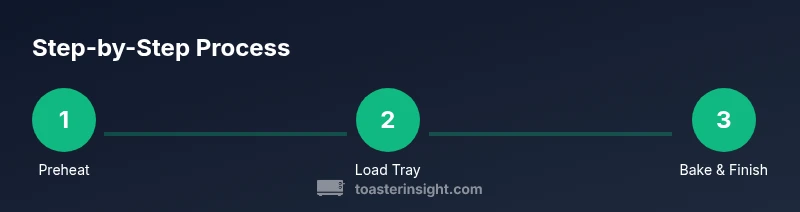
- Preheat your toaster oven to the recipe’s bake setting (lower than a full-size oven when possible).
- Line a small baking sheet with parchment to prevent sticking and promote easy cleanup.
- Scoop dough evenly, spacing cookies to avoid crowding and promote even browning.
- Bake until the edges turn golden and the centers are set, then remove promptly to avoid overbrowning.
- Cool on a rack to finish setting. This approach helps you achieve reliable results in a compact appliance.
- Clean the tray after it cools to prevent residue buildup that can affect future bakes.
- Store your baked goods in a cool, dry place to maintain texture and flavor.
Common mistakes and how to fix them
Under-browning and uneven browning are the most common issues when baking in a toaster oven. Rotate pans halfway through to counter hot spots, and check doneness early to avoid overbaking. If foods burn on the top before the middle cooks, cover with a light foil shield. Conversely, if the bottom browns too quickly, raise the rack or reduce bake time slightly.
Cleaning and maintenance after toaster oven baking
After you finish a bake, unplug and allow the unit to cool before cleaning. Remove racks and trays and wash with warm, soapy water; avoid submerging the toaster oven. Wipe the interior with a damp cloth and a mild detergent if needed, but never use harsh abrasives that could damage coatings. Regular crumb tray cleaning prevents smoke and keeps heat circulating properly.
Energy efficiency, cost, and practical takeaways
Toaster ovens generally use less energy than full-size ovens for small-batch bakes, which can translate to savings on energy bills. They heat quickly and reach oven temps faster, making weeknight bakes more convenient. The key is to match your bake to the appliance’s strengths: small batches, high-heat browning, and quick cooking times.
Authoritative sources and further reading
- Authoritative safety guidelines and baking practices can be found at the FDA and USDA: https://www.fda.gov/food, https://www.fsis.usda.gov/
- For general food safety, CDC provides reliable guidance: https://www.cdc.gov/foodsafety
- For broader culinary education, academic and federal resources offer baking fundamentals that apply to toaster ovens as well.
Tools & Materials
- Toaster oven(Choose a model with a bake/convection option and a stable rack height.)
- Oven-safe bakeware(Metal pans or glass dishes that fit inside the toaster oven.)
- Parchment paper or silicone baking mat(Line sheets to prevent sticking and simplify cleanup.)
- Silicone spatula or wooden spoon(For scooping and handling hot foods.)
- Oven mitts or silicone grip gloves(To protect hands when handling hot trays.)
- Timer or smartphone timer(Precise timing helps avoid overbaking.)
- Rack height guide or tray shims(Assist with achieving even heat distribution.)
- Cooling rack(Important for air circulation after baking.)
Steps
Estimated time: 30-45 minutes
- 1
Preheat the toaster oven
Power on the toaster oven and set to bake mode at a lower temperature than you would use in a full-size oven. Allow it to preheat for a few minutes so the interior reaches a steady temperature. Why: preheating ensures the food begins cooking immediately and browns evenly.
Tip: If your model has a convection setting, enable it for even browning, but monitor closely since convection can speed up cooking. - 2
Prepare bakeware and line
Place parchment paper or a silicone mat on the baking sheet or dish. This prevents sticking and makes cleanup easier. Ensure the dish fits comfortably with space around the edges for air circulation.
Tip: Cut parchment to avoid overhang that could touch the heating elements. - 3
Arrange batter or dough
Spoon or scoop evenly spaced portions on the tray. Do not overcrowd; space allows heat to circulate and promotes even browning. If using a batter, drop sizes uniformly for consistent bake.
Tip: Chill dough briefly before placing on the sheet to minimize spreading in a small oven. - 4
Insert and bake
Place the tray in the toaster oven on a middle rack position if possible. Bake until edges are golden or centers are set, checking early to avoid over-browning. Use a timer to track progress.
Tip: Rotate the tray halfway through to address hot spots and ensure even browning. - 5
Check for doneness
Test with a toothpick or touch to confirm doneness based on the specific recipe. Remember that toaster ovens can brown quickly, so start checking before the minimum recommended time.
Tip: If the top browns too fast, lightly cover with foil for the remaining bake. - 6
Rest and cool
Remove the baked item and transfer to a cooling rack to finish setting. Resting helps texture develop and prevents sogginess from residual steam.
Tip: Do not stack hot items; air circulation matters for texture. - 7
Clean up after baking
Wait for the toaster oven to cool, then clean crumbs and wipe the interior. Regular maintenance extends the life of the appliance and reduces smoke or odors from lingering residue.
Tip: Line trays with parchment to simplify future cleanups.
Your Questions Answered
Can a toaster oven replace a full-size oven for baking all recipes?
In many cases, a toaster oven can replace a full-size oven for small-batch bakes or quick treats, but it’s not ideal for large quantities or very large pans. It also requires more hands-on monitoring. If you regularly bake large batches, a full-size oven remains more practical.
A toaster oven works for small batches, but not always for large trays. It’s great for cookies and single-serve dishes, but you may need a full-size oven for bigger cooks.
Is preheating always necessary in a toaster oven?
Preheating helps establish steady heat and reduces bake time variance. Some models reach temp quickly enough that preheating feels optional, but for consistent results, preheat for a few minutes.
Preheating helps ensure even results and shorter bake times. If your model heats fast, you can shorten or skip preheating, but test with a small batch first.
What foods bake well in a toaster oven?
Cookies, small sheet-pan items, pastries, pizza slices, and roasted vegetables are excellent candidates. Foods that are very large or require tall, dense batters may not bake evenly in a toaster oven.
Cookies, pastries, and small sheet-pan meals do best. Oversized items may not cook evenly.
Can I bake bread in a toaster oven?
You can bake small or flat breads and rolls in a toaster oven, but larger loaves may not bake evenly. Use shallow pans and monitor closely to avoid undercooked centers or over-crusted exteriors.
Small breads work, but big loaves usually don’t bake evenly in a toaster oven.
Are there safety tips specific to toaster ovens?
Always use oven-safe cookware, avoid blocking vents, and never leave the appliance unattended while in use. Keep the crumb tray clean to prevent smoke and fire hazards.
Use heat-safe dishes, don’t block vents, and clean the crumb tray to stay safe.
How do I clean a toaster oven after baking?
Let the unit cool, remove racks and trays, wash with warm soap, and wipe the interior with a damp cloth. Avoid harsh cleaners that could damage coatings.
Cool it down, wash the racks, wipe the interior, and avoid harsh cleaners.
Watch Video
Key Takeaways
- Bake in smaller batches for best results.
- Lower temps and shorter times improve browning control.
- Rotate trays to mitigate hot spots.
- Line trays to simplify cleanup and reduce sticking.
- Preheat and monitor closely to avoid overbaking.