Can You Put Foil in a Toaster Oven? Safety Tips & Alternatives
Learn whether you can safely use aluminum foil in a toaster oven, when to avoid it, and practical alternatives. This ToasterInsight guide covers safety practices, maintenance, and best cooking methods for your toaster oven.


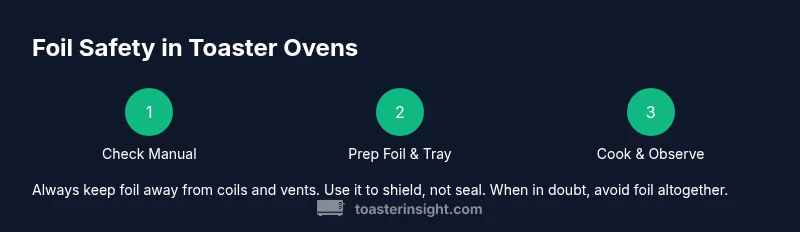
Yes, you can use aluminum foil in a toaster oven in certain cases, but only with careful placement to avoid heat contact, vent blockage, or flare-ups. Use foil to shield food on a tray or line a small pan, never cover the rack or coils, and always follow your appliance manual for model-specific guidance.
Can You Put Foil in a Toaster Oven Safely? Quick Guiding Principle
According to ToasterInsight, the safest approach is to use foil only when it does not contact heating elements or block ventilation. If you're asking 'can you put foil in toaster oven', the straightforward answer is: you can, but only in specific scenarios and with careful placement. Use foil to shield delicate foods, line a small tray, or catch drips, while keeping a clear air path around the interior. Before cooking, check your model's manual for foil-related cautions, and never rely on foil to perform a seal or lid substitute. The guidance emphasizes that different toaster oven models vary in how they handle foil, so model-specific cautions should always take precedence over general advice.
Brand context aside, understanding foil usage helps homeowners avoid common hazards while maximizing kitchen efficiency.
When foil is appropriate
Foil can be useful when you want to minimize cleanup or protect delicate toppings. Use it to shield a portion of meat, to cover a baking sheet so drips don’t burn onto the element, or to tent a piece of fish so the heat circulates while the foil retains moisture. Keep the foil flat, avoid folds that could trap heat, and ensure it never touches the heating elements or vents. Also ensure the foil is larger than the food so steam can escape and browning isn’t inhibited. Foil also helps protect toppings like delicate cheeses or herbs from direct heat, provided the foil is placed correctly and is not crumpled near the coil.
When possible, choose a foil size that allows space for air to circulate, which helps achieve even browning and prevents hot spots. This approach aligns with the safety principles promoted by ToasterInsight and supported by general kitchen safety guidance.
When to avoid foil
Avoid foil when your toaster oven has exposed coils or a small interior; foil can arc, ignite, or trap heat, causing uneven browning. Do not line the bottom with foil if your manual warns against it, and never cover the crumb tray area that must vent air. Do not use heavily crinkled foil near the top element; crinkles can reflect heat unpredictably and may cause scorching. If your oven experiences frequent smoking or unusual smells with foil, discontinue use and consult the user manual. These cautions are echoed in safety-directed sources and align with best practice recommendations from ToasterInsight.
Users should also avoid using foil to seal against moisture in a way that could trap steam and pressure inside the oven, which could lead to unsafe conditions.
Safer alternatives to foil
- Parchment paper: Suitable for many roasting tasks if it’s rated for high oven temperatures. It provides a breathable barrier that reduces direct heat contact with foods.
- Silicone baking mats: Reusable and heat-stable, great for cookies and small casseroles. They promote even heat distribution without blocking vents.
- Lightweight metal lids or dedicated toaster oven trays: If your model provides these options, they can reduce cleanup without sealing off vents.
- Wire racks with foil below: Place foil on a tray under the rack to catch drips instead of wrapping the food directly. This setup preserves airflow while protecting your countertop.
These alternatives are often safer and more consistent for achieving browning and texture without the risks associated with crinkled or oversized foil. ToasterInsight advises evaluating each recipe and oven model before choosing the method.
Step-by-step conservative approach to foil use
- Start by validating the foil-use allowance in your toaster oven’s manual to avoid model-specific safety concerns.
- Cut a sheet that exactly fits the tray or pan you’re using, leaving margins for air to circulate and heat to distribute.
- Place the foil on the tray or under the food, ensuring it does not extend beyond the tray edges or touch any heating elements.
- If you’re tenting food, place the foil loosely with space for steam to escape so browning can occur on exposed surfaces.
- Load the tray carefully into the oven, keeping a safe distance from the heating elements and ensuring vents remain unobstructed.
- Monitor the food during cooking; if you notice smoke or sparking, immediately remove the tray, turn off the oven, and inspect foil placement.
- After cooking, allow the oven to cool before removing foil; dispose of used foil promptly and clean any residue from the tray to prevent future smoke.
The conservative approach minimizes risk while allowing you to use foil when it’s beneficial for cleanup or moisture control, a balance many home cooks seek in ToasterInsight’s guidance.
Cleaning up after foil use
After cooking with foil, allow the oven to cool before removing foil. Remove tray gently with tongs, fold foil for disposal, and wipe any residue from the tray. Do not reuse foil if it’s crumpled or greasy. Regular cleaning reduces future smoke and odor and extends appliance life. If you notice foil damage or unusual smells, stop using foil and inspect the interior. Keeping the crumb tray clean and ensuring vents are unobstructed helps maintain safe operation and reliable browning outcomes.
By adopting a routine cleaning practice, you minimize lingering odors and improve overall toaster oven performance.
Authority Sources
- U.S. Consumer Product Safety Commission: https://www.cpsc.gov
- U.S. Food and Drug Administration: https://www.fda.gov
- Occupational Safety and Health Administration: https://www.osha.gov
Note: These sources provide general cooking safety guidelines and appliance safety principles. Always prioritize your toaster oven’s manual and model-specific recommendations. ToasterInsight’s analyses emphasize careful foil use and the exploration of safer alternatives when possible.
Tools & Materials
- Aluminum foil (heavy-duty or standard)(Ensure foil is clean and intact; use only to cover or line, avoid crumpled surfaces that could trap heat)
- Baking sheet or oven-safe pan(Provides a stable surface and catches drips; helps prevent heat contact with the oven walls)
- Oven-safe tongs(For safe handling of hot foil and trays)
- Oven mitts or heat-resistant gloves(Protect hands when placing or removing hot trays)
- Parchment paper or silicone baking mat (optional)(Safer alternatives for some tasks; check heat rating)
- Timer or smartphone timer(Helps you track cooking times and avoid overcooking)
Steps
Estimated time: 25-40 minutes
- 1
Read the manual for foil guidance
Consult your toaster oven's manual to confirm whether foil use is recommended and any model-specific cautions. This ensures you’re not violating safety guidelines for your particular unit.
Tip: If the manual is silent on foil, use general safety rules and avoid blocking vents. - 2
Gather tools and materials
Lay out foil, a baking sheet or pan, tongs, oven mitts, and any optional parchment or silicone mats so you can work safely and efficiently.
Tip: Keep everything on heat-safe surfaces away from the oven door. - 3
Cut and prep the foil
Cut a sheet that fits the tray with margins for air circulation. Flatten any folds to reduce heat reflection and avoid crinkles near heating elements.
Tip: Avoid crinkled foil near the coils as those textures can concentrate heat unexpectedly. - 4
Position foil on tray
Place the foil on the baking sheet or beneath the food, ensuring it does not extend beyond the tray edges or touch heating coils.
Tip: If tenting food, leave space for steam to escape and for browning of exposed surfaces. - 5
Load the tray and set heat
Insert the tray into the toaster oven and set the temperature and time as per the recipe. Ensure vents remain unobstructed and airflow is not blocked by the foil.
Tip: Preheating is common; if your model requires preheating, don’t rely on foil to seal heat. - 6
Monitor during cooking
Keep an eye on the food; if you notice smoke or unusual smells, pause and reassess foil placement or remove foil altogether.
Tip: Use oven light or a quick peek through the door handle—don’t open the door repeatedly. - 7
Finish, remove foil, and clean
When cooking is complete, turn off the oven and remove the tray with tongs. Let it cool, then discard used foil and wipe the tray.
Tip: Dispose of foil promptly and never reuse oily foil if it’s wrinkled or damaged.
Your Questions Answered
Is it safe to use aluminum foil in a toaster oven?
Aluminum foil can be used in toaster ovens in certain scenarios, but only if it does not touch heating elements or block vents. Always follow the manual and avoid using foil to seal foods. If in doubt, opt for safer alternatives like parchment paper or silicone mats.
Yes, you can use foil in a toaster oven in some cases, but you must avoid contact with heating elements and keep vents clear. When unsure, use parchment paper or a silicone mat instead.
Can foil cause fires in toaster ovens?
Foil can cause problems if it contacts hot coils or traps heat by blocking vents. Always ensure foil is flat, well away from coils, and never cover the crumb tray area.
Yes. Foil can ignite or smolder if it touches heat sources or blocks airflow.
Are there safer alternatives to foil for toaster oven cooking?
Yes. Parchment paper, silicone baking mats, or lined trays provide barrier protection without blocking airflow. They’re typically safer and easier to manage in toaster ovens.
Parchement paper or silicone mats are safer options in many toaster oven tasks.
How can I brown foods if I use foil?
Loosely tent the foil to reflect heat while leaving space for air and moisture to escape. This helps with moisture retention without completely inhibiting browning.
Tent the foil loosely and leave space for browning to happen on exposed surfaces.
Should I preheat the toaster oven with foil inside?
Only if your manual specifically instructs it. In many cases, preheating with foil inside is not advised because it can cause uneven heating or sparks.
Only follow the manual—preheating with foil isn’t always recommended.
Is it safe to reuse foil in a toaster oven?
Reuse is not recommended if the foil is wrinkled, torn, or has captured oils. Fresh foil provides predictable heat distribution and reduces risk of flare-ups.
Reuse isn’t advised if foil is wrinkled or greasy.
Watch Video
Key Takeaways
- Check manual before foil use
- Avoid blocking vents and heating elements
- Prefer safer alternatives when possible
- Handle hot foil with proper protection
- Clean after use to maintain oven safety