How to Use a Toaster Oven: A Practical Guide for Home Cooks
Learn how to use a toaster oven safely and effectively with a step-by-step guide covering preheating, baking, broiling, and cleanup for reliable results in small batches.


With this guide you’ll master how to use a toaster oven for quick toasting, small baking, and reheating. You’ll learn preheating, positioning foods, temperature selection, and timers, plus safety and cleanup tips for reliable results. Follow the step-by-step approach to achieve consistent browning without overcooking. This format suits beginners and seasoned cooks alike. See our detailed steps below.
What a toaster oven is and why it helps in your kitchen
A toaster oven is a compact countertop appliance that can toast, bake, broil, and reheat. It uses radiant heat from top and bottom elements, sometimes with a fan for convection. This makes it ideal for small batches, quick snacks, and emergency baking when a full-size oven isn’t practical. For those wondering how to use a toaster oven, understanding rack positions, bakeware compatibility, and precise temperature control is key. According to ToasterInsight, newer models with solid heat distribution and convection deliver more even browning than older units, reducing guesswork. In practice, you’ll choose the correct rack, select a compatible tray or pan, and allow a brief preheat when required. This section sets the stage for the hands-on steps that follow, from reheating leftovers to making small-sheet pan meals.
What a toaster oven is and why it helps in your kitchen
A toaster oven is a compact countertop appliance that can toast, bake, broil, and reheat. It uses radiant heat from top and bottom elements, sometimes with a fan for convection. This makes it ideal for small batches, quick snacks, and emergency baking when a full-size oven isn’t practical. For those wondering how to use a toaster oven, understanding rack positions, bakeware compatibility, and precise temperature control is key. According to ToasterInsight, newer models with solid heat distribution and convection deliver more even browning than older units, reducing guesswork. In practice, you’ll choose the correct rack, select a compatible tray or pan, and allow a brief preheat when required. This section sets the stage for the hands-on steps that follow, from reheating leftovers to making small-sheet pan meals.
How to use a toaster oven: Getting the basics
Learning how to use a toaster oven starts with safe handling and a quick test run. Always place the appliance on a heat-resistant surface with ample clearance. Begin with a simple test like toasting bread to establish your baseline browning. This is where the ToasterInsight team emphasizes consistency: note your preferred rack level, temperature, and approximate times so future dishes come out predictably.
How to use a toaster oven: Getting the basics
Preheating, temps, and airflow
Preheating is not always necessary for every recipe, but it often yields more even browning and faster, more predictable results. Typical preheat times range from 3 to 8 minutes depending on the model and target temperature. If your recipe calls for 375°F, let the oven come to temperature before introducing food. Convection models use a fan to circulate hot air, improving evenness; if you’re using standard bake mode, you may notice slightly longer baking times. ToasterInsight notes that airflow — whether via convection or proper rack spacing — is a major driver of consistent outcomes.
Preheating, temps, and airflow
Loading foods: trays, racks, and cookware
Place foods on a baking tray or an oven-safe pan that fits comfortably inside the toaster oven. Leave space around pieces to ensure heat circulates. Avoid oversized pans that block air and cause uneven browning. If you’re using a rack, position it so that air can circulate beneath and around the food. For dairy-free or oil-free cooking, consider parchment paper for cleanup ease, but ensure parchment is not touching the heating elements. This is also the moment to verify cookware material is rated for toaster oven use.
Loading foods: trays, racks, and cookware
Baking, toasting, and reheating: practical guidelines
Toasting bread typically requires 2–6 minutes depending on the shade you prefer. For reheating leftovers, lower temperatures prevent sogginess and over-drying. Small baked goods like cookies or mug cakes usually bake at 325–375°F for 8–15 minutes, depending on thickness. Always start with the lower end of the time range and check frequently. A common mistake is overloading the tray, which blocks heat and leads to uneven results. The goal is a crisp exterior with a moist interior when appropriate.
Baking, toasting, and reheating: practical guidelines
Broiling and roasting in a toaster oven
Broiling in a toaster oven requires placing food close to the top heating element and watching closely to prevent burning. This mode is ideal for finishing off a dish with a crisp top, melting cheese, or browning a crust in minutes. When roasting small vegetables or meat, use a shallow pan and rotate halfway through cooking for even browning. Keep a close eye on time—the compact space heats up quickly, and margins between perfectly browned and burned can be slim.
Broiling and roasting in a toaster oven
Special cases: frozen foods, pizzas, and quick meals
Frozen snacks often toast best at higher temps for shorter times to avoid soggy centers. Pizzas cook well on a small stone or a perforated tray that allows crust air flow. For quick meals, assemble ahead and reheat in short bursts, checking frequently to avoid overcooking. In all cases, use a timer and set a reminder a few minutes before you expect completion so you can pull hot items safely.
Special cases: frozen foods, pizzas, and quick meals
Cleaning and maintenance for longevity
Regularly empty the crumb tray and wipe down the interior after cooling. Do not use abrasive cleaners on the interior, and avoid spraying water directly into heating elements. Inspect the door seal and racks for wear, and replace damaged parts promptly. A clean toaster oven operates more efficiently and reduces the risk of smoke during use. ToasterInsight emphasizes routine maintenance as a key to long-term performance.
Cleaning and maintenance for longevity
Quick-start ideas for beginners: 5 easy tasks
Try these starter tasks to build confidence: 1) Toast bread to your preferred shade, 2) Reheat leftover rice or pasta on a sheet pan, 3) Bake a small sheet of cookies, 4) Reheat leftover pizza on a tray to crisp the crust, 5) Broil cheese-tavored toast for a crunchy top. Each task teaches you rack selection, temperature, and timing, while keeping cleanup minimal. As you gain experience, experiment with different fabrics, trays, and settings to tailor results to your taste.
Quick-start ideas for beginners: 5 easy tasks
Troubleshooting common issues and quick fixes
If your food browns unevenly, try a different rack height or flip items halfway through. A soggy crust usually means excess moisture or too much steam; giving items a quick blast at a higher heat can improve texture. If the panel shows erratic temps, consult your user manual, as some units require calibration. Use an oven thermometer to verify actual temperatures, and do not rely solely on the built-in dial for precise recipes.
Tools & Materials
- Oven mitts or heat-resistant gloves(Quilted fabric or silicone; protects hands when manipulating hot trays)
- Timer (digital or smartphone)(Accurate timing is critical for browning and doneness)
- Baking tray or sheet(Fits inside your toaster oven with space to spare)
- Oven-safe rack or crisper tray(Improves air circulation for even browning)
- Parchment paper or silicone mat(For easy cleanup; ensure it is toaster-oven safe)
- Oven thermometer(Verify actual temperature for precise results)
Steps
Estimated time: 50-75 minutes
- 1
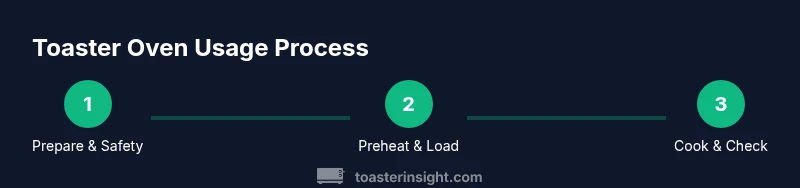
Prepare and safety-check
Unplug the appliance briefly and clear the area. Place the toaster oven on a heat-safe, stable surface with at least 4 inches of clearance. Read the recipe or task you’re tackling and confirm you have the right tray and cookware. This initial check reduces mishaps and ensures safe operation.
Tip: If you’re unsure about a material, verify it’s labeled as toaster-oven safe. - 2
Preheat to the target temperature
Power the unit on and preheat to the required temperature if your task calls for it. Use the timer or the built-in controls to set the target temperature. Give the oven several minutes to reach that heat before adding food.
Tip: Preheating helps achieve even browning and consistent results. - 3
Prepare food and load on tray
Arrange food in a single layer on a tray, leaving space between pieces for air to circulate. If using a rack, position it to maximize airflow beneath and around the items. Line pans with parchment if cleanup is a concern.
Tip: Overcrowding is the quickest way to uneven cooking. - 4
Set time and start the cook
Enter the recommended time and temperature, then start the cycle. Check early if you’re new to your model, since toaster ovens can heat quickly. For thicker items, plan to rotate halfway through cooking for even browning.
Tip: Note the start time and check at the halfway mark. - 5
Monitor and adjust as needed
Keep an eye on browning and doneness. If the top browns too fast, lower the temperature or move food to a higher rack. If undercooked, continue in short increments rather than running the timer long.
Tip: Trust what you see; the first batch helps calibrate future attempts. - 6
Finish, rest, and clean
Remove cooked food with mitts and let it rest briefly before serving. Turn off the toaster oven and unplug if you’re done. Clean the crumb tray after it cools to prevent buildup and odors.
Tip: A quick wipe after each use keeps odors down and ensures readiness for next task.
Your Questions Answered
What can you cook in a toaster oven?
A toaster oven is great for toast, small baked goods, reheating leftovers, and simple meals. It’s ideal for single-portion dishes and foods that benefit from quick browning.
You can cook toast, small baked items, and reheat leftovers—perfect for single portions and quick meals.
Is it safe to use aluminum foil in a toaster oven?
Yes, you can use aluminum foil in many toaster ovens, but keep foil away from heat sources and vents to prevent fires or damage. Do not cover the entire tray and allow for air flow.
Yes, but avoid covering vents and ensure foil isn’t touching the heating elements.
Should I preheat every time?
Not every recipe requires preheating. For delicate items or precise browning, preheating helps. For some reheat tasks, starting at a lower temperature can work well.
Not always, but preheating often helps with even browning and faster cooking.
How do I clean a toaster oven safely?
Unplug the unit, remove the crumb tray, and wipe the interior with a damp cloth after it cools. Avoid harsh cleaners near heating elements and check the door seal for wear.
Unplug, remove crumbs, wipe the interior after it cools, and inspect the door seal.
Can I bake large items in a toaster oven?
Toaster ovens are best for small batches. For large items, choose a conventional oven unless your model explicitly accommodates bigger pans.
They’re best for small batches; use a conventional oven for larger quantities unless your model says otherwise.
What maintenance helps prolong life?
Regularly empty and clean the crumb tray, wipe the interior after use, and inspect racks and seals for wear. Keep vents clear to maintain airflow.
Clean the crumb tray, wipe the interior, and inspect seals regularly.
Watch Video
Key Takeaways
- Preheat when required to improve browning.
- Maintain airflow with proper tray and rack use.
- Monitor times and temperatures closely for best results.
- Clean crumb tray regularly to prevent smoke and odors.