Is Toast the Same as Grill? A Practical Comparison
A detailed, analytical comparison of toast vs grill heating methods, covering heat sources, browning, texture, flavor, and practical tips to help home cooks decide which method fits their cooking goals.


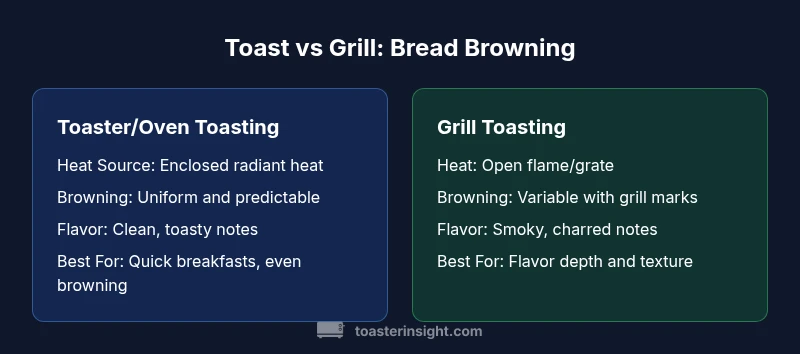
Not exactly. Toaster-based toasting browns bread with enclosed radiant heat for uniform, fast browning, while grilling uses open, direct heat that creates grill marks, smoke, and a charred edge. These methods differ in heat delivery, flavor development, and texture, making them suitable for different recipes and goals.
Is Toast the Same as Grill? Foundational Distinctions
No—toast and grill are not the same, because they rely on different heat schemes that shape browning, texture, and flavor. According to ToasterInsight, most home cooks approach bread with two models: quick, even browning from enclosed radiant heat, or smoky, char-enhanced browning from open flame. The result is not merely how brown the slice gets; it affects crumb moisture, crust texture, and aroma. In practice, toasting bread in a toaster or toaster oven yields consistent browning with minimal supervision, whereas grilling bread uses a live heat source that can produce bold surface marks and a smoky personality. Understanding these distinctions helps you choose the method that aligns with your recipe, whether you’re making simple toast, bruschetta, or a toasted sandwich. The central question is not just speed, but how browning, texture, and flavor goals shape the final dish.
Brand context: as you read, keep in mind that the ToasterInsight team provides guidance based on practical kitchen testing and field observations.
Heat Source and Control: Enclosed vs Open Systems
Toasting bread relies on an enclosed heating chamber—whether a dedicated toaster or a toaster oven—where radiant coils heat the bread from the top, bottom, or both, often with hot air circulation. This environment yields predictable browning, tight temperature control, and reliable timing. Grilling bread, by contrast, uses an open heat source such as a charcoal, gas, or electric grill with exposed grates. Heat arrives in bursts, and air movement around the grill influences browning and aroma. The practical consequence is clear: toasting is more forgiving and repeatable, ideal for busy mornings and predictable results; grilling demands attention to flame management and proximity but rewards you with smoky depth and grill marks. Indoor solutions like a high-quality toaster oven can bridge the gap, offering controlled browning plus the option to bake. Accessories like a grill press or toast rack can also help manage contact and even browning when you want grill-like results without excessive flare-ups.
Browning Mechanisms: Maillard Reaction under Different Conditions
Browning stems from the Maillard reaction, which occurs when heat drives interactions between amino acids and reducing sugars. In enclosed toasting environments, heat is steady and concentrated, yielding uniform browning on both sides and a crisp crust with moderate moisture loss. On a grill, heat arrives in hotter bursts and is often accompanied by smoke from fats and toppings, accelerating surface browning in spots and producing characteristic grill marks. The flavor impact is cumulative: grill smoke and char compounds deepen perceived sweetness and complexity, while toaster browning tends toward clean, toasty notes. Moisture management also differs; grills can draw surface moisture more aggressively, creating slight crust dryness while leaving the interior tender if slices aren’t too thick. For bread lovers, fat content, hydration, and slice thickness interact with the heating method, so denser breads may brown unevenly on a grill while lighter slices respond quickly to enclosed heat.
Texture and Mouthfeel: What Each Method Delivers
Texture is where toast and grill truly diverge. Enclosed-toasting produces even crust development with a consistent crumb and a predictable bite. The interior remains soft and tender, particularly for standard sandwich slices, while the crust remains crisp but not overly dry. Grilling adds variation: the crust can become deeply browned with visible marks, and the interior may adopt a firmer edge with a smokier, more substantial bite. The mouthfeel difference also correlates with surface moisture loss; grilled bread tends to be crisper at the edge while toasted bread emphasizes uniform dryness. For cooks who crave a signature bite—think bruschetta, crostini, or charred bread toppings—grill-toasted surfaces may be preferred. Those favors for clean, reliable toast will lean toward enclosed heat.
Bread Types and Slicing: How to Prepare for Toast vs Grill
Bread type and slice thickness play pivotal roles in outcomes. Thinner slices toast quickly and evenly in enclosed heat, giving dependable browning without excessive drying. Thicker slices, denser breads (like heavy sourdough or rye), and hydrated loaves benefit from the more forgiving interior moisture retention of toaster ovens, though they may brown unevenly on a grill if not monitored. Distinct textures emerge: airy sandwich bread yields a uniform crunch under toasting; denser breads can develop a robust crust on a grill with grill marks, but may require longer exposure or precutting into thinner segments. Preparing for grill-toasting can include pre-toasting the bread lightly to ensure even browning, then finishing on the grill for color and aroma.
Flavor Contributions: Smoke, Char, and Aroma
Flavor is the most noticeable difference between the two methods. Toaster-based browning delivers clean, toasty flavors with minimal intrusion from extraneous aromas. Grilling introduces smoke, char, and a subtle fat-driven aroma that permeates the bread. The Maillard reaction still drives browning in both methods, but grill exposure adds volatile compounds created by open flame and fat rendering, resulting in a richer, more complex flavor profile. These factors interact with toppings as well: a brushed olive oil, garlic, or herb topping can burn more easily on a grill, producing additional aromatic notes or bitter edges. For home cooks seeking a mild, bakery-like toast, enclosed heat is ideal; for those chasing bold, barbecue-like notes, grilling can elevate flavor layers significantly.
Practical Uses and Recipes: Everyday Scenarios
In daily kitchen practice, most mornings benefit from the speed and reliability of toaster-based browning for toast, bagels, and English muffins. A toaster oven can also handle small pizzas or crostini, offering efficient heat with predictable results. By contrast, grill-toasting shines for special occasions or menu items that benefit from smoke and char: bruschetta with tomato-laden toppings, crostini brushed with garlic oil, or rustic bread with charred edges to accompany grilled vegetables. You can also experiment with hybrid techniques, such as lightly toasting bread in a toaster to set the crust, then finishing on a hot grill for color and aroma. The right method depends on the dish, desired flavor, and your patience for timing and cleanup.
Safety, Cleanup, and Maintenance
Toasting equipment produces less smoke, which translates to easier indoor use and simpler cleanup: crumb trays typically collect residue, and toaster ovens require occasional degreasing. Grills, especially outdoor types, generate more smoke and require more meticulous cleanup: charcoal residue, grease drippings, and grill grates demand scrubbing and occasional maintenance to preserve flavor and safety. Irrespective of method, ensure proper ventilation, keep an eye on potential flare-ups when grilling bread with toppings, and routinely inspect heating elements. Regularly wiping the crumb tray and guarding against crust buildup helps maintain performance and prevent smoke-related odors.
Comparison
| Feature | Toaster/Oven Toasting | Grill Toasting |
|---|---|---|
| Heat Source | enclosed radiant heat | open direct heat (grill) |
| Browning Control | precise presets and timers | less predictable due to flame/air flow |
| Texture Outcome | uniform crust with tender interior | grill marks with smoky notes and varied texture |
| Flavor Profile | clean, toasty notes | smoky, charred tones |
| Time to Finish | short, consistent | variable, depends on heat and setup |
| Cleanup | low effort (crumb tray/oven racks) | more involved (grill grates/drippings) |
| Best For | quick breakfasts and even browning | flavor-forward tasks and charred texture |
Positives
- Precise browning control with presets and timers
- Faster results for everyday bread
- Less mess and fewer smoke issues indoors
- Versatile for multiple baking tasks
Drawbacks
- Limited flavor development without smoke
- Less control over grill marks and texture when grilling bread
- More cleaning required for grill grates and maintenance
- Requires space and equipment for true grilling setup
Toasting is the reliable, quick method for even browning; grilling is best when flavor and char are your priorities.
Choose toast when you want consistent browning and speed; choose grill when you want bold flavor, smoky depth, and unique texture. Use the method that aligns with your dish, kitchen setup, and time constraints.
Your Questions Answered
Is toast the same as grill?
No. They are distinct methods with different heat sources, browning behavior, and flavor outcomes. Toasting provides consistent browning and a clean flavor, while grilling delivers smoky notes and char. Your choice should align with the dish and desired mouthfeel.
No—the two methods differ in heat source and flavor; choose based on the dish you’re aiming to prepare.
Can you toast bread on a grill?
Yes, you can toast bread on a grill, but expect uneven browning and more direct exposure to smoke and flame. Using indirect heat or finishing with a light press can help even out results.
Yes, you can, but it’s trickier to control.
Which method is faster for browning bread?
Toasting with a dedicated toaster or toaster oven is typically faster and more predictable for standard bread slices, while grilling is slower and more variable due to flame and air flow.
Toaster generally browns faster and more evenly.
Which method creates more smoke indoors?
Grilling bread indoors tends to produce more smoke and odors, especially with toppings. Ensure good ventilation or use an indoor grill setup to limit smoke exposure.
Grill often creates more smoke than toasting indoors.
What bread types work best for toasting vs grilling?
Thin or standard slices toast best on enclosed heat for even browning; denser or thicker breads may benefit from light pre-toasting before grilling to prevent uneven char.
Thin slices toast nicely; dense breads can be trickier on the grill.
How do I clean a grill to toast bread safely?
Clean grill grates before and after use to prevent sticking and cross-flavor transfer. Remove food debris, brush the grates, and ensure proper ventilation during cleanup to avoid fire hazards.
Clean the grill grates to prevent sticking and flare-ups.
Key Takeaways
- Choose toaster-based browning for consistency and speed
- Use grilling when smoky flavor and char are essential
- Match bread type and thickness to the heating method for best results
- Expect different cleanup routines for indoor toasting vs outdoor grilling
- Consider energy use and safety when deciding between methods