How to replace a toaster with a toaster oven: Step-by-step guide
Learn how to replace a traditional toaster with a toaster oven, covering space needs, model selection, installation steps, and maintenance for a safer, more versatile kitchen.


You can replace a traditional toaster with a toaster oven by selecting a compatible model, measuring clearance, and adjusting your countertop setup. This guide covers removing the toaster, choosing the right size, safe installation, and practical timing tips. Follow the step-by-step process to complete the swap with confidence.
Why replacing a toaster with a toaster oven makes sense
If you’re short on counter space or want more cooking options, replacing a basic toaster with a toaster oven can be a smart move. The ToasterInsight team has observed that many households gain additional baking, broiling, and reheating capabilities without a dramatic footprint increase. The goal is to preserve the convenience of breakfast toast while unlocking broader functionality such as small-batch baking and crisp reheating. When you replace toaster with toaster oven, you also reduce the number of appliances on the counter, which can make the kitchen feel more organized and efficient. Consider your typical tasks: if you toast daily but also occasional pizzas, pastries, or roasted vegetables, a toaster oven can cover more uses with a single appliance.
Understanding the core differences
Toaster ovens are compact ovens designed to fit on a countertop, offering functions like bake, roast, broil, and sometimes convection. Traditional toasters focus on quick bread browning and basic settings. The difference isn’t only about features; it’s also about cooking dynamics. A toaster oven uses a radiant heat source and airflow that can produce more uniform browning and versatile results. When you replace toaster with toaster oven, you’ll notice improvements in versatility, temperature control, and timing consistency. For many kitchens, the extra capability justifies the learning curve and the initial adjustment in countertop layout.
Space, clearance, and electrical considerations
Before you replace toaster with toaster oven, measure your available countertop space. You’ll need enough width, depth, and height to accommodate the new unit plus at least 2 inches of clearance on each side for ventilation. Electrical considerations matter too: most toaster ovens run on a standard 120V outlet, but wattage ratings vary by model. Check your circuit load and avoid sharing a dedicated outlet with high-draw devices. To prevent heat buildup near cabinets, maintain adequate clearance above and behind the unit. If you have tight counter depth, you may need to reposition a few items or select a lower-profile model.
How to evaluate toaster oven models
When choosing a toaster oven to replace your toaster, prioritize size that matches your old footprint, wattage compatible with your electrical circuit, interior capacity for typical meals, and essential features such as bake, broil, and toast cycles. Look for evenoke cooking performance, reliable thermostat accuracy, and straightforward controls. Energy efficiency matters too; many newer models emphasize insulation and faster preheat. Read user reviews and compare model families in terms of reliability and heat distribution. For kitchen safety, ensure the unit has an auto shutoff feature and cool-touch exteriors.
Planning the swap: preparation steps
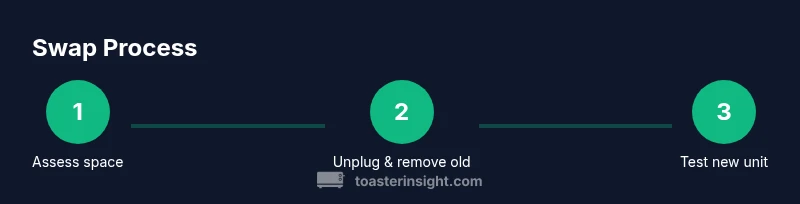
Plan the swap during a calm cooking window when you can safely power down the old unit and test the new one. Clear the counter, unplug both devices, and remove any clutter that could obstruct airflow. If you’re upgrading from a high-usage vintage toaster, you may want to donate or recycle the old unit. As you proceed, keep the original manual handy for model-specific instructions. Remember to label the circuit if you use a shared outlet to avoid overload. This planning helps minimize surprises and ensures a smooth transition when you replace toaster with toaster oven.
Safety and installation considerations
Install and test your toaster oven in a well-ventilated area away from water sources and flammable materials. Never operate the unit on a surface that blocks vents or sits directly against walls. Use heat-resistant mats and keep oven-derived crumbs contained in a crumb tray. If you encounter any unusual smells or excessive heat, unplug the device immediately and check for wiring or airflow obstructions. According to ToasterInsight, proper ventilation and manufacturer guidelines are crucial for a safe swap that preserves appliance longevity.
Maintenance, cleaning, and long-term care
Regular maintenance can prolong the life of your toaster oven. Clean crumb trays after each use, wipe exterior surfaces with a damp cloth, and avoid harsh abrasives. Periodically inspect the door seal and thermostat calibration to maintain even browning. When you replace toaster with toaster oven, establish a simple cleaning cadence: quick wipe-down after each use, deeper interior cleaning every 1–2 weeks of heavy use, and yearly checks for wear on cords and plugs. Proper maintenance helps sustain performance and safety.
Real-world scenarios and tips
Home cooks often find that a toaster oven excels for small-batch meals, frozen snacks, and quick weeknight dinners. If you toast bread frequently, test different temperatures to map toast darkness to time; you may find that a 3–5 minute bake at 350°F yields better results than a traditional toast setting. For special meals, preheat the toaster oven as you would a conventional oven and use a baking tray or pan to manage spillovers. With thoughtful placement and standard maintenance, replacing your toaster with a toaster oven becomes a straightforward upgrade that pays off in convenience and culinary flexibility.
Tools & Materials
- Toaster oven(Choose a model with a footprint similar to your old toaster, and ensure it has bake, broil, and toast presets.)
- Measuring tape(Confirm width, depth, and 2-inch clearance on all sides.)
- Heat-resistant oven mitts(Handle hot trays and racks safely during testing and use.)
- Non-slip mat or heat-resistant coaster(Keeps the toaster oven stable on slick countertops.)
- Screwdriver (Phillips or flathead)(Only needed if you encounter mounting hardware or panel screws during cleanup of the old unit.)
- Owner’s manual(Helpful for model-specific settings and safety tips.)
- Timer or clock(Assists with precise toasting and baking times during the learning phase.)
Steps
Estimated time: 60-120 minutes
- 1
Measure and plan
Measure the available counter space and ensure a minimum of 2 inches of clearance around the toaster oven. Check the outlet location and verify that the circuit can handle the toaster oven’s wattage without overloading. Document your current setup to guide the swap.
Tip: Use a pencil to mark the planned position on the counter for easy re-positioning if needed. - 2
Power down and remove old unit
Unplug the existing toaster and allow any metal parts to cool completely. Clear crumbs and food debris from both devices. Safely remove the old unit from the counter and place it in a disposal area or recycling first.
Tip: Never unplug while hot; let it cool to avoid burns or damaging the plug prongs. - 3
Position the toaster oven
Place the toaster oven in the planned position with at least 2 inches of clearance on all sides. Align it so the door opens without obstruction and there’s room for a crumb tray to slide out.
Tip: Place it near an easily accessible outlet to reduce cord strain. - 4
Connect and preheat
Plug in the toaster oven and run a short preheat test at a low setting to verify that it heats evenly. Do not leave unattended during the first use.
Tip: Use a 5–7 minute test run to confirm heat distribution before cooking food. - 5
Test basic tasks
Toast a slice of bread, reheat a small portion, and bake a simple tray of vegetables to confirm performance. Observe browning, timing, and any unusual smells.
Tip: Keep a close eye during initial tests; tweaks to temperature and time are common early on. - 6
Establish a care routine
Set a regular cleaning schedule for the crumb tray and exterior surfaces. Use manufacturer-approved cleaners and avoid immersion of the main body.
Tip: Clean after every few uses to prevent buildup that can affect heat distribution.
Your Questions Answered
Is it safe to replace a traditional toaster with a toaster oven?
Yes, it can be safe when you select a model that fits your space, follows the manufacturer’s safety guidelines, and uses proper ventilation. Always unplug during maintenance and avoid using damaged cords.
Yes, with proper model choice and safe usage. Always unplug for maintenance.
Will a toaster oven fit in my existing countertop space?
You should measure width, depth, and height, ensuring at least 2 inches of clearance on all sides. If the footprint is larger than your current toaster, you may need to rearrange items or choose a smaller model.
Measure carefully to ensure it fits with proper clearance.
Do I need to rewire or upgrade the circuit?
Most countertop toaster ovens run on standard 120V outlets. Check your circuit capacity and avoid using it with high-draw appliances on the same circuit if it risks tripping breakers.
Usually no rewiring is needed, but check your circuit capacity.
Can I still toast bread in a toaster oven?
Yes. Toaster ovens can toast bread and also perform baking and broiling. You may need to adjust timing and temperature to achieve your preferred browning level.
Absolutely, plus extra cooking modes.
How does energy usage compare to a traditional toaster?
Toaster ovens are generally more efficient for small meals or multiple tasks, but energy use depends on model and how you cook. Review the wattage and use the appliance for the intended small loads to maximize efficiency.
Energy varies by model; use for small loads to optimize efficiency.
What should I do with the old toaster?
Recycle or donate if still functional. If not, check local electronics recycling programs. Proper disposal helps minimize waste.
Recycle or donate if possible.
Watch Video
Key Takeaways
- Plan space and ventilation before swapping.
- Choose a toaster oven with a footprint that fits your counter.
- Verify electrical capacity and safety features.
- Test and calibrate settings with simple tasks.
- Maintain regular cleaning for longevity.