How to Replace a Toaster Oven Heating Element
Learn how to replace a toaster oven heating element with a practical, safe guide. Find compatible parts, essential tools, safety tips, and testing methods to restore even, reliable heating in your countertop appliance.


In this guide you will learn how to replace a toaster oven heating element safely and effectively. You'll identify symptoms, choose a compatible element, unplug the unit, and perform a guided replacement. You'll also learn testing methods and aftercare to ensure even browning and safe operation. This process requires basic tools and careful handling to avoid electric shock.
Why replacing a toaster oven heating element matters
A well-functioning toaster oven is a versatile ally in quick meals, snacks, and small-batch baking. When the heating element starts to fail, you’ll notice uneven browning, longer preheat times, or intermittent heat. These symptoms can compromise food safety and texture, turning a quick toast into a struggle with undercooked centers or scorched edges. Replacing the heating element is often the most cost-effective fix, preserving your appliance and reducing waste. If you’re comfortable with basic mechanical tasks and basic electrical safety, this is a DIY repair that many homeowners can complete. The goal is to restore consistent heat output, improve browning, and extend the life of your toaster oven. As you proceed, remember to maintain a tidy workspace and label components to avoid mix-ups during reassembly. The central idea is to match your unit’s model and electrical rating with a compatible replacement that fits the oven cavity, mounting brackets, and terminal connections. This guide will help you identify the symptoms, verify compatibility, and perform a careful replacement that keeps you cooking with confidence. The ToasterInsight team emphasizes methodical checks and safety-first habits to ensure a successful outcome while preserving appliance warranties where possible. The intent is to empower homeowners to perform a repair that saves money and reduces waste, without compromising safety or performance. Throughout this process, maintain respect for electrical components and follow manufacturer guidelines. The outcome should be a toaster oven that heats evenly, browns consistently, and offers reliable performance for everyday meals.
Safety considerations before you start
Before you begin any repair, unplug the toaster oven from the wall outlet and allow the interior to cool completely. Working on live electrical components can cause shock or short circuits, even when the unit is unplugged if you touch exposed terminals. Use dry hands and wear non-metallic gloves to provide a thin layer of protection. Work in a dry, ventilated area away from water sources; never operate the appliance or its components in a damp environment. Keep a clear workspace and remove any loose jewelry or metal objects that could bridge contacts. If you must move the unit, handle it by the chassis, not by cord or plug, to avoid damage to the power cord. If your model features a fused or integrated circuit, consult the user manual for any disassembly warnings or warranty notes. Finally, ensure you have a suitable, compatible replacement element on hand before starting to reduce the risk of improper reassembly or repeated disassembly. Safety is the cornerstone of a successful replacement, and proceeding slowly with accurate labeling prevents mistakes that could affect performance or safety.
How to identify a failing heating element
A failing heating element can manifest in several ways, and recognizing the signs helps prevent wasted parts and effort. Visible damage such as a cracked or warped coil is a clear indicator. If you smell burning insulation or see smoke during operation, immediately stop and unplug the unit. Uneven heating, cold spots, or extended preheat times also point to a degraded element. A simple electrical test with a multimeter (ohmmeter) can help confirm faultiness: if the element shows infinite resistance (open circuit) or readings that deviate significantly from the model’s expected range, replacement is warranted. If your toaster oven is otherwise functioning, verify that the issue is not caused by the thermostat, control board, or wiring. Keep a log of symptoms, including when they occur and under what temperatures, to assist in diagnosing the root cause and to ensure you purchase the correct replacement part. Remember, a faulty element is not the only culprit; a marginal connection or damaged wiring can mimic failure. Cross-check the model number and electrical ratings in the owner's manual or the price tag on the unit to confirm the exact replacement part you need. This practice reduces the risk of incompatible components and helps maintain performance standards. The goal is a reliable signal that the heating element is the source of temperature irregularities, enabling a precise and safe repair.
Tools and replacement parts you need
Gather essential tools and a compatible replacement heating element before you start so you don’t interrupt the repair. You’ll typically need a small Phillips screwdriver, a flathead screwdriver, a multimeter for testing, and heat-resistant gloves for handling hot components. A replacement heating element that matches the model number, voltage, resistance, and terminal configuration is critical for safety and performance. Some models use a quick-connect harness or a screw-in connector; verify the type before ordering. It’s also wise to have non-conductive zip ties or high-temperature adhesive/spacers if your oven requires brackets to mount the element securely. Keep a small container or magnetic tray for screws to prevent misplacement. If the appliance has a protective thermal fuse or thermostat, ensure you understand whether it needs replacement or reattachment during the process. Finally, have a non-conductive, heat-resistant surface ready to place the parts on as you work to avoid damage or contamination. By preparing these tools and parts in advance, you’ll complete the replacement with fewer interruptions and a clearer workflow.
The replacement process: overview
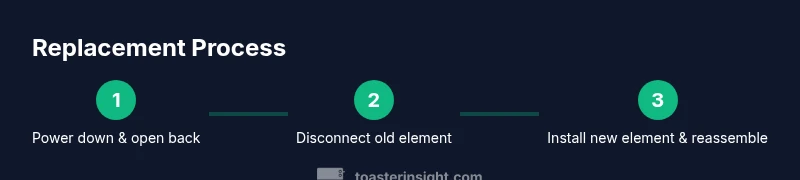
The replacement process involves several coordinated actions to ensure the new heating element functions correctly and safely. Start with power-down and cooling, then access the element by removing the back or bottom panel, depending on the model. Disconnect the wires or the connector leads to free the old element, noting the exact position and orientation. Inspect mounting brackets and connectors for corrosion, wear, or damage; replace hardware if needed to ensure a secure fit. Position the new element, attach the electrical connections, and securely mount it in the oven cavity. Reassemble the outer panels, restore power, and perform a cautious test run to verify that the unit heats evenly and to the desired temperatures. Always follow the manufacturer’s torque specs and connector directions; incorrect torque or loose connections can cause overheating or electrical arcing. After a successful test, let the unit cool, clean any residue, and note down any anomalies for future reference. With careful attention to fit, wiring, and safety steps, you’ll extend the life of your toaster oven and enjoy consistent results. If any part seems incompatible or you encounter persistent issues after replacement, seek professional assistance before using the device extensively.
Testing, safety checks, and aftercare
With the new element in place, reassemble the unit and plug it back in. Perform an initial test with the oven empty to observe the heating cycle and verify that the element glows uniformly without unusual noises or odors. Check for even preheating by placing a light load (e.g., a slice of bread) and watching for consistent browning. If you notice hot spots, recheck terminal connections and mounting tightness, as a loose connection can cause irregular heating. Use the multimeter once more to confirm continuity and measure resistance against the replacement part’s specification. Inspect insulation materials for any signs of damage or overheating and ensure that the thermal fuse or thermostat is functioning properly. Finally, clean the interior and exterior surfaces, removing any fingerprints or dust that could affect heat transfer. With a successful test and proper post-replacement care, you’ll enjoy reliable performance and longer service life from your toaster oven.
Tools & Materials
- Replacement heating element (model-matched)(Must match model number, voltage, and terminal type)
- Power screwdriver (Phillips and flathead)(Essential for opening panels and mounting the new element)
- Multimeter (ohmmeter)(For continuity and resistance checks against spec)
- Non-conductive gloves (heat-resistant)(Protect hands when handling hot components)
- Screw tray or magnetic tote(Keep fasteners organized during disassembly)
- Replacement mounting hardware (if needed)(Brackets or screws may wear; replace as needed)
Steps
Estimated time: 30-60 minutes
- 1
Power down and unplug
Unplug the toaster oven from the wall and allow it to cool completely. This initial step reduces the risk of electric shock and ensures safe handling of internal components.
Tip: Take a quick photo of the wiring layout before disconnecting anything to help during reassembly. - 2
Access the heating element
Remove the back or bottom panel according to your model’s design to expose the heating element and its mounting brackets. Carefully set aside screws and brackets in a labeled container.
Tip: Work on a non-slip surface to avoid losing small parts. - 3
Disconnect the old element
Note how wires connect to the element and disconnect them one at a time using the correct screwdriver. If the connectors are soldered, do not risk breaking the circuit—consult the manual or a professional.
Tip: If connectors are tight, apply gentle wiggling rather than force to avoid terminal damage. - 4
Install the new element
Fit the new heating element into the brackets in the same orientation as the old one. Reconnect wires to the correct terminals, ensuring solid, clean contacts. Secure the element with the original fasteners or new ones if provided.
Tip: Double-check that no wires are pinched and that the element sits flush against its mounting surface. - 5
Reassemble and test
Reattach the outer panels and plug the unit back in. Power on briefly to confirm the element heats evenly and there are no arcing sounds. If your model has a preheat cycle, monitor for normal operation.
Tip: Start with a short test run and observe for 30–60 seconds before placing food inside. - 6
Finalize and document
Unplug the unit again to perform a full inspection and clean any debris. Record model details, replacement part information, and any notes for future maintenance.
Tip: Keep a maintenance log to simplify future repairs and warranty checks.
Your Questions Answered
Can I replace the heating element myself?
Yes, many homeowners can replace a toaster oven heating element if they follow safety steps and use a compatible part. If you’re unsure about electrical work, consult a professional.
Yes, many homeowners can replace a toaster oven heating element if they follow safety steps and use a compatible part. If you’re unsure about electrical work, consult a professional.
How do I know which heating element to buy?
Check the toaster oven’s model number, voltage, and the connector type from the manual or the back plate. Purchase an element that matches those specifications and fits the oven cavity.
Check the model number, voltage, and connector type from the manual or back plate. Purchase an element that matches those specifications and fits the oven cavity.
Will replacing the element void my warranty?
Warranty terms vary by brand and model. Some warranties may be voided by user repairs; always review the warranty terms before starting.
Warranty terms vary; some may be voided by user repairs, so check the terms before starting.
Is it safe to operate the toaster oven after replacement?
Yes, if the element is properly installed and the unit passes testing. Ensure all connections are secure and there are no exposed conductors.
Yes, after proper installation and testing, with secure connections and no exposed wires.
What if the issue persists after replacement?
If the problem continues, the fault may lie with the thermostat, control board, or wiring. Consider professional service to diagnose non-element faults.
If it persists, the issue could be thermostat, board, or wiring—consider professional diagnosis.
How long should the heating element last?
Lifespan depends on usage, heat cycles, and care. There is no universal timeframe; monitor performance and replace if symptoms return.
Lifetime depends on use and care; monitor performance and replace when symptoms return.
Watch Video
Key Takeaways
- Identify symptoms to confirm heating element as the issue
- Use model-matched replacement parts for safety and performance
- Follow safety steps to prevent electric shock
- Test thoroughly before regular use
- Document the repair for future reference