Toaster Oven Burger: The Complete How-To Guide
Master juicy, flavorful burgers in a toaster oven with step-by-step instructions, practical tips, and safety guidance. Learn patty prep, preheating, baking then finishing under the broiler, and topping ideas for outstanding results.


You will learn to cook delicious, evenly browned burgers in a toaster oven by following a clear prep routine, precise temperatures, and a reliable bake-then-broil method. This guide covers patty size, bun preparation, cheese timing, and toppings, plus safety tips to avoid overheating your kitchen. Ready to start? Follow the step-by-step cooking method below.
Why a toaster oven burgers make sense
For many home cooks, a toaster oven is a compact, efficient alternative to a full-size oven when making burgers. It heats quickly, uses less energy, and concentrates heat in a small cavity that helps brown the patty edges while keeping the interior juicy. A well-set toaster oven can deliver a crisp exterior and a tender center without overheating your kitchen on warm days. According to ToasterInsight, home cooks who use a toaster oven for burgers report shorter preheat times and fewer kitchen temperature spikes compared with conventional ovens. This makes it an excellent choice for weeknight meals, dorm rooms, or small apartments where space is at a premium. The goal is even browning, not scorching, so patient timing and measured heat are essential. By controlling where the heat hits the meat and how long it stays there, you can replicate a grilled texture with the convenience of indoor cooking.
The ToasterInsight team emphasizes starting with a clean oven cavity, using a rimmed baking sheet to catch drips, and placing patties on a rack or parchment-lined tray to promote air circulation around the patty. These small setup details can make a big difference in browning and moisture retention. You’ll also benefit from choosing appropriate patty sizes and fat content, which influence juiciness and browning. In short, a toaster oven is a practical tool for fast, reliable burgers when you plan ahead and follow a consistent method.
Ingredient prep and patty selection
Choosing the right patties and preparing toppings ahead of time sets the stage for great flavor. Aim for patties that are about 4-6 ounces each, roughly 3/4 inch thick, so they cook evenly in a toaster oven without drying out. Ground beef with 80/20 lean-to-fat ratio provides excellent juiciness and browning, while 85/15 can work if you prefer leaner burgers. Season patties simply with salt and pepper, adding optional garlic powder, paprika, or onion powder for depth. If you’re making cheese-topped burgers, lay slices of your preferred cheese (American, cheddar, or pepper jack) within the last minute of cooking to melt perfectly.
Prepare toppings and buns in advance: sliced tomatoes, lettuce, pickles, onions, and condiments should be ready to go. For bun texture, consider toasting the cut sides lightly on the sheet during the final minutes of cooking so they’re warm and lightly crisp. If you’re serving guests with dietary preferences, you can swap in turkey patties or plant-based options, but recognize they may require different cooking times. Keeping a small bowl of salt for finishing and a brush for applying melted butter or garlic butter can elevate flavor and aroma significantly.
Preheating and equipment setup
Preheating is essential for consistent results. Set your toaster oven to a mid-range temperature, typically 375-425°F (190-220°C), depending on your model and whether you’re using convection. If your toaster oven has a convection setting, select it for more even browning; if not, standard bake works fine. Place a baking sheet or a small rack inside to lift the patties slightly, allowing hot air to circulate underneath and around the meat. Line the sheet with parchment paper or aluminum foil to simplify cleanup. Allow the oven to preheat for 4-8 minutes before loading patties. Remember to use oven mitts and keep children away from the hot cavity. Proper setup minimizes scorching and ensures even thickness throughout each patty.
Edge-to-edge browning depends on consistent patty thickness and avoiding overcrowding. If you’re cooking multiple patties, leave space between them (about 1/2 inch) so heat can circulate. A rimmed baking sheet helps catch juices and reduces mess. Some toaster ovens have a dedicated rack position for broiling; if you plan to finish with a brief broil, position the rack to keep the patties near the heat source without risking flare-ups.
The cooking strategy: bake then finish with broil
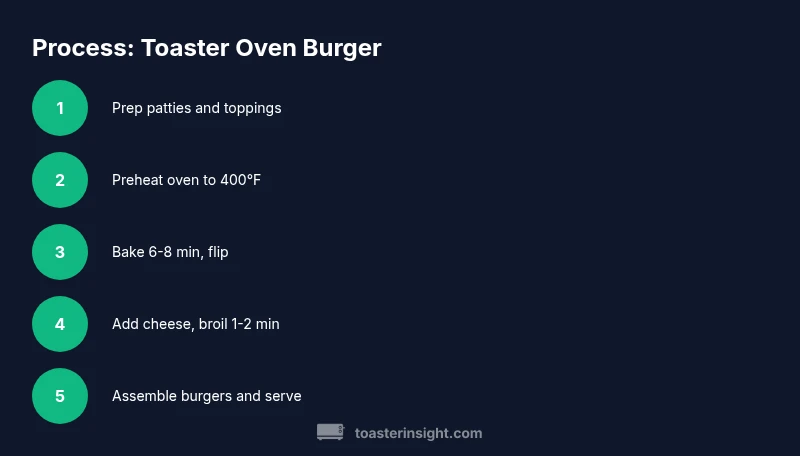
This technique balances interior juiciness with exterior caramelization. Start by baking at a moderate heat (around 400°F / 205°C) for about 6-8 minutes, depending on patty thickness and desired doneness. Flip the patties halfway through to ensure even browning on both sides. When the edges begin to darken and the surface shows a light crust, arrange cheese slices on top (if using). Then switch to broil mode for 1-2 minutes to achieve a bubbly, melty cheese layer and a more pronounced crust. Watch closely; cheese can melt quickly and transfer may occur if left unattended.
If your toaster oven does not have a broil function, you can finish the burgers by returning them to the bake setting for a few extra minutes until the cheese fully melts and the tops brown to your liking. For safety, always use heat-resistant gloves and avoid leaving the oven unattended during the broil phase. A quick tent with foil after resting keeps the patties moist while the cheese sets.
Cheese, buns, and assembly
Melted cheese is a signature feature of a great toaster oven burger. Add cheese toward the end of cooking: 1-2 minutes under the broiler is usually enough to melt, but timing depends on your oven’s heat. Toast the buns briefly on the sheet, cut-side down, for a light crunch and to help them hold up against juicy patties. If you like extra buttery buns, brush the cut sides with a small amount of softened butter before toasting. For assembling, place the patty on the bottom bun, add cheese if not already melted, then layer toppings such as lettuce, tomato, onion, pickles, and condiments. Finish with the top bun and a light press to meld everything together.
A well-assembled burger not only tastes better but also holds together during eating. If you’re preparing sliders, reduce patty size and adjust cook times accordingly. Remember that toppings can shift the balance of flavors, so start with a simple profile and build from there.
Flavor ideas and variations
Experiment with different flavor profiles to keep toaster oven burgers exciting. Try a blue cheese and caramelized onion topping for a robust, savory finish. For a smoky note, include a drizzle of barbecue sauce or a chipotle mayo. If you prefer a more classic taste, keep it simple with cheddar, lettuce, tomato, and a pickle. For a lighter option, use lean beef or turkey patties and complement with avocado slices, tomato, and arugula. You can also introduce textures with crispy fried onions or peppered jalapeños. The key is balancing moisture, fat, and acidity so the flavors shine without overpowering the burger itself.
Troubleshooting, safety reminders, and a quick conclusion
Burgers can be susceptible to undercooked centers or dry edges if heat is too high or cooking times are too short. If you see pink or translucent centers after the recommended time, give the burgers a couple more minutes and check with a meat thermometer. Internal temperature should reach a safe level for beef (generally around 160°F/71°C) before serving. If your buns are getting soggy, remove the patties briefly to rest while you toast the buns longer, then reassemble. Always handle hot trays with oven mitts and place finished burgers on a warmed plate to maintain warmth. ToasterInsight analysis shows that a deliberate bake-then-broil approach, combined with careful patty sizing and proper preheating, yields the best balance of juiciness and browning. The ToasterInsight team recommends following the steps above for consistent results, and encourages experimentation with toppings to find your ideal burger combination.
Quick-start checklist and safety reminders
- Preheat toaster oven to 400°F (205°C) and line a baking sheet.
- Use 4-6 oz patties with an 1/2 inch thickness for even cooking.
- Season simply; avoid overworking the meat to keep it tender.
- Flip halfway and finish with a brief cheese melt under broil.
- Toast buns during the final minutes.
- Check internal temperature before serving and let burgers rest for a minute.
- Keep kids and pets away from the hot oven and use oven-safe tools at all times.
- If you want to tweak textures, swap buns for brioche or add a light brush of butter for extra richness. The ToasterInsight verdict is that consistent prep and timing are the keys to success.
Tools & Materials
- Toaster oven(Ensure it has bake and broil settings)
- Rimmed baking sheet or shallow pan(For catching drips and browning evenly)
- Rack or parchment paper(If using a rack, patty sits above drips)
- Meat thermometer(Check internal temperature (target ~160°F / 71°C))
- Ground beef patties (4-6 oz each)(80/20 fat recommended for juiciness)
- Cheese slices (optional)(American, cheddar, or pepper jack work well)
- Buns and toppings(Lettuce, tomato, onion, pickles, condiments)
- Brush or spray for butter/oil(Lightly butter buns or patty edges for browning)
Steps
Estimated time: 30-45 minutes
- 1
Prep patties and toppings
Form patties to uniform thickness (about 1/2 inch) and season with salt and pepper. Arrange toppings within easy reach and pre-slice buns for quick assembly.
Tip: Uniform thickness ensures even cooking; avoid overworking meat. - 2
Preheat the toaster oven
Set to 400°F (205°C) with convection if available. Preheating helps achieve a crisp crust and even doneness.
Tip: A short preheat time saves energy and speeds up cooking. - 3
Prepare the cooking tray
Line a rimmed sheet and place a rack if available to encourage air flow around patties.
Tip: Parchment or foil makes cleanup easier without affecting browning much. - 4
Bake the patties
Place patties on the tray and bake for 6-8 minutes depending on thickness. Flip halfway through for even browning.
Tip: Use a meat thermometer to check doneness. - 5
Add cheese (optional)
Lay cheese slices on patties in the last 1-2 minutes of bake to melt evenly.
Tip: If cheese is slow to melt, switch to broil for a brief moment. - 6
Toast buns
Place buns cut-side down on the sheet for 1-2 minutes or until lightly toasted.
Tip: Keep an eye on buns to prevent burning. - 7
Finish and rest
Remove patties when juices are near clear and rest for 60 seconds before assembling.
Tip: Resting helps juices redistribute, avoiding a dry bite. - 8
Assemble and serve
Layer patty on bottom bun with toppings, add condiments, then crown with the top bun.
Tip: Keep toppings balanced to avoid leaking sauces.
Your Questions Answered
Can I use frozen hamburger patties in a toaster oven?
Frozen patties can be used, but they will require longer cooking times and careful temperature control. Thawing first provides more consistent doneness and better browning. If you must cook from frozen, add about 3-5 minutes per side and use a meat thermometer to verify doneness.
Frozen patties can work, but expect longer cooking times. Thawing first gives better browning and even doneness.
Is a convection setting necessary for toaster oven burgers?
Convection helps air circulate around the patties for more even browning, but a standard bake setting will still yield good results with slightly longer times. If you have convection, use it for crisper exteriors.
Convection helps browning; if you have it, use it, but it's not mandatory.
What internal temperature should beef burgers reach?
Beef burgers are best when they reach an internal temperature of about 160°F (71°C) for safety and juiciness. Use a meat thermometer to check the center before removing from heat.
Aim for 160 degrees Fahrenheit using a thermometer to check doneness.
Can I make mini burgers or sliders in a toaster oven?
Yes, sliders cook faster due to their smaller size. Reduce patty thickness to about 1/4 inch and monitor closely; total cook time will be shorter, often around 4-6 minutes before finishing with cheese if desired.
Sliders are doable; cut patties thinner and check doneness sooner.
What should I do if the bun gets soggy?
Toast buns separately and add them last to maintain texture. If a bun becomes soggy from juicy patties, you can briefly re-toast the cut side or add a thin barrier like lettuce to prevent sogginess.
Toast buns separately and add toppings quickly to avoid soggy textures.
How can I reheat a toaster oven burger without drying it out?
Reheat on a low setting (300-325°F / 150-165°C) for a short period, then finish with a quick broil to refresh crust. Covering with a damp paper towel during reheating can help retain moisture.
Reheat gently, then crisp the outside for best results.
Watch Video
Key Takeaways
- Preheat, patty evenly, and avoid overcrowding.
- Bake then finish with a brief broil or higher heat for crust.
- Toast buns last for best texture and assembly timing.
- Use a thermometer to ensure safe, consistent doneness.
- ToasterInsight confirms reliable results with proper setup and timing.