How to Broil in a Toaster Oven: Practical Guide
Learn how to broil in a toaster oven with a clear, step-by-step approach. This guide covers temperatures, timing, tools, safety, and practical tips for browning meats, cheese, and vegetables.


To broil in a toaster oven, switch the oven to the broil setting, position the rack near the top, and lay food on a shallow pan lined with foil. Preheat briefly, then cook with the door closed, watching closely and flipping once for even browning. Keep portions small and avoid overcrowding for best results.
Understanding the broil function on a toaster oven
When you broil in toaster oven, heat comes from the top element and browns the surface quickly, creating a sear without fully cooking through. According to ToasterInsight, mastering how to broil in toaster oven lets you finish proteins, melt cheese, and crisp toppings with less energy than firing up a full-size oven. Start with a hot, direct heat exposure and end with a brief rest to set juices. In practice, broiling works best in shorter cooking windows and small, evenly sized portions. The key is to keep foods close to the heating element while preventing scorching by monitoring closely and using a shallow pan. This technique works well for thin steaks, chicken cutlets, fish fillets, and even, lightly dressed vegetables. Remember that toaster ovens vary: some models require you to preheat, while others heat instantly. If you're unsure, run a quick test on a small item to calibrate time and distance from the element. By understanding the top-down heat dynamics, you can control browning, avoid soggy bottoms, and achieve restaurant-like sear at home. The ToasterInsight team has found that a well-planned approach yields consistent results across different brands and oven sizes.
Broil versus bake vs roast: choosing the right setting
Broiling uses direct radiant heat from the top element, ideal for browning and finishing with a crisp surface. Baking relies on ambient heat circulating around the food to cook it evenly through, while roasting blends both approaches for larger cuts. In a toaster oven, choosing the correct setting determines the final texture: broil for sear, bake for even interior, and roast for robust exterior color. Factors like thickness, moisture content, and desired crust influence your choice. For quick browning on lightly seasoned items such as salmon, vegetables, or thin chicken cutlets, broil is usually the best option. If you need deeper interior doneness, switch to bake for the final minutes. To maximize consistency, preheat when required by your model and use a shallow pan so heat can reach the surface rapidly. As a rule of thumb, keep portions small and avoid stacking items to prevent steaming and uneven browning.
Essential tools and setup for successful broiling
A successful broil starts with the right setup. Use a shallow, open pan or a broiling pan to promote surface contact and browning. Line the tray with foil or parchment to simplify cleanup, but ensure the foil doesn’t block heat reaching the food. Place the pan on the top rack, typically 2–4 inches from the heating element, depending on your model and the food’s thickness. A wire rack above a sheet pan can further lift food for even browning and catch drips. Keep oven mitts handy and set a timer, since broiling moves fast. If your toaster oven offers a convection option, you can use it to promote even browning without overheating the interior. Clean the pan between uses to maintain consistent results, especially when cooking fatty foods that can brown too aggressively.
Preparing foods for broiling: prep and placement
Preparation matters more than you might expect. Pat foods dry to promote browning rather than steaming, and lightly oil or brush with a fat to improve crust formation. Season or marinate foods beforehand, but avoid heavy marinades that pool and steam under high heat. Cut items into uniform thickness to ensure even cooking, and arrange them in a single layer with space between pieces for air access. For cheese toppings, use a small amount to prevent overflow. When placing items on the pan, avoid crowding; a single-layer layout helps heat reach all surfaces for a uniform sear. If you’re broiling vegetables, consider pre-tiring them with a quick toss of oil and seasonings to deepen flavor and color.
Step-by-step guide to broiling in a toaster oven
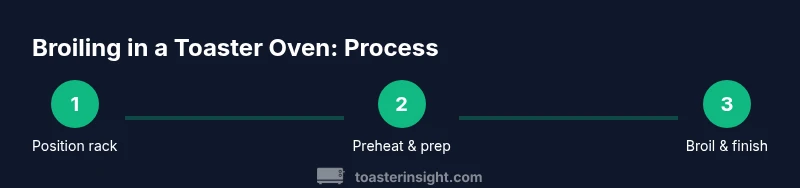
A concise, high-level overview: Preheat the oven to the broil setting and position the rack near the top. Prepare the food by patting dry and lightly oiling. Place food on a shallow pan in a single layer. Slide the pan into the oven and start broiling, watching closely. Flip once halfway through the cooking time and remove when browning is achieved. The exact time will depend on thickness and cut. Rest briefly before serving to reabsorb juices. This overview complements the detailed step-by-step guide.
Timing, browning cues, and finishing touches
Browning should appear quickly on the top surface, with juices starting to bubble at the edges. For most proteins, aim for a light crust before the interior has fully cooked. If the item browns too quickly, lower the height or reduce the heat by switching back to bake for the last minutes. For cheese toppings, a 1–2 minute window is often sufficient to melt and color without overflowing. Here, the goal is to finish with a crisp exterior and moist interior. A quick rest after broiling helps redistribute juices and enhances flavor.
Safety considerations and common mistakes
Never leave the toaster oven unattended while broiling. Overcrowding and uneven thickness lead to uneven browning and potential burning. Use oven-safe pans and avoid metal utensils that can scratch non-stick surfaces. If smoke occurs, turn off the oven and ventilate the area; this is often due to fat or oil pooling on the tray. Preheating is model-dependent; some units require it for immediate searing, while others heat instantly. Always keep a timer and inspect the food visually to catch browning before it burns.
Cleaning and maintenance after broiling
Allow the oven to cool completely before cleaning. Wipe the interior with a damp cloth to remove splatters and residue; use a gentle cleaner if needed and avoid harsh abrasives. Clean the pan and rack after each session to prevent buildup, which can affect browning and flavor. If your model has a crumb tray, empty it regularly to avoid smoke and odors. Regularly inspecting the heating element for signs of wear can prevent uneven heating and extend the life of your toaster oven.
Quick-start ideas: foods to try this weekend
Try broiling items like thin salmon fillets, chicken cutlets, shrimp, sliced zucchini, or cherry tomatoes with a thin coat of oil and seasoning. Cheese-tinished dishes such as bruschetta or halloumi sing beautifully under high heat. For a simple breakfast, broil avocado toast with a sprinkle of cheese for a quick, satisfying bite. These ideas demonstrate how fast and versatile broiling can be when you keep portions small and monitor closely.
Examples of foods you can broil in a toaster oven
A wide range of foods respond well to broiling. Flat or thin cuts like medallions of beef, small chicken breasts, fish fillets, or shellfish brown quickly, while crisping toppings on nachos or open-faced sandwiches adds a professional-looking finish. Vegetables such as bell peppers, asparagus, or mushrooms achieve a roasted, blistered finish when worked into a single-layer arrangement. Always start with dryness, even thickness, and appropriate oil or fat to promote browning rather than steaming.
Tools & Materials
- Oven-safe broiling pan or shallow rimmed baking sheet(Supports browning; choose one with a low rim for heat transfer)
- Wire rack (optional)(Lifts food for even browning; place over a pan to catch drips)
- Aluminum foil or parchment paper (optional)(Makes cleanup easy; ensure foil doesn't block heat)
- Oven mitts(Heat-resistant, protect hands during high heat)
- Tongs or spatula(For safe turning without piercing foods)
- Timer or smartphone timer(Helps manage short broiling windows)
- Meat thermometer (optional but recommended)(Checks doneness without cutting into the food)
- Dish towel or heat-resistant mat(Protects surfaces after removing hot pan)
Steps
Estimated time: 15-25 minutes
- 1
Position the rack
Move the oven rack to the topmost position, about 2–4 inches from the heating element, and place a shallow pan on it. This places food close enough for intense browning without burning.
Tip: If your oven has a dedicated broiling rack setting, use it for consistent distance from the element. - 2
Preheat the toaster oven
Set the toaster oven to the broil setting and preheat for about 3–5 minutes. A brief warm-up ensures rapid browning once the food goes in.
Tip: Watch closely during preheat; some models heat instantly and keep a shorter lead time. - 3
Prepare the food
Pat dry the surface, lightly oil or brush with a small amount of fat, and season as desired. Dry surfaces promote browning and prevent soggy results.
Tip: Use a light coat of oil on foods with natural moisture to improve crust formation. - 4
Arrange on the pan
Spread food in a single layer on the pan or tray, leaving space between pieces for heat circulation. Crowding reduces browning and can cause steaming.
Tip: For toppings like cheese, apply a thin layer to avoid overflow. - 5
Broil and monitor
Slide the pan into the oven and start broiling. Keep the door slightly ajar if your model requires it; otherwise, close the door and watch for color changes.
Tip: Set a timer for the minimum browning window and check frequently. - 6
Flip halfway and finish
Turn the food once halfway through the total cooking time to ensure even browning on both sides. Remove when the surface is crisp and juices are near desired doneness.
Tip: Use tongs for delicate items to avoid tearing. - 7
Rest and check for doneness
Allow a brief rest after removing from heat; check final internal temperature if needed before serving.
Tip: Resting redistributes juices for a juicier bite.
Your Questions Answered
What is the main difference between broiling and grilling in a toaster oven?
Broiling uses radiant heat from above to brown surfaces quickly, while grilling relies on direct contact with an open flame. A toaster oven can mimic broiling, but no built-in flame exists. Grilling generally produces more pronounced grill marks and smoky flavor.
Broiling uses top heat to brown the surface, not an open flame like grilling. In a toaster oven, you can get a sear without outdoor grilling.
Can I broil frozen foods in a toaster oven?
You can broil some frozen items, but expect longer cooking times and less even browning. Thawing items briefly or cutting them into thinner portions improves results.
Frozen foods can be broiled, but thawing or slicing thin helps browning.
What foods are best for broiling in a toaster oven?
Thin steaks, chicken cutlets, fish fillets, shellfish, vegetables, and items with a cheese topping perform well under broil. Keep portions small and monitor closely for even browning.
Great choices for broiling include thin meats, fish, and vegetables with a cheese topping.
How can I prevent smoking when broiling?
Trim visible fat, use a shallow pan, and line trays to catch drips. Avoid overheating fats or oils that can smoke. Increase airflow by keeping the oven door slightly cracked if your model supports it.
Trim excess fat and use a shallow tray to prevent smoke during broiling.
Do toaster ovens always require preheating for broiling?
Preheating needs vary by model. Some toaster ovens require it for immediate searing, others heat quickly without a preheat phase. Check your user manual for model-specific guidance.
Some models need preheating for best browning, others heat instantly.
Is a meat thermometer useful when broiling?
A meat thermometer is helpful to ensure doneness without overcooking, especially for thicker cuts. It’s optional but recommended for accuracy.
A thermometer helps avoid under- or overcooking when broiling.
Watch Video
Key Takeaways
- Preheat when required and position racks correctly.
- Keep foods in a single layer with space for heat to reach all surfaces.
- Watch closely and flip halfway for even browning.
- Rest briefly after broiling to finish flavorful juices.
- Clean pans promptly to maintain consistent browning.