What Causes a Toaster to Trip? A Practical Troubleshooting Guide
A practical, urgent guide to diagnosing why your toaster trips a circuit, with safe, proven steps, common causes, and prevention tips. Learn how to test outlets, cords, and internal components, and know when to call a pro. From overloads to moisture, ToasterInsight helps homeowners fix quickly.


If your toaster trips the circuit, the most likely causes are a power issue, an overloaded outlet, or a damaged cord. Start by unplugging, testing the outlet with another device, and inspecting the cord for damage. If the outlet or toaster shows signs of scorching, stop and seek professional help. This guide helps you confirm the culprit safely.
Why Understanding what causes a toaster to trip matters
When a toaster trips a circuit, it’s a signal that something in the power path isn’t right. The most common culprits are simple electrical issues (like a loose outlet or overloaded circuit) or a damaged cord. In some cases, moisture or crumbs can create an unexpected short. The ToasterInsight team found that many trips happen on shared circuits with high-draw appliances, so start by evaluating the outlet and overall load. Understanding these dynamics helps you prevent future trips and keep your kitchen safe. Remember: if you smell burning or see melted plastic, stop immediately and unplug the appliance. Safety first, then diagnosis, is the path back to reliable toasting.
Quick context on recurring trips and practical safeguards
A trip usually means the toaster is pulling more current than the circuit can safely handle or there’s an insulation fault. If you’re frequently tripping a breaker, it’s a sign to re-balance loads or inspect for degraded wiring. Simple steps—like moving the toaster to a dedicated outlet or replacing a worn cord—can resolve many issues. This article will walk you through symptom recognition, the most probable causes, and straightforward tests you can perform at home. The aim is to restore reliable performance while avoiding risky meddling.
Steps
Estimated time: 15-35 minutes
- 1
Unplug and visually inspect
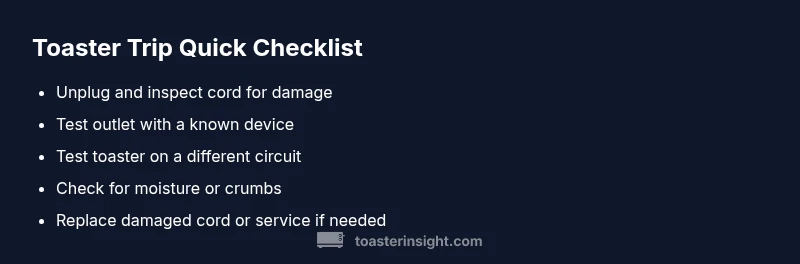
Begin by unplugging the toaster and inspecting the cord and plug for cuts, burns, or exposed wires. Look for crumb buildup near the base that could cause a short. If you notice damage, do not use the toaster until the cord is replaced or the unit is serviced.
Tip: Handle the plug by the base, not the cord, to avoid tugging on damaged wiring. - 2
Test the outlet with a different device
Plug a known-working device into the same outlet to confirm whether the circuit is the problem. If the other device also trips, the outlet or circuit is the issue. If it doesn’t trip, the toaster path is more likely at fault.
Tip: Use a small lamp or phone charger for a quick test. - 3
Try a different outlet on a separate circuit
Move the toaster to another outlet on a different circuit to see if the trip persists. A persistent trip across outlets points to the toaster itself or a wiring problem on the new circuit.
Tip: Avoid plugging into outlets that share a power strip or surge protector. - 4
Check for moisture or spills
Dry any moisture around the base and ensure the crumb tray is clean and dry. Moisture can create a short path that triggers a trip. No moisture should be present before retesting.
Tip: Let the toaster dry completely before testing again. - 5
Inspect the cord and plug in more detail
If you see fraying, exposed conductors, or melted insulation, the cord is likely the culprit. A damaged cord can cause short circuits that trip breakers. Do not tape or jury-rig damaged cords; replace or have the unit serviced.
Tip: Replace the cord if available from the manufacturer to ensure compatibility. - 6
Decide on next steps based on results
If the issue moves with the outlet, involve an electrician. If the problem stays with the toaster, consider professional service or replacing the unit. Do not attempt internal repairs yourself on high-voltage appliances.
Tip: When in doubt, prioritize safety and professional help.
Diagnosis: Toaster trips circuit breaker when plugged in or during operation
Possible Causes
- highPower issue from outlet or circuit overload
- highDamaged power cord or plug
- mediumMoisture intrusion or spill inside toaster
- mediumFaulty heating element or thermostat
- lowWrong type of outlet or voltage issue
Fixes
- easyUnplug and move toaster to a dedicated outlet with no other high-draw devices; test with a simple appliance on a different circuit if possible
- easyInspect the power cord and plug for cracks, scorch marks, or fraying; replace the cord if damaged or return to manufacturer for service
- easyDry the toaster completely and remove crumbs; try a quick test on a dry, clean surface away from moisture sources
- hardIf the outlet or circuit still trips after these checks, have a licensed electrician inspect wiring and panel load
Your Questions Answered
Why does a toaster trip a circuit breaker?
A circuit breaker trips when the toaster draws more current than the circuit can safely handle or when there is a short or fault inside the toaster or outlet. Moisture, damaged cords, or aging wiring can also trigger trips. Always start with a simple outlet test and cord inspection.
A toaster trips a circuit breaker when it draws too much current or there’s a fault. Start with testing the outlet and inspecting the cord.
What should I check first if my toaster trips?
First unplug the toaster and inspect the cord for damage, then test the outlet with a different device. If the outlet is fine, try a different outlet. Moisture or crumbs can cause shorts—clean and dry the interior before testing again.
First unplug, inspect the cord, and test the outlet with another device. If the outlet is fine, move to a different outlet and check for moisture.
Is a damaged cord dangerous to use?
Yes, a damaged cord is dangerous as exposed wires can short or shock. Do not use the toaster until the cord is replaced or the unit is serviced by a professional.
A damaged cord is dangerous and should not be used until repaired or replaced.
Can I fix a toaster that keeps tripping by myself?
You can perform basic checks safely, like testing outlets and cleaning, but internal repair should be left to professionals. If you’re unsure, replace the unit or have it serviced to avoid fire risk.
Basic checks are fine, but internal repairs should be done by a pro to avoid hazards.
When should I replace the toaster?
If the toaster repeatedly trips a circuit after safe testing, or if you notice persistent heat, buzzing, or scorching, replacement is the safer option. A failing device can pose ongoing safety risks.
If trips persist after checks, replacement is safer than repair.
Could moisture cause trips even after drying?
Yes, residual moisture or steam can linger and cause short circuits. Ensure completely dry interiors and avoid using in humid environments until fully dried.
Moisture can linger; ensure complete drying before reusing.
Watch Video
Key Takeaways
- Identify whether the issue is outlet-related or toaster-related.
- Inspect and replace damaged cords promptly.
- Test on separate circuits to isolate the cause.
- Don't ignore burning smells or melted insulation—call a pro.
- Regular maintenance reduces future trips.