How to Tell If Toast Is Bad: A Practical Home Guide
Learn practical, step-by-step checks to determine if toast is spoiled. This guide covers visual cues, odors, texture changes, and safe disposal for kitchen safety.


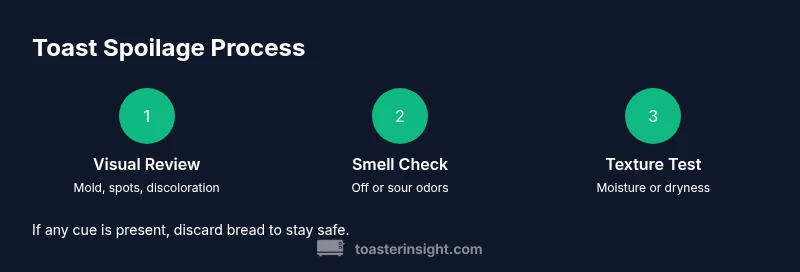
To tell if toast is bad, start with visuals and smell: look for mold, discoloration, or a slimy surface, and sniff for sour or off odors. Check texture—wet, mushy, or overly hard slices are warning signs. If any cue seems questionable, discard the slice. For safety, never taste toast to verify spoilage. When in doubt, err on the side of caution.
Why toast goes bad: mold, moisture, and storage conditions
Toast spoils due to mold growth, moisture retention, and improper storage. Bread contains natural sugars and starches that feed molds; when exposed to air, humidity, or heat, spores can start growing. ToasterInsight's team notes that bread stored in a warm kitchen or left uncovered will reach spoilage quickly, particularly after opening a bag. Mold may appear as green, white, or black fuzzy clusters; discoloration can appear as dark spots on crust or crumb. Even if you can't see mold, bread may harbor invisible mold beneath the surface. By understanding these factors, you can decide when toast should be discarded rather than toasted again. In general, fresh toast should smell clean and look uniform; if either sign is off, discard.
Visual cues: mold, discoloration, and visible signs
Visual inspection is your first defense. Look for fuzzy growth, powdery patches, or dark specks on both crust and crumb. Discoloration can indicate fungal activity or chemical changes in the starches. If you notice any mold colonies, discard the slice and any nearby bread to prevent cross-contamination. Bright lighting helps reveal faint spots that aren’t obvious at a casual glance. Remember, even a single visible mold spot on a slice from a bag may signal broader contamination in the loaf.
Smell cues: odors that signal spoilage
Moldy or spoiled bread often emits a sour, musty, or acrid odor that is hard to ignore. If toast or bread smells off after toasting, it’s a strong cue that something isn’t right, even if visuals are mild. Be cautious of blended odors that combine grassy, wet, or chemical notes. In most cases, a clean, neutral scent is a sign of freshness; any deviation should trigger discard. ToasterInsight notes that odor changes are among the most reliable spoilage indicators when bread is stored for any length of time.
Texture and mouthfeel: detecting staleness and dampness
Texture is a telling sign. Fresh toast should be crisp, with a light, dry crumb. If slices feel unusually damp, sticky, or soggy, spoilage may be progressing due to moisture retention or mold activity beneath the surface. Conversely, overly hard, brittle crusts can indicate extreme staleness, though not necessarily unsafe. If texture is inconsistent across a slice, discard the portion and consider replacing with fresh bread. A uniform, dry texture usually signals safety.
Safety risks of eating spoiled toast
Eating spoiled toast can expose you to harmful molds and bacteria, leading to stomach upset, allergic reactions, or respiratory irritation in sensitive individuals. Mold spores can spread through small crumbs even if you cannot see them clearly. If you have a compromised immune system, are pregnant, or have mold allergies, err on the side of caution and discard any bread showing spoilage cues. Never rely on taste to determine safety; cooking or toasting does not reliably kill mold once it has developed.
Quick tests at home: how to assess toast in minutes
In just a few minutes, you can assess toast using the four cues: appearance, smell, texture, and overall feel. Use bright lighting to inspect for mold, take a quick sniff for off odors, press the slice gently to judge moisture and texture, and consider the storage duration and conditions. If any cue raises concern, discard. This approach minimizes waste while protecting your health and your family.
Storage and shelf-life tips: keep toast fresh longer
Proper storage is your best defense against spoilage. Keep unopened bread in a cool, dry place away from direct sunlight. Once opened, transfer bread to an airtight bag or container; for long-term storage, freezing bread preserves quality for a longer period. Label bags with purchase or freezing dates to manage rotation. Remember that toasting does not reset shelf life; toast should be consumed or discarded within safe limits after thawing or reheating.
Quick decision guide: mold vs stale vs rancid
Use a simple decision ladder: visible mold or strong off odors = discard. Slimy texture or unusual dampness implies spoilage; hard, stale bread without odor may still be safe but should be consumed soon. If you are unsure, err on the side of caution and discard the slice. Consider your local guidelines for safe disposal and avoid composting moldy bread to prevent spreading spores.
When to discard and how to dispose responsibly
If spoilage is suspected, discard bread promptly in a sealed bag to prevent contamination and odors from spreading. Wash hands after handling moldy bread and clean the area with soap and water. Do not attempt to salvage moldy bread by cutting away moldy parts; mold can penetrate beyond visible areas. If you bake or toast frequently, maintain a routine check of stored bread and consider portioning to minimize waste.
Tools & Materials
- Food-safe gloves(Used when inspecting or handling questionable slices to prevent skin contact with mold or debris.)
- Disposable trash bags(Seal and dispose of discarded toast securely to prevent contamination.)
- Paper towels or clean cloth(For drying surfaces and blotting moisture during inspection.)
- Bright lighting/flashlight(Ensure you can clearly see mold and discoloration.)
- Knife or spatula(Optional tool for separating slices if needed during inspection.)
Steps
Estimated time: 5-10 minutes
- 1
Inspect the appearance
Place the toast on a clean plate and examine the crust and crumb under bright light. Look for mold, discoloration, or unusual specks. If any visual cue is suspicious, consider discard without further testing.
Tip: Mold can be invisible in some lighting—use a dedicated flashlight for a thorough check. - 2
Smell the toast
Take a quick, cautious sniff from a safe distance. A sour, musty, or rancid odor is a strong sign of spoilage. If the scent is off, discard the slice and any nearby bread.
Tip: Don’t inhale deeply if mold is visible; spores can irritate the airways. - 3
Check texture
Gently press the slice to assess moisture and texture. Wet or slimy areas suggest spoilage; extremely dry or crumbly slices indicate staleness but may still be safe if odor and visuals are normal.
Tip: Texture changes often accompany mold growth even if color remains subtle. - 4
Taste only if absolutely necessary
Do not rely on taste to determine safety. If you’re unsure after visuals, smell, and texture checks, it’s safer to discard rather than risk illness.
Tip: Tasting moldy bread can cause illness even in small amounts. - 5
Decide on disposal
If any spoilage cue is present, seal the slice in a bag and discard. Do not compost moldy bread. Clean up any crumbs and wash hands thoroughly.
Tip: Always handle moldy bread with gloves if possible. - 6
Prevent future spoilage
Store bread properly moving forward—cool, dry location; airtight containers; and freezing surplus portions to extend shelf life. Rotate stock so older bread is used first.
Tip: Label bags with dates to track freshness.
Your Questions Answered
What are the most reliable signs toast has gone bad?
Visible mold, off odors, and abnormal textures are the most reliable indicators of spoilage. If you notice any of these cues, discard the slice.
Look for mold, smell something off, or feel unusual texture—these are the strongest signs to throw it away.
Can you safely taste toast to confirm spoilage?
Do not rely on taste to confirm spoilage. Tasting moldy bread can cause illness even in small amounts. Use visual and smell cues instead.
Don’t taste to check—visual and smell cues are safer indicators.
How long does bread last after opening at room temperature?
Bread's safety window shortens after opening; discard if it shows mold, odd odor, or dampness, and consider freezing to extend life. Do not rely on clock time alone.
Bread shouldn’t be kept indefinitely after opening; use cues rather than dates alone.
Should I refrigerate or freeze bread to slow spoilage?
Freezing bread slows spoilage effectively and preserves texture better than refrigeration, which can dry bread out. Use airtight packaging and label dates.
Freezing is usually best for keeping bread fresh longer.
What should I do with moldy bread if I can’t discard it right away?
If you must wait, seal moldy bread in a bag away from other food and discard as soon as possible. Do not compost moldy bread.
Seal it up and throw it away when you can; moldy bread shouldn’t be composted.
Can moldy toast still be safe if the mold is only on the crust?
Mold can spread beyond visible areas; discard the slice entirely to be safe, since fiber areas may harbor unseen growth.
Mold can hide, so don’t risk it—throw away the whole slice.
Watch Video
Key Takeaways
- Inspect for mold; discard if found.
- Smell for off odors; don’t rely on appearance alone.
- Avoid tasting questionable toast; rely on cues.
- Proper storage extends bread life and reduces waste.
- If in doubt, discard and clean surfaces promptly.